


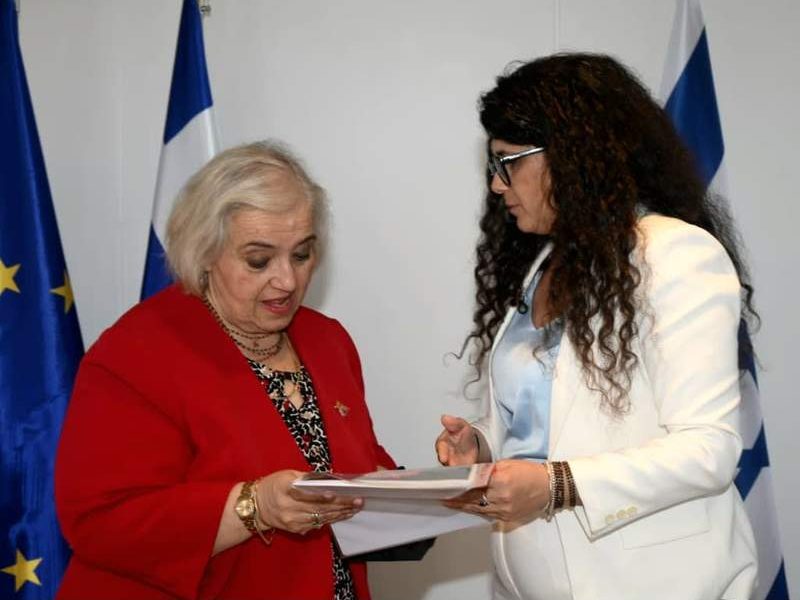
Aegean Axis: Greek-Israeli Ties Solidify, Redrawing Eastern Mediterranean Map
POLICY WIRE — Athens, Greece — The placid Aegean, long a stage for historical currents and contemporary squabbles, now hosts a decidedly modern — and rather potent — alliance. What was once...

POLICY WIRE — Athens, Greece — The placid Aegean, long a stage for historical currents and contemporary squabbles, now hosts a decidedly modern — and rather potent — alliance. What was once unthinkable for many diplomatic old-timers has become not just routine but aggressively ‘flourishing,’ according to those close to the strategic rapprochement between Greece and Israel. But it isn’t merely friendly rhetoric; it’s a deep, deliberate realignment that’s busy reshaping the region’s very fault lines.
Because let’s be real, a few decades ago, the notion of Athens and Jerusalem becoming best buds wasn’t even a punchline. Greece, part of the historically pro-Palestinian European bloc, — and Israel, a regional outlier. Yet, shifting energy landscapes, security imperatives, and a common competitor have pushed them into a tighter embrace than ever. It’s pragmatism, writ large — and unapologetic, against a backdrop of increasing regional volatility. The message is clear: shared interests trump historical inclinations, especially when there’s offshore gas involved and geopolitical maneuvering by other players.
“Our strategic alignment isn’t merely about good faith anymore; it’s about mutual security in a profoundly volatile neighborhood, a genuine partnership that reflects shared challenges and aspirations,” Israel’s Deputy Foreign Minister, Tzipi Hotovely, told Policy Wire recently. Her remarks underscore what officials on both sides whisper during cocktail receptions: they’ve got each other’s backs now. And why wouldn’t they? The partnership extends from defense cooperation, joint military drills that make regional rivals rather nervous, to ambitious energy pipelines designed to transport Eastern Mediterranean gas to Europe, bypassing, crucially, other less agreeable states. It’s a high-stakes poker game, — and these two aren’t folding.
But the enthusiasm isn’t one-sided. Athens sees a pathway to diversifying its energy sources, enhancing its geopolitical clout, and modernizing its defense capabilities. Greek Foreign Minister Nikos Dendias, for his part, publicly lauded the partnership as a “cornerstone of stability in an unpredictable arc of crisis, contributing significantly to both our national interests and broader European energy security.” It’s all very statesmanlike, of course. Yet, one can’t ignore the elephant in the room: Turkey. The warming between Greece and Israel forms a distinctly un-chummy counterweight to Ankara’s expanding maritime claims and regional assertiveness, especially concerning energy exploration.
This dynamic has significant ripple effects. For instance, the proposed EastMed pipeline, a multi-billion-dollar project to ferry Israeli and Cypriot gas to mainland Europe via Greece, has ruffled more than a few feathers. It’s seen in Ankara as a deliberate circumvention. That kind of energy architecture can, and does, shape long-term strategic visions for nations across the broader Muslim world, including Pakistan and other South Asian states that carefully monitor regional power shifts and resource politics. Any shift in energy corridors, particularly those that sidestep traditionally influential energy transit states, is noticed keenly, signaling altered alignments and potential economic disadvantages for some, while others might view it as a fresh opportunity for alternative partnerships.
📄 POLICY WIRE WHITEPAPER PUBLISHED: PAKISTAN'S NATIONAL SECURITY POLICY PRIORITIES
👉 READ BY CLICKING HERELook at the numbers: bilateral trade between Greece and Israel swelled by over 25% in the past three years, hitting nearly $1 billion in 2023, according to figures released by the Hellenic Statistical Authority. That’s not just ‘flourishing;’ it’s a damn surge. They’re building more than friendships; they’re building infrastructure, security frameworks, and, yes, a hedge against perceived regional threats. It’s not some fleeting romance; it’s a marriage of convenience cemented by hard geopolitical realities and tangible economic benefits. These aren’t just talks anymore; they’re commitments. And the region is watching, calculating its own moves. Even in the shifting winds of Beijing’s strategic interests, these localized alignments hold their own weight, potentially influencing broader trade and security patterns. It’s not just a regional play, but a piece in a much bigger, global jigsaw puzzle.
What This Means
This strengthening Athens-Jerusalem axis fundamentally alters the Eastern Mediterranean power balance. Politically, it signals a deeper European engagement with Israeli security concerns and a willingness to form alternative blocs. Economically, it establishes a new energy corridor for Europe, potentially diminishing the strategic leverage of traditional gas suppliers and transit nations. This isn’t just about gas prices; it’s about control, influence, and the redefinition of strategic pathways. For nations like Turkey, it reinforces a sense of encirclement and might provoke further assertive responses in its maritime claims, pushing its foreign policy towards new alliances—perhaps closer to states within the broader Muslim world like Pakistan. In essence, what Israel and Greece are building is a security and energy compact that seeks to guarantee stability on their terms, drawing lines in the sea and on the diplomatic map. And for everyone else? They’re scrambling to adjust to the new geopolitical reality.
The old guard might fret, but the fact is, the alliances that seemed set in stone for generations? They’re not. Not anymore. This one feels different. It’s a clear signal that, when it comes to regional self-interest and security, sentiment often takes a back seat to sheer strategic advantage. A lesson, really, for anyone paying attention. You’ve gotta evolve, or get left behind.