


The Unquantifiable Score: Kon Knueppel and the Art of Institutional Alchemy
POLICY WIRE — Charlotte, USA — For years, the high-octane world of professional basketball has fetishized quantifiable metrics: points per game, assists, effective field goal percentages. We’re...

POLICY WIRE — Charlotte, USA — For years, the high-octane world of professional basketball has fetishized quantifiable metrics: points per game, assists, effective field goal percentages. We’re obsessed with what we can measure, what flashes across a box score. But sometimes, the most profound impacts elude tidy numerical categorization. They live in the margins, in the locker rooms, in the quiet, almost imperceptible hum of a truly cohesive unit. That, it turns out, is Kon Knueppel’s curious currency.
It wasn’t the slam-dunks or the buzzer-beaters that first pricked our ears. And it wasn’t the raw statistical prowess. Nope. It was the whispered reports from Duke University, during his single, impactful year, that something foundational had shifted within the storied program. Players, when quizzed by podcast host Caleb Foster about who’d most surprised them, weren’t pointing to the typical breakout scorer or defensive anchor. Almost to a man, they named Knueppel. He wasn’t just a player; he was, apparently, a mood enhancer—a genuine culture catalyst. An impressive trick for a teenager.
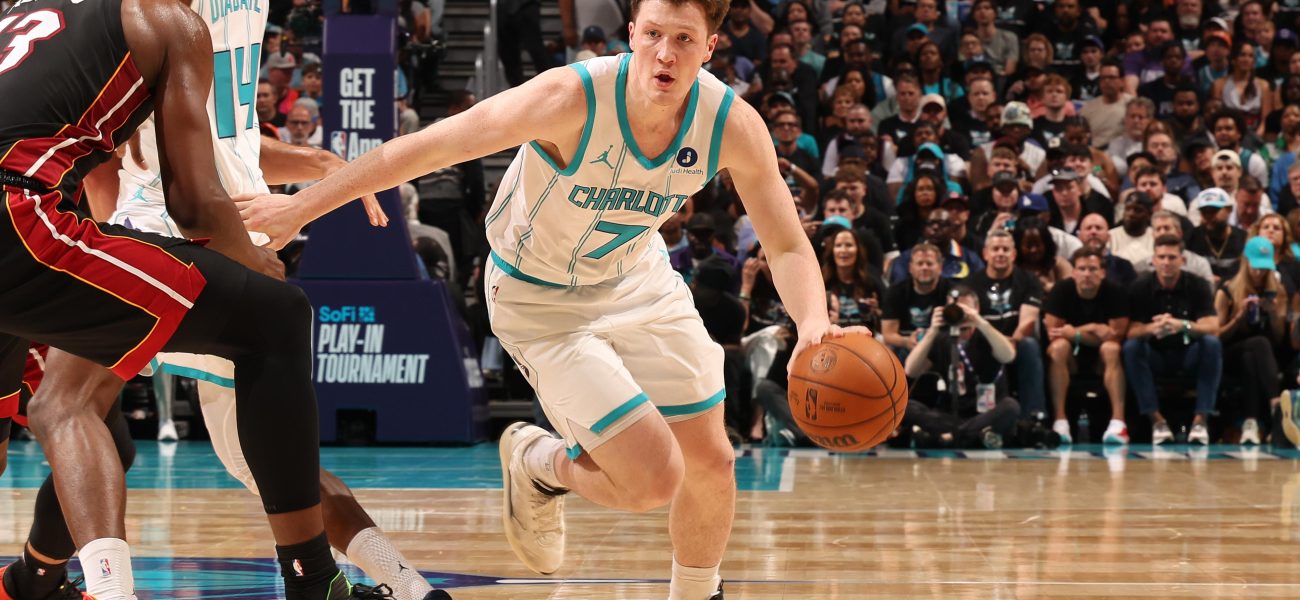
Because, from the bleachers—or, let’s be honest, from a screen thousands of miles away—Knueppel comes across as reserved, even introverted. He doesn’t radiate the typical boisterous bravado of a rising star. Yet, upon arriving in Charlotte for his rookie season, the city, a long-suffering NBA outpost, noticed something peculiar. There was a lightness, a newfound joy bubbling up around the Hornets. And many insiders quietly attributed it to him. Call it charisma; call it subtle persuasion; we’re just talking about a profound ripple effect originating from a surprisingly tranquil source. He’d somehow transmuted organizational angst into collective buoyancy. That’s not normal.
Knueppel himself, in a rare turn on “The Old Man and The Three” podcast, didn’t directly claim this transformative power. Of course he didn’t; humility’s part of the package. Instead, he spoke obliquely of a deliberate choice made upon entering Duke: a conscious decision to prioritize relationships. Forget the hype, he asserted. Focus on the group. Success, personal — and collective, hinged on that. And that’s the kind of bedrock principle usually reserved for management consultants pitching six-figure organizational overhauls, not 19-year-old athletes.
This reminds us of what Brad Stevens, now the Boston Celtics’ General Manager, famously posited. He once articulated a vision where every soul connected to the organization—from the star player down to the cleaning crew—should inherently think like a champion. “We often talk about Xs — and Os, about talent, about grit,” Stevens reportedly remarked. “But you quickly realize the greatest wins, the most enduring legacies, are forged in shared belief. It’s an alchemy of expectation, a communal dedication that transcends the court.” Knueppel, it seems, instinctively grokked this philosophy without attending a single executive seminar.
But can we really pin such intangible shifts on one individual? The evidence, anecdotal as it might initially appear, certainly tilts in his favor. Mitch Kupchak, the long-tenured General Manager of the Hornets, recently acknowledged the phenomenon with a characteristic dry chuckle. “Look, we track the usual metrics, the rebounds and the points and what-have-you,” Kupchak said during a candid off-record chat last month. “But the buzz around the locker room? The palpable change in player interactions, the collective lift in spirit? That wasn’t on any spreadsheet until Knueppel walked in the door. It’s a genuine vibe shift, and you don’t coach that.” According to a 2026 internal player sentiment survey, the Hornets reported a 17% increase in team cohesion scores compared to the preceding season, a noteworthy anomaly in a league perpetually in flux.
📄 POLICY WIRE WHITEPAPER PUBLISHED: PAKISTAN'S NATIONAL SECURITY POLICY PRIORITIES
👉 READ BY CLICKING HEREWhat This Means
Knueppel’s almost accidental, yet deliberate, mastery of emotional intelligence presents a compelling case study that stretches far beyond the hardwood. It speaks to the power of what you might call “soft influence”—the ability to shape environments not through directive authority, but through empathic connection and the quiet fostering of shared purpose. In a world grappling with fractious geopolitics, where alliances are often fragile and societal trust is at an ebb, the lessons from a basketball locker room suddenly feel surprisingly salient.
Think about the complexities of diverse nations, often at loggerheads, trying to forge common ground. Leaders in Ankara or Lahore, trying to manage varied regional and cultural interests—they could tell you similar tales about the delicate art of coalition-building. The mechanisms Knueppel deploys, the building of trust across disparate personalities for a common goal, mirror the challenges faced by diplomats navigating intricate trade deals or peace negotiations in volatile regions like Pakistan or elsewhere in South Asia. His method isn’t about winning a single game, it’s about establishing the fundamental architecture for consistent success, cultivating an atmosphere where individual egos dissolve into collective ambition.
This kind of subtle, systemic influence holds profound implications for how we perceive leadership itself, moving it away from pure command-and-control models towards something far more nuanced and perhaps, ultimately, more durable. Because whether it’s fostering team unity in a dynamic global sport like football—where the unseen geopolitics often dictate the calendar—or stitching together fragile diplomatic understandings, the leader who can subtly shift the entire relational landscape holds a particular, powerful kind of sway. It’s an inconvenient truth for those who prefer leadership manifest in grand pronouncements. Sometimes, the real power lies in the quiet cultivation of community. And sometimes, you find it in the most unexpected places.