

A largely predictable trend is emerging on the western frontier of Pakistan: whenever the nation acquires diplomatic traction, the economically acceptable growth of confidence, or a certain strategic determination, the chaos forces seem to pull Pakistani eyes once more to the security issue. The 48-hour wave of the recent terrorism in the Khyber Pakhtunkhwa, which is said to have cost 23 precious lives due to attacks across markets and police installations is not just a security incident but a strategic strike on the morale of the people, their economic viability and stability in their region.
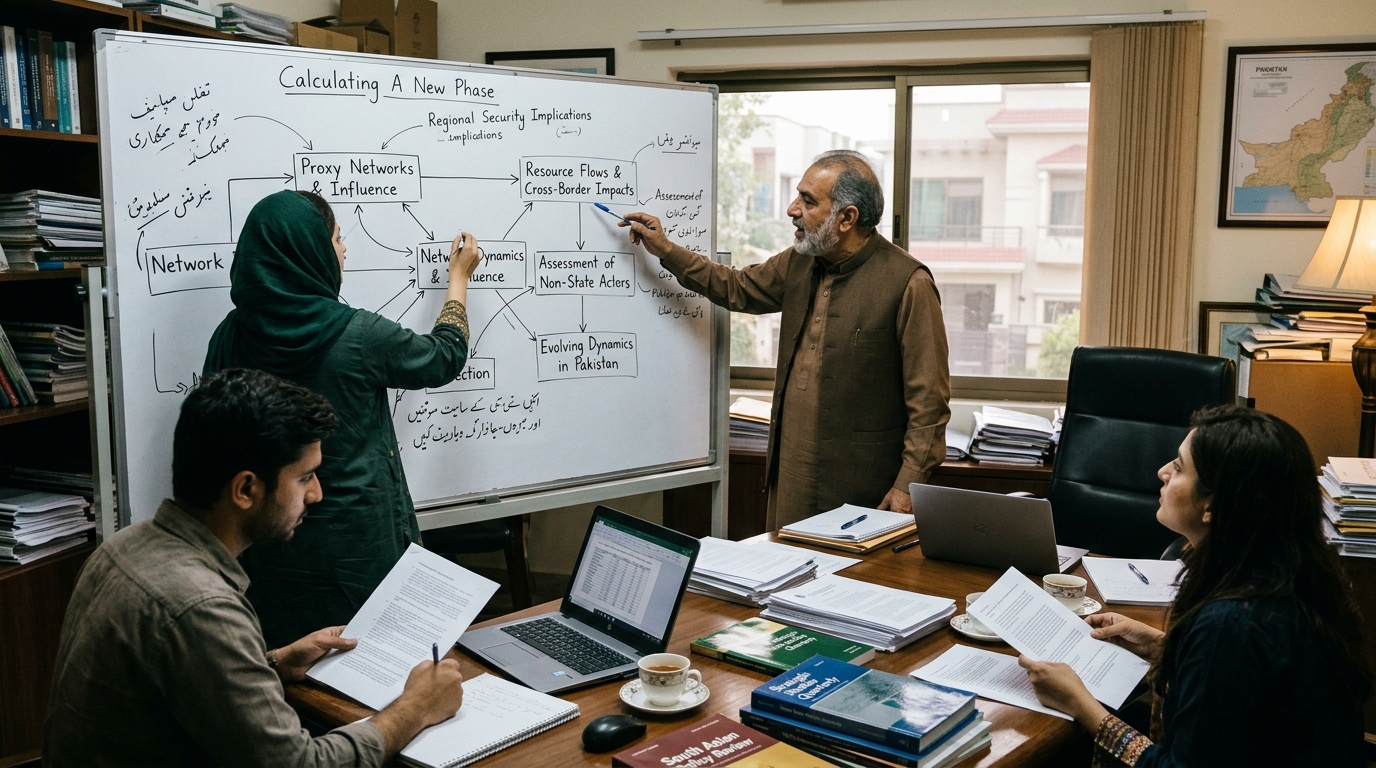
These attacks are full of characteristics of hybrid warfare. Because of its inability to counterattack Pakistan, to compete on the international level on equal terms, and to be competitive in the realm of diplomacy, malevolent players have to resort more and more to proxy, disinformation, and irregular violence. It is due to this that the current escalation needs to be placed within the context of its overall strategy. The apparent victories that Pakistan has had in recent months, be it on the diplomatic front, consultations on regional interconnectedness, or efforts to reclaim internal stability have changed the strategic calculus. Individuals who are displeased with the revival of Pakistan want to be diverted by killing.
Long-established pattern of deniable war raises the manner of using militant outfits like Fitna al Khawarij and allied groups. The terror groups flourish in the presence of external sponsors who deliver ideological air and money, access to intelligence, or even indulgence in territories. Security analysts all over the world have recorded how proxy networks are usually instigated when the sponsoring states are strategically embarrassed in other areas. The case of Pakistan does not seem to be any different. The aim is not so complex: make spectacular violence, take headlines, and artificially demonstrate the lack of stability where it is becoming sustainable.
The latest attacks also have a darkest of tactical realities. Attacking bazaar, checkpoint and police stations make militants show their vulnerability, rather than strength. To the extent that terrorist factions lose space to organize against organised military formations they switch to soft targets. This has been witnessed all around the world in countries like Iraq, Nigeria and Afghanistan among others. Civilian massacres are the arm of the people who are incapable of holding ground, incapable of ruling people and unable to survive in a pitched battle.
Pakistan has not experienced anything new–and conquered it before. State statistics, which are publicly accessible and available within the past ten years, point to significant full-scale counter-terrorism activities that had drastically cut down the terrorist acts within their highest years. Previously one of the global states that had the highest levels of terrorism, Pakistan had been aptly supported by coordinated military response, intelligence amalgamation and even police sacrifices in order to significantly enhance internal security. In order to restore peace in the country, thousands of soldiers, officers and civilians were sacrificed. And with new seriousness that well-edged gain must be maintained.
Internal capacity has to be the first pillar of response. Khyber Pakhtunkhwa Police are on the frontline every day and it warrants comprehensive operational freedom, isolating command structures and expedited modernization. Technologically-empowered policing has been critical in most of the countries that have been facing insurgency. The ability to use smart surveillance, forensic laboratories, secure communications, drone surveillance systems, AI-enhanced threat mapping, and swift response mobility is no more luxurious than a necessity. A police constable to face terror is entitled to the like strategic support with any front line fighter.
Second, Pakistan needs to step up efforts against the financing of terrorists. The United Nations has time and again all over the world reiterated that the extremists cannot live without money trails, hawala trail, extortion rackets, narcotics smuggling, kidnapping and unlawful intersectional trade. Defunding pipelines can severely weaken terror groups more quickly than the fights on the battlefield. An effective military-intelligence-financial amalgamation strategy to root-out these networks is thus not only necessary to guarantee security, but also economic growth and investor confidence.
Third, diplomacy should be straightforward, stern and persistent. Afghanistan has history, religion, geographical similarities and close human relations with Pakistan. But friendship must have a price. No independent state can tolerate seeing its neighbour have its land being faced as a cat-pad to launch its attack to its people. The demand by Islamabad that verifiable action be taken against sanctuaries, facilitators and cross border planners is well founded. The bilateral commitments should no longer be statements but have to be enforced.
This has nothing to do with confrontation, it has everything with sovereign obligation. International norms expect every state to ensure that it does not allow the use of its soil by non-state actors in its efforts to execute terrorism. Pakistan has already paid all too much blood and treasure to accept such ambiguity on this principle.
The economic aspect is also dire. Terrorism is created to both kill people, and kill opportunity. It interferes with the transport corridors, acts as a discouragement to tourism, hinders investment, and redirects the finances that could be spent in schools and hospitals towards emergency security expenditure. The importance of fragile security environments has been widely observed by the World Bank and other institutions, which are interests that diminish development outcomes. Thus, the victory over Fitna al Khawarij cannot be extracted outside of realizing the goals of growth, poverty eradication, and Sustainable Development prospects of Pakistan.
But the bigger picture is of national resilience. At the current level of the terrorism wave, Pakistan is better institutionally, more prudent strategically and more seasoned in its operations than ever before. Its citizens have also and again refused to bow to terror. Its military security has proven to be professional several times. It still remains involved in the world through its diplomacy with confidence. People planning their attacks on markets and police posts corruptly misinterpret the Pakistani nation. Their misunderstanding is to equate patience with weakness, compassion with vulnerability and democratic openness with weakness. This is the contrary of history. All attacks have only strengthened national will.
Pakistan keeps all their sovereign rights to act accordingly and against the terrorists’ builders-whether they be white, green or black-the ones to facilitate it all, and the ones to cover it with a cover. Peace is what is preferred in Pakistan. However, peace without security is nothing but a figment of imagination and security without determination simply is not feasible. This is the time that requires cohesion, understanding and boldness. Pakistan is being panicked by its enemies. They are supposed to be enhanced with a powerful state, more united people and commitment towards lasting peace.
Author