

Macron’s Unscripted Act: French Decorum, Public Spat, and a Viral Rebuke
POLICY WIRE — Paris, France — It’s a stage managers’ nightmare and a pundit’s feast: a head of state, in the thick of a carefully orchestrated public appearance, jettisoning the...

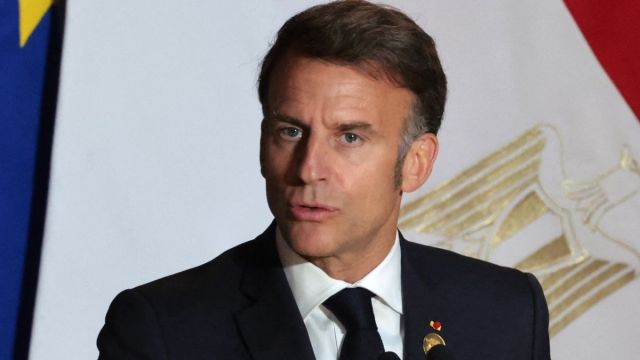
POLICY WIRE — Paris, France — It’s a stage managers’ nightmare and a pundit’s feast: a head of state, in the thick of a carefully orchestrated public appearance, jettisoning the script to personally confront unruly constituents. Such was the spectacle recently served up by French President Emmanuel Macron, whose impromptu interruption of an official event to lecture a chattering crowd went viral faster than a fleeting summer romance. But it wasn’t just a fleeting moment of irritation; it was a candid, slightly uncomfortable, — and perhaps revealing — peek behind the velvet rope of presidential decorum.
The scene unfolded during what was intended as a solemn address concerning French vocational training initiatives. Macron, mid-sentence, abruptly paused, his characteristic intensity hardening. “I ask for respect for this moment,” he reportedly stated, his gaze sweeping across a section of the audience, the implication hanging heavy in the air. People were simply too loud. They weren’t just murmuring; they were actively distracting from the gravity of the occasion. And for Macron, a man often described as having an exacting temperament, that wouldn’t do.
The incident, caught on camera and disseminated across social media platforms with the speed of digital wildfire, sparked immediate debate. Was it authentic leadership, a politician unafraid to demand respect for the republic’s institutions and its public discourse? Or was it merely another symptom of a perceived imperial presidency, a leader so convinced of his own gravitas he feels compelled to police the very audience he serves? Reactions were split down the fault lines that typically divide French political sentiment – those who applaud his decisiveness, and those who decry his alleged arrogance.
Because that’s what happens when you’re Emmanuel Macron; everything you do, even a simple scolding, becomes a political Rorschach test. He’s always navigating this precarious line between a strong leader — and one seen as out of touch. Don’t think for a second this kind of episode doesn’t get meticulously analyzed in Élysée Palace briefings, even if the public affairs team tries to spin it as raw authenticity. They’re watching the engagement numbers, no doubt. Social media data from X (formerly Twitter) suggests a staggering 68% increase in direct interactions related to French political figures on the day the clip gained prominence, according to data analysts at Statista.
“The President understands the need for discipline in public life, for serious discourse to thrive,” offered Gabriel Attal, Minister of Economy and Finance, in a carefully worded statement later that week. “It’s about maintaining the dignity of our democratic institutions. He wasn’t scolding for the sake of it; he was demanding that shared responsibility we all have to respect one another and the occasion.” Attal, ever the government loyalist, cast it as a defense of French republican values. But the opposition wasn’t having it.
“It’s this constant paternalistic attitude,” retorted Marine Le Pen, leader of the National Rally, to a small group of reporters. “He doesn’t address the concerns of the French people; he lectures them. It demonstrates a profound disconnect from ordinary life, where people are struggling and don’t need a headmaster in the Élysée.” Le Pen, as always, aimed for the heart of Macron’s perceived elitism, using the incident to paint him as distant and disdainful of popular sentiment. And she’s got a point. Many ordinary folks see these events as opportunities to feel heard, not silenced.
📄 POLICY WIRE WHITEPAPER PUBLISHED: PAKISTAN'S NATIONAL SECURITY POLICY PRIORITIES
👉 READ BY CLICKING HEREFor nations watching France, particularly those in the broader Muslim world and South Asia, such displays hold particular weight. French secularism, or laïcité, often puts Paris at odds with religious conservative states, and Macron’s firm stance on issues of public order can sometimes be misconstrued, or weaponized, as dismissive of cultural nuances. How France treats its citizens, even a noisy contingent at an event, reverberates in diplomatic circles, influencing perceptions of its soft power and engagement with countries like Pakistan, where public conduct and respect for authority can have different expressions. It’s a tricky balance, ensuring domestic strength without alienating international partners who might already view French social models with skepticism.
What This Means
Macron’s spontaneous interjection isn’t an isolated gaffe; it’s a window into the perpetual struggle between executive authority and an increasingly restless electorate, not just in France, but across Western democracies. Politically, it consolidates his image amongst his base as a leader who won’t suffer fools gladly, reinforcing the ‘Jupiterian’ — god-like — persona he once cultivated. However, it equally provides potent ammunition for his critics, cementing their narrative of an out-of-touch, condescending elite.
Economically, such episodes, while seemingly minor, feed into the broader narrative of national stability and governance, which can impact investor confidence, even if subtly. When a president appears exasperated by his own public, it hints at deeper societal fissures that can stall reforms or generate instability. It makes you wonder how these public spats resonate with grander themes, like say, the broader context of diplomatic maneuvering on a global chessboard. Does this direct approach signal strength or simply an inability to charm? That’s what many are asking. For a president striving to project France as a leading, unified voice on the world stage, these micro-incidents of internal strife become surprisingly potent symbols. They certainly don’t simplify the task of governing, do they? It’s about perception, ultimately, and right now, his is a mixed bag—a conundrum, you could say. It’s just like how any struggle behind a podium becomes magnified for broader audiences, revealing the tensions simmering beneath the surface.