


Diamonds and Debt: Yankees’ Mike Trout Gambit Exposes Brutal Sports Economics
POLICY WIRE — New York, United States — In the gilded cages of professional sports, where billions flow and dynasties are forged, human beings — transcendent talents and fresh-faced hopefuls alike —...

POLICY WIRE — New York, United States — In the gilded cages of professional sports, where billions flow and dynasties are forged, human beings — transcendent talents and fresh-faced hopefuls alike — get reduced to assets. They’re mere commodities on a spreadsheet, poker chips in a high-stakes game played by men in designer suits. And nowhere is that colder, sharper truth more evident than in the swirling rumors around the New York Yankees’ supposed pursuit of Angels slugger Mike Trout.
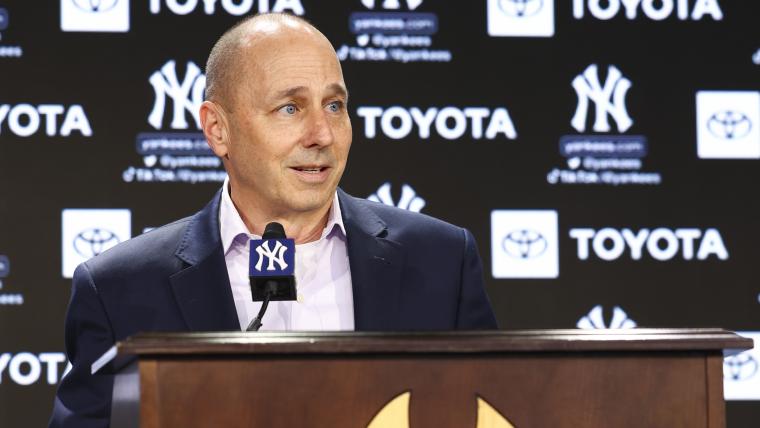
It’s not just a trade; it’s an autopsy of ambition, a brutal economic model laid bare. The talk, initially just whispery fan conjecture, posits the Yankees sending away their next generation—Jasson Dominguez, Spencer Jones, and Carlos Lagrange—to snatch a proven, if lately injury-plagued, superstar. Imagine the sheer audacity. They’re offering up the future, unwritten potential, for the now, for that gleaming World Series trophy Brian Cashman covets so fiercely. “We don’t chase headlines,” Cashman told a press gaggle, his eyes scanning the room, “we chase championships. Any serious franchise examines every viable pathway to optimize its roster.” That’s a careful, almost chillingly detached way to talk about other people’s careers, don’t you think?
The calculus is stark: The Yankees, riding high with a 25-12 record—the best in the American League as of an ESPN sports report early this season—see a clear path to October. They’re in “all-in” territory, as one unnamed executive put it, not just considering, but aggressively mapping out their championship window. Mike Trout, despite a recent history of frustrating injuries, remains an extraordinary force, a genuine, undeniable superstar. This season alone, he’s shown glimpses of that first-ballot Hall of Fame form, proving he still commands attention, still shifts momentum.
But the catch, oh, it’s a beauty. This trade, say the pundits, hinges on Trout’s desire to leave Anaheim. And the Angels, perennial bridesmaids in a league increasingly dominated by fiscal might, might just be amenable. Owner Arte Moreno, speaking to an Associated Press correspondent, stated with a sigh, “No one wants to lose a player like Mike. He’s family. But in this game, sometimes you have to make hard choices, very hard choices, for the health of the organization and the player’s own journey.” It’s a delicate dance, a performance of caring that belies the underlying cold pragmatism of professional sports. And sometimes, you just gotta let go.
The price for such proven firepower? Three young guns: Dominguez, a fleet-footed outfielder with a prodigious ceiling; Jones, another tantalizing prospect still finding his stride; and Lagrange, a pitcher whose arm possesses genuine upside. To many, it seems a steep tariff for a player who, while legendary, carries a fair bit of recent injury baggage. It’s like buying a luxury car, but it’s spent half its life in the shop. Still, for a franchise as deep-pocketed and globally ambitious as the Yankees, that gamble is just another entry in the budget line item marked ‘expendables’. After all, the market for talent—any talent—is truly global now; scouting departments have eyes everywhere, even the dusty ballfields of Karachi.
What This Means
This rumored deal isn’t just a baseball trade; it’s a stark reflection of the modern sports economy’s ruthless prioritization of immediate success over organic growth. It’s an investment strategy for billionaires. What you see is a shift, really—away from patient development and towards a mercenary approach where prospects are less future stars and more currency. You could liken it to venture capitalism, only the ‘startups’ are 20-year-old phenoms and the ‘exit strategy’ is a World Series title.
This “all-in” philosophy isn’t confined to American leagues, either. It’s a symptom of how global capital warps and accelerates elite competition everywhere, from the vast sums paid for footballers in Europe to the frenetic bidding wars in cricket leagues across South Asia. The pressure on franchises—and their wealthy owners—to deliver instant gratification for fanbases (and media partners) means long-term planning often takes a backseat to acquiring the glittering ‘name’ that sells jerseys and attracts eyeballs, be it from Times Square to the teeming streets of Dhaka. Because when billions are on the line, sentiment rarely wins out. And that’s the dirty truth, isn’t it? It’s not just about sport; it’s about power — and prestige.