


The Vatican’s Bernabéu Gambit: Pope Leo XIV Seeks Relevance on Football’s Hallowed Turf
POLICY WIRE — Madrid, Spain — In a move that’s less about piety and more about strategic positioning, the iconic Santiago Bernabéu Stadium—a veritable temple of global football—is set to host...

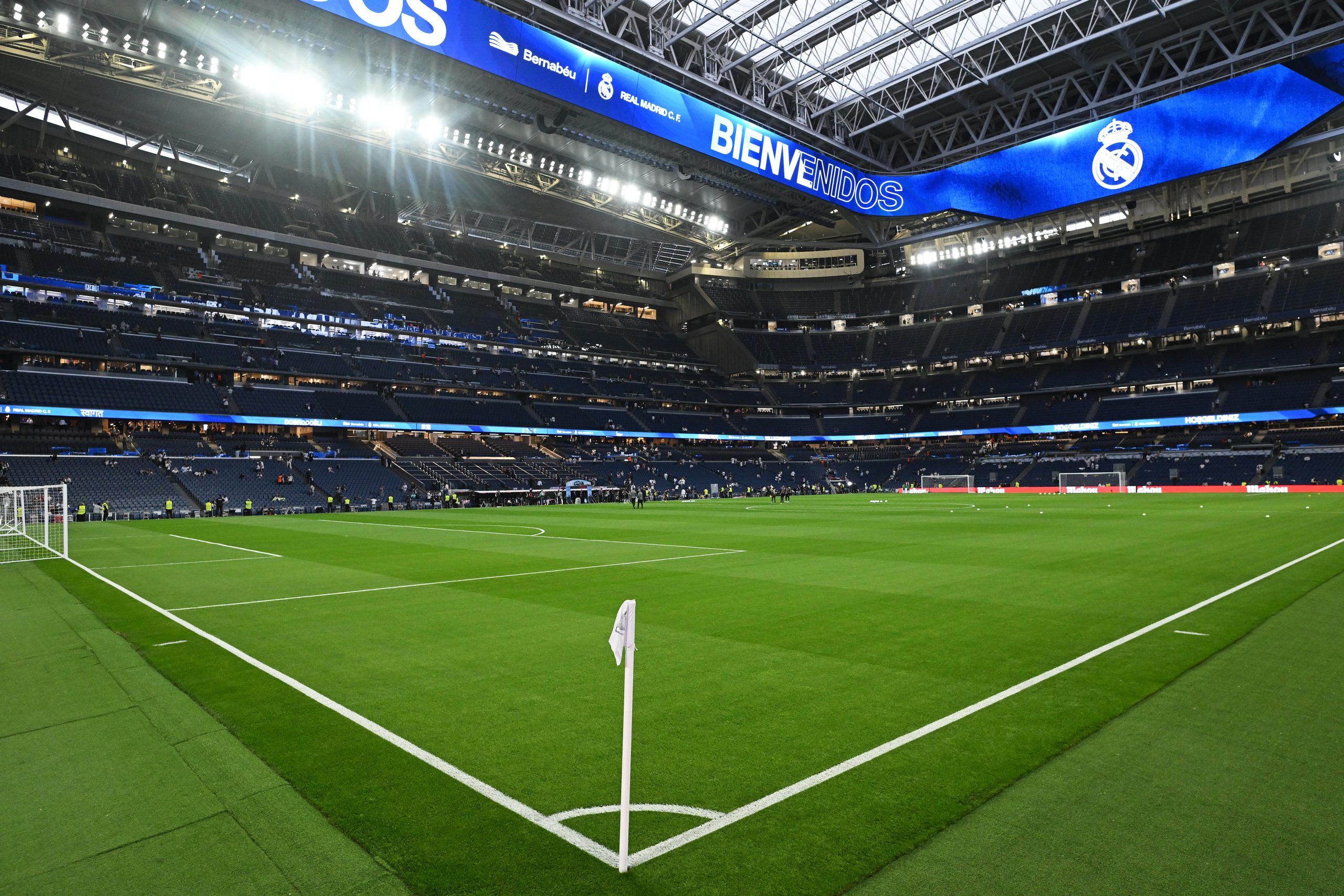
POLICY WIRE — Madrid, Spain — In a move that’s less about piety and more about strategic positioning, the iconic Santiago Bernabéu Stadium—a veritable temple of global football—is set to host Pope Leo XIV for an unprecedented encounter with the Madrid diocesan community. It isn’t just a logistical marvel; it’s a profound statement, one that signals the Vatican’s recalibrated approach to engaging a world increasingly detached from traditional religious institutions.
Behind the headlines of mere scheduling, a fascinating juxtaposition emerges: the grandeur of sport, synonymous with fierce rivalries and commercial spectacle, now momentarily cedes its stage to spiritual authority. This isn’t merely about accommodating large crowds; it’s a deliberate choice of venue, an acknowledgement that to capture the contemporary zeitgeist, the sacred must sometimes inhabit the spaces of the secular. And what space is more secularly revered in Spain than the home of Real Madrid? It’s audacious. It’s also, arguably, quite savvy.
Still, the symbolism isn’t lost on observers. Pope Leo XIV, known for his pragmatic pastoral approach, appears to be steering the Church into arenas previously considered beyond its purview. This isn’t a pilgrimage to a cathedral; it’s a strategic outreach event, designed to resonate with a populace more accustomed to chanting hymns of victory than reciting prayers. Monsignor Ricardo Soler, Vicar General of the Madrid Archdiocese, couldn’t mask his excitement. “It isn’t merely a logistical feat; it’s a profound statement,” Soler observed, a slight tremor in his voice. “We’re reaching out, quite literally, to meet our people where they’re, in the very heart of their civic life. We’re showing that faith has a place everywhere, even on grounds hallowed by sporting triumphs.”
At its core, this event underscores the continuing challenge faced by organized religion across much of Europe: declining attendance, an aging demographic, and stiff competition from countless secular pursuits for people’s time and attention. The Bernabéu, with its formidable capacity of 81,044 spectators (source: Real Madrid C.F. official website), provides an unparalleled platform for visibility and—more critically—demonstrated strength in numbers. It’s a calculated effort to rekindle a collective religious identity, to show the faithful that they’re still a formidable body, capable of filling even the grandest of venues.
“We can no longer confine the sacred to ancient stone walls,” Pope Leo XIV reportedly quipped to aides, his voice a low rumble, “The spirit finds its resonance wherever hearts gather, be it under a frescoed dome or a grand stadium’s canopy. Our message must echo where the people are, not just where they once were.” This sentiment reflects a broader Vatican strategy to modernize its outreach, to harness the power of mass gatherings and media visibility – much like a political campaign, one might argue – to counter the erosion of religious observance. They’ve learned, it seems, that spectacle, even spiritual spectacle, draws attention.
And the implications stretch well beyond the boundary of Madrid. In an era where the Catholic Church grapples with complex interfaith dialogues and sometimes hostile geopolitical currents, particularly in regions like South Asia and the Muslim world, such a public display of unity and organizational prowess serves multiple functions. It projects an image of strength — and continuity at a time when its global influence is often questioned. For Muslim communities, especially in Pakistan where Christian minorities face considerable challenges, this event could be seen either as a reassuring sign of vibrant faith, or perhaps, for some, as a demonstration of renewed Western religious assertiveness. The Vatican’s soft power, after all, operates on a global stage, and every public action is subject to diverse interpretations.
What This Means
This Bernabéu meeting isn’t just a grand gathering; it’s a consequential geopolitical — and sociological statement. Politically, it signals the Church’s continued role as a significant, albeit evolving, soft power player. By engaging with popular cultural venues, the Vatican attempts to reassert its relevance in the public square, potentially influencing social discourse and even policy debates in traditionally Catholic nations. Economically, while not a direct revenue driver for the Vatican (at least not overtly), such events generate significant local commerce—tourism, hospitality, merchandise—and elevate the host city’s profile. It’s also a shrewd public relations exercise, costing far less than a full-scale international tour while delivering comparable media impact. For Madrid, it’s an undeniable boon.
Sociologically, it represents an ongoing experiment in reconciling traditional faith with modern secularism. Can a medieval institution truly thrive in the digital age by co-opting its secular symbols? The spectacle itself might attract lapsed Catholics or those curious about faith, presenting an opportunity for re-engagement. It’s a high-stakes gamble in Europe’s financial football arena of ideas, where the Church is fighting not just for souls, but for cultural space and continued societal influence. The scoreboard, in this particular match, won’t show goals, but rather, attendance figures and public sentiment, both of which the Vatican will be watching with acute interest.