

Macron’s African Gamble: A €23 Billion Bet on Shifting Sands
POLICY WIRE — Nairobi, Kenya — The optics, as always, were impeccable. French President Emmanuel Macron, a man perpetually keen to recast the narrative, stood in Nairobi, painting a grand vision of a...

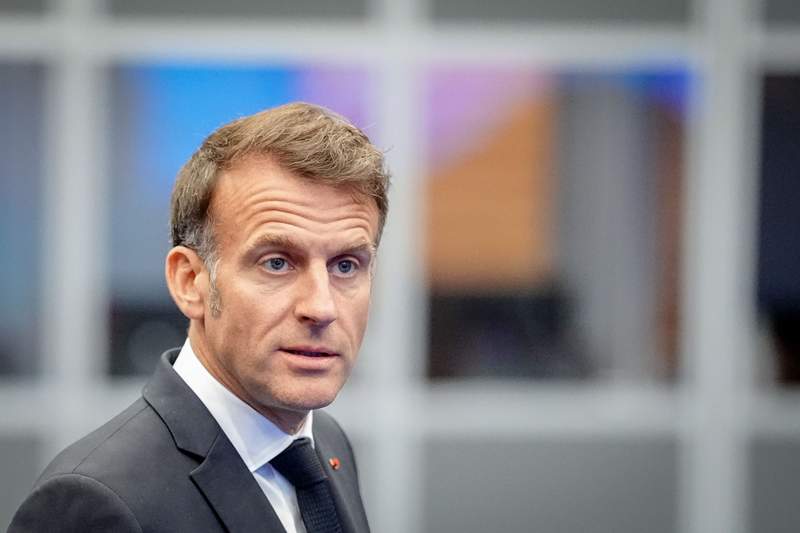
POLICY WIRE — Nairobi, Kenya — The optics, as always, were impeccable. French President Emmanuel Macron, a man perpetually keen to recast the narrative, stood in Nairobi, painting a grand vision of a “renewed partnership” with Africa. His pronouncement: a staggering €23 billion investment package. But scratch beneath the surface of soaring rhetoric and handshake diplomacy, and you find something altogether more complicated, something that feels a bit like a high-stakes poker game played with European money and African aspirations.
It’s not just about the money, is it? Never is. The true currency here, folks, is influence. Macron’s pledge, unveiled at the Global Gateway Africa-Europe Investment Forum, isn’t some altruistic handout. No, it’s a strategic gambit, designed to reassert European — and specifically French — relevance on a continent where traditional Western hegemony feels increasingly, well, passé. For decades, the narrative has been about aid, sometimes dressed up as development. Now, Paris wants to talk investment, co-production, — and sustainable growth. Because that’s what Africa’s rising economies are demanding. It’s a belated recognition, perhaps, that the continent isn’t simply a recipient; it’s a rapidly growing market, a geopolitical player.
And Macron, bless his soul, has a way with words. “We’re moving past the outdated models of past aid relationships,” he declared, likely with that characteristic intensity. “This is about co-ownership, real capacity building, — and ensuring that African initiatives drive African prosperity. It’s not charity; it’s an intelligent investment in our shared future.” But ask leaders across the continent, particularly those less charmed by Gallic overtures, and you hear a different kind of quiet calculation. They’re weighing these billions against what Beijing offers—or what Washington *might* offer, if it ever gets its act together beyond lip service.
The funds, they say, are earmarked for everything from renewable energy projects and sustainable infrastructure to digital connectivity and education. Fine, good intentions all around. But many Africans remember promises made—and broken—before. They’ve heard the talk about partnership. Now, they’re looking for tangible, equitable returns, not just recycled colonial metaphors with fresh paint. Kenya’s President, William Ruto, a pragmatic operator if ever there was one, likely welcomed the capital. But he wouldn’t be doing his job if he wasn’t keeping an eye on other options. “Africa is open for business, indeed,” Ruto might’ve dryly noted behind closed doors. “But we’re also making sure that business benefits Africa first. Our friends in Europe understand that the global landscape has changed. We’re not exclusively looking one way anymore.”
The continent isn’t a monolith, of course. Countries like Egypt, with its deep historical and trade links to Europe, will engage differently than, say, Niger, which is grappling with French military withdrawal and newfound regional instability. But a common thread runs through many African capitals: a growing appetite for genuine sovereignty and diversified alliances. This isn’t just about cash, it’s about dignity—something many felt was missing from previous relationships. Indeed, some analyses suggest that despite repeated Western pledges, net official development assistance to Sub-Saharan Africa has stagnated in real terms over the past decade, barely increasing beyond an inflation-adjusted annual average of $50 billion, according to UN economic reports. So, €23 billion, while substantial, also feels like a catch-up play.
📄 POLICY WIRE WHITEPAPER PUBLISHED: PAKISTAN'S NATIONAL SECURITY POLICY PRIORITIES
👉 READ BY CLICKING HEREThe context for Macron’s bold play isn’t solely African. It’s a global chessboard, shifting with geopolitical currents that sweep from the Sahel to the South China Sea. China’s Belt and Road Initiative, for all its complexities and debt trap criticisms, has redefined the scale of infrastructure investment available to developing nations. Pakistan, for instance, has leveraged—and sometimes struggled with—its own strategic partnerships, particularly with China, in ways that offer both immense opportunities and potential dependencies. Nations in the Muslim world, from North Africa to Southeast Asia, are keenly observing these new European overtures, assessing whether this generation of investment is truly different or simply the latest iteration of familiar power dynamics. Everyone’s looking for the best deal, a balance of support without undue influence. The ghost of geopolitics is everywhere.
What This Means
Politically, Macron’s ambitious pledge represents France’s—and by extension, Europe’s—desperate bid to retain relevance. It’s an acknowledgment that past models of engagement are insufficient against the backdrop of an increasingly multipolar world, where China, Russia, and even Gulf states are active players. Expect to see this investment packaged as an antidote to perceived neo-colonial practices or debt-trap diplomacy, whether that characterization holds up in practice is another story. It also suggests a new level of desperation from Paris to stem the tide of anti-French sentiment, particularly in its former colonial territories.
Economically, if this money flows responsibly and with genuine local partnership—and that’s a sizable “if”—it could spark real development in key sectors. Think green energy jobs, upgraded ports, — and broader digital access. But Africa’s governments aren’t monolithic, — and neither are their priorities. Expect fierce competition among African nations to secure portions of these funds, potentially exacerbating internal political divisions or leading to a scramble for projects that don’t always align with long-term, equitable development goals. It’s a vast sum, certainly, but only time will tell if it transforms into genuine, self-sustaining growth, or if it simply serves as a fresh coat of paint on a very old, very complex colonial-era edifice.