


Dignity on Demand: Albuquerque’s Streets and the High Price of Neglect
POLICY WIRE — ALBUQUERQUE, N.M. — A mother buries her child, lost to the unforgiving streets and the insidious grip of addiction. For Carmen Morales, that unspeakable grief wasn’t a catalyst...

POLICY WIRE — ALBUQUERQUE, N.M. — A mother buries her child, lost to the unforgiving streets and the insidious grip of addiction. For Carmen Morales, that unspeakable grief wasn’t a catalyst for despair. No, it became a fierce, burning engine for something else entirely: a street-level reckoning with the city’s silent shame, a fight to give others what her son, perhaps, couldn’t get.
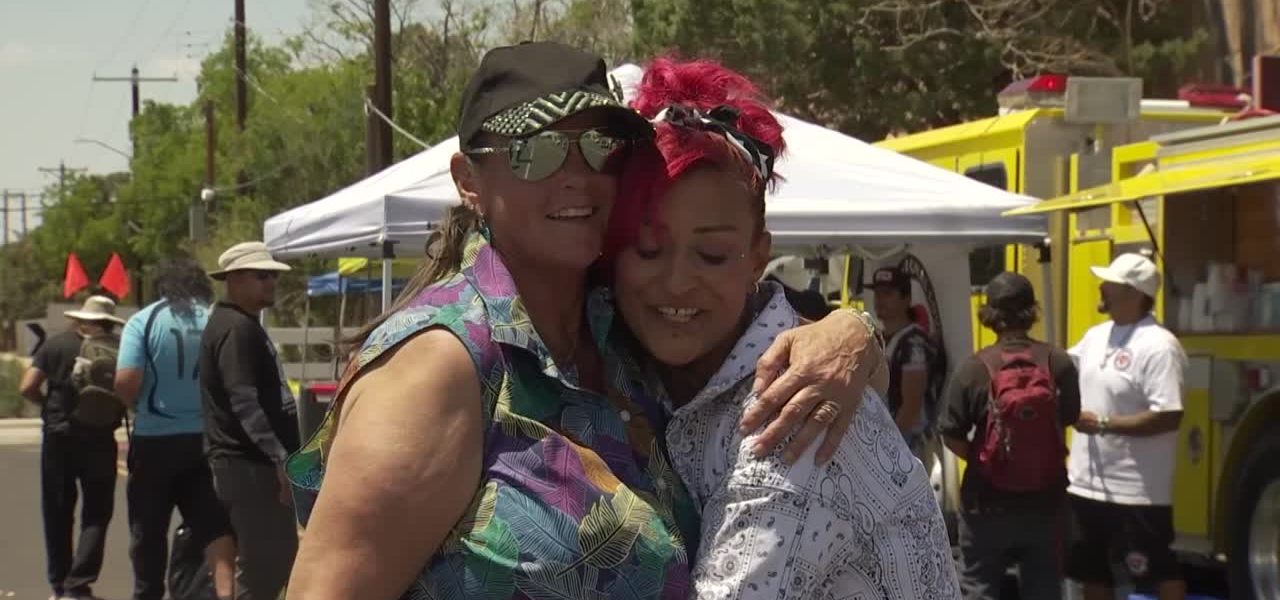
Because sometimes, it takes that kind of raw, personal devastation to light a fuse under bureaucratic apathy, doesn’t it? Morales didn’t just mourn; she organized. She created ‘Dignity Day,’ an event that recently offered a vital lifeline to over 250 people teetering on the precipice of oblivion in Albuquerque, giving them something more than just resources—a glimpse of self-worth that modern society seems hell-bent on denying its most vulnerable.
It’s not just about a roof. Anyone who’s been truly down — and out will tell you that. It’s the basics: a shower, a fresh shirt, a haircut that doesn’t scream ‘discarded.’ Paul Sanchez, a volunteer for Unconditional Love, a local nonprofit that helps make these days happen, understands this intimately. He knows what it’s like. He’s been there, clawing his way back. He now helps others through their housing program. “You forget who you are when you’re out there, just trying to survive,” Sanchez confided, his voice raspy with remembered hardship. “And then someone hands you a clean towel, a new shirt… you look in the mirror, and for a second, you remember who you were. That’s everything.” Marvin Erb, too, fresh from a free haircut—courtesy of a volunteer salon—echoed the sentiment. “Hard. It’s just hard out here,” he mumbled, running a hand over his newly trimmed hair. “You see weird stuff. Makes you not want to be on the streets. But people *do* need the help. It’s here, sometimes.”
These aren’t luxuries; they’re foundational steps toward reclaiming a life. Unconditional Love, alongside Morales’s efforts, provides everything from mental health support to case management, a comprehensive approach in a world that too often prefers superficial fixes. They don’t just offer food; they offer an off-ramp from the misery highway. And that’s no small feat, not when official figures from the U.S. Department of Housing and Urban Development reported a staggering 653,104 people experiencing homelessness on a single night in 2023 nationwide, a sharp 12% increase from the year prior. Albuquerque’s streets bear witness to that national trend.
But can a single day, however well-intentioned, truly make a dent in such an intractable problem? City Councilman Arthur Gonzales, known for his pragmatic approach to urban policy, offers a measured assessment. “We applaud Ms. Morales’s tireless work; community-led initiatives are absolutely essential,” Gonzales stated, acknowledging the reality that city coffers are often stretched thin. “However, systemic challenges require systemic solutions—sustained funding for affordable housing, comprehensive mental healthcare, and robust addiction treatment programs. Without that, we’re simply patching bullet holes with band-aids, however compassionate those band-aids might be.” Indeed, local officials frequently find themselves juggling urgent needs with finite budgets, a high-wire act where the safety net is perpetually fraying.
Morales herself is no stranger to the precipice; she’s navigated homelessness — and addiction, emerging six years sober. “In recovery, you learn to keep trying,” she mused. “It’s never just one try. And I want them to know they can keep trying. They deserve that chance.” Her personal journey provides an authenticity that cuts through political rhetoric and academic analysis, grounding the effort in lived experience. But it also points to something much bigger than individual triumph, a broader social responsibility that many elected officials find inconvenient to embrace fully.
📄 POLICY WIRE WHITEPAPER PUBLISHED: PAKISTAN'S NATIONAL SECURITY POLICY PRIORITIES
👉 READ BY CLICKING HEREWhat This Means
Carmen Morales’s ‘Dignity Day’ isn’t just a feel-good story; it’s a stark mirror held up to societal failure, a stark reminder that when governments fall short, individuals must pick up the slack. The very existence of such an event—born from a mother’s profound loss—highlights a catastrophic breakdown in the social safety net, and in how we value human beings when they lack a postal address. The economic implications are brutal: untreated homelessness doesn’t save money; it costs communities more in emergency services, healthcare, and public safety interventions than preventative measures ever would. For every individual helped back onto their feet, there are countless others trapped in a cycle of destitution, a burden that society ultimately bears, one way or another.
And it’s not a uniquely American problem, of course. Across South Asia, in cities like Karachi or Dhaka, millions of internal migrants and displaced persons face similar battles against precarity and a fundamental lack of political will to adequately address growing urban informal settlements. Dignity, or the lack thereof, operates on a universal plane. In Muslim-majority nations, the concept of Zakat – obligatory charity – exists, theoretically, to mitigate such widespread suffering. Yet, the systemic issues persist globally. Albuquerque’s plight, therefore, offers a localized lens through which to view a broader, international crisis of neglect and systemic disadvantage, where individuals like Morales become unwilling—yet resolute—frontline commanders in a war too few are even willing to acknowledge, let alone win.
Morales is planning another Dignity Day in three months. Because, frankly, the need isn’t going anywhere. Neither, it seems, is the unwavering spirit of one mother determined to salvage dignity where society has too often seen only destitution. And that’s a lesson governments, from Albuquerque to Islamabad, would do well to internalize.