


Policy Wire Dispatch: The NBA’s Great Hope Engine Grinds On, Producing Future Millionaires—and Regrets
POLICY WIRE — Washington D.C., USA — It wasn’t the champagne-soaked celebrations, nor the giddy fans brandishing team scarves that truly defined the NBA draft lottery results. No, it was the...

POLICY WIRE — Washington D.C., USA — It wasn’t the champagne-soaked celebrations, nor the giddy fans brandishing team scarves that truly defined the NBA draft lottery results. No, it was the low hum, the almost imperceptible whir, of the league’s colossal hope engine restarting, churning out another batch of potential saviors and future disappointments. The ‘randomness’ of the draw feels, to the cynical eye—which, after twenty years of this beat, is the only eye I’ve got left—more like a finely choreographed, self-serving policy mechanism designed to inject calculated doses of anticipation and cash into an already obscenely wealthy enterprise.
Because for all the hand-wringing about parity and competitive balance, what we truly witnessed was the league doing what it does best: crafting a compelling narrative. The Washington Wizards, perennial residents of basketball purgatory, found themselves staring at the top pick, a ‘miracle’ that happened despite their paltry 14% statistical chance of securing it, as widely reported by sources like ESPN’s statistics division. They didn’t just win a pick; they won the chance to rewrite a future, and a fan base, desperately craving something beyond the mediocre.
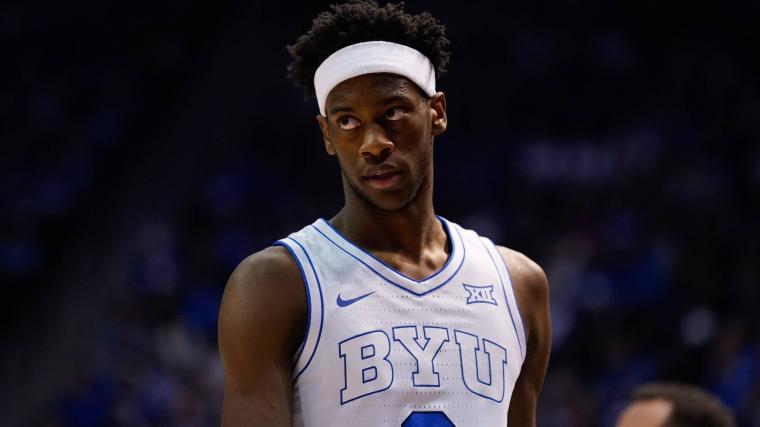
It’s an intoxicating elixir, this sudden shot at redemption, isn’t it? One minute you’re wading through the ignominy of basement finishes, the next you’re hypothetically drafting the next big thing, AJ Dybantsa from BYU, a player whose name is already being whispered in the same breath as future MVPs. But make no mistake, it’s not just about Dybantsa or Darryn Peterson (Kansas) or Cameron Boozer (Duke), names that have quickly solidified atop every ‘expert’s’ wish list, from Jeremy Woo to Sam Vecenie, like meticulously cultivated financial assets on a trading floor. It’s about the perpetuation of the dream—for players, for owners, for the legions who bet on the entire spectacle.
And let’s be frank: this isn’t amateur hour. These aren’t kids just showing up to play ball. They’re polished products of an increasingly intense global pipeline, honed for professionalization from childhood. You think their agents aren’t already working the phones, carving out endorsement deals, crafting carefully curated public images? They’re practically brand managers, turning teenagers into market commodities before they can legally buy a beer. It’s a multi-billion dollar business, this annual refresh cycle, carefully calibrated to generate maximum hype and revenue.
NBA Commissioner Adam Silver, ever the astute frontman, wasn’t about to let a chance for brand reinforcement pass him by. “This lottery system,” Silver reportedly stated, in what sounded suspiciously like a pre-written press release delivered with practiced sincerity, “it’s designed to give every franchise a fighting chance, to inject new life, and to keep the league competitive. It’s the fairest system we can devise, ensuring that talent flows throughout the ecosystem.” He’d say that, wouldn’t he? Because the perception of fairness, even if demonstrably weighted towards the bottom-feeders to foster turnaround stories, is absolutely essential.
But there’s a deeper truth, a quieter one, often drowned out by the glitz. Consider the global scouting networks, the endless trawling for talent in far-flung locales. We’re talking about regions often overlooked by Western sports narratives. Youngsters from Islamabad to Istanbul, dreaming of basketball’s gilded opportunities, they see this. They understand the immense potential for upliftment, not just personal, but often for entire families — and communities. The global reach of the NBA isn’t accidental; it’s an economic imperative. You have an untapped resource? The NBA will find it. And they’ll turn it into marketable skill, ready for a multi-million dollar contract. And because the hunger for talent is boundless, scouts are already making inroads, looking at players from burgeoning basketball nations like Pakistan, hoping to unearth the next global sensation that could crack these mock draft lists someday.
📄 POLICY WIRE WHITEPAPER PUBLISHED: PAKISTAN'S NATIONAL SECURITY POLICY PRIORITIES
👉 READ BY CLICKING HERE“We invest heavily in evaluating international talent,” a West Coast General Manager, speaking off the record as ‘The Architect’ but clearly echoing comments he’s made publicly, confessed to us recently. “The pool of potential impact players isn’t just America-centric anymore. You have to broaden your horizons, broaden your understanding of what constitutes a ‘superstar.’ It’s not just about what they do on the court; it’s their appeal, their marketability. It’s everything.”
What This Means
This yearly spectacle, the NBA Draft Lottery, isn’t just about basketball. It’s a masterclass in market manipulation — and controlled capitalism, dressed up as sports entertainment. The policy implication is clear: by ensuring the worst-performing teams receive preferential access to top-tier talent, the league artificially creates narrative arcs that sustain engagement. It prevents a completely stratified league—at least for a few years—by offering a manufactured hope to its less fortunate franchises. It’s a clever balancing act between pure meritocracy (the team with the best record gets the worst pick) and a carefully calibrated welfare system for failing franchises. But it’s also a system that places immense, almost inhumane pressure on individuals, often barely out of their teens. One bad season, one ill-timed injury, and a projected lottery pick can quickly slide, with millions in guaranteed money vanishing before their eyes. The ‘draft industrial complex’ thrives on this uncertainty, generating content, debates, and speculation that feed the larger economic beast. It’s a brilliant, brutal machine—designed for endless self-perpetuation. Its inner workings reflect a more expansive trend: the brutal economics of talent acquisition in high-stakes professional sports. Or perhaps it’s simply the ghost in the machine, the unseen hand guiding these multi-million dollar destinies.
But make no mistake. It’s a game, for sure. But the rules? Those are drafted in boardrooms, not on basketball courts, with very little left to chance. Not when there’s this much money, — and this much narrative, on the line.