


The Brutal Economics of Denver’s Latest Football Gamble: A Receiver’s Last Stand
POLICY WIRE — Denver, Colorado — It isn’t about highlight reels or endorsement deals for Mike Woods. Not anymore. For the veteran wide receiver, signing what one insider termed a ‘standard...

POLICY WIRE — Denver, Colorado — It isn’t about highlight reels or endorsement deals for Mike Woods. Not anymore. For the veteran wide receiver, signing what one insider termed a ‘standard one-year, vet-minimum deal’ with the Denver Broncos isn’t the fulfillment of a dream, but rather a temporary reprieve. It’s a stark, unvarnished look at the NFL’s brutal, transactional underbelly; where talent meets desperation, and where a player’s shelf life can be shorter than a presidential election cycle.
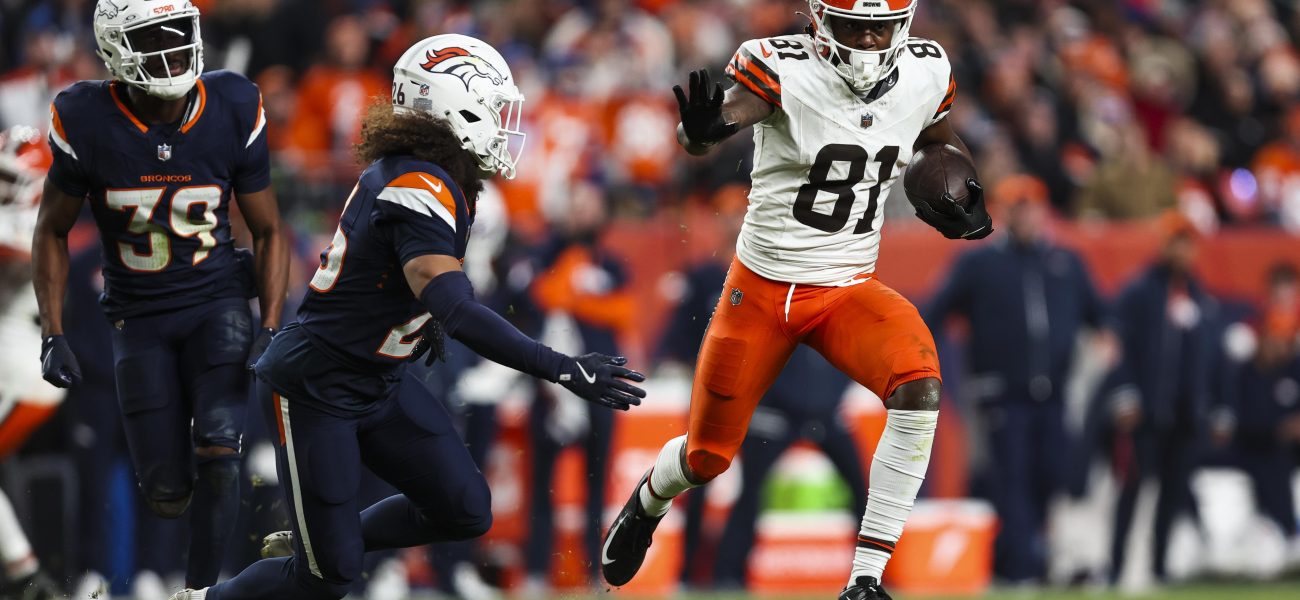
Woods earned his keep the hard way: a tryout. And ‘tryout’ in NFL parlance often translates to ‘last chance saloon.’ After two seasons as a late-round draft pick with the Cleveland Browns, appearing in a mere 15 games for a total of 12 receptions and 110 yards, he was effectively out. A stint on the Green Bay Packers practice squad offered little more than a whisper of hope. Now, in the thin air of Denver, he’s not just competing for a job; he’s battling for the continued existence of a career that, by conventional measures, should’ve been over.
But that’s professional football for you. A perpetual, high-stakes game of musical chairs, particularly at crowded positions like wide receiver. The Broncos’ receiving corps isn’t just stacked; it’s practically overflowing. They’ve already got Jaylen Waddle, Courtland Sutton, Troy Franklin, — and Marvin Mims firmly entrenched. Then there are the hungry prospects—Pat Bryant, Lil’Jordan Humphrey, Michael Bandy, and a host of undrafted rookies—all clawing for an improbable slot. Woods’ signing shoves the Broncos roster to 92 players, which means another poor soul’s hopes just got crushed to make room. (Because someone always gets the short end of the stick in this business, don’t they?)
His scouting report from the 2022 NFL Combine described a player with ‘decent build-up speed’ and ‘improving hands’ but ‘tight hips’ and unlikely to ever be a ‘contested catch guy.’ Essentially, a serviceable but unspectacular talent in a league that constantly demands spectacle. A few years in, those observations likely still hold water. Sometimes, a raw skill set only takes you so far. That’s why these opportunities? They become the difference between a new contract — and a quiet return to civilian life.
“We’re always looking for competition,” Head Coach Sean Payton is rumored to have told associates. “Especially in a crowded room. Every slot on this roster? It’s earned, not given.” It’s a sentiment that rings true, a terse acknowledgment of the zero-sum nature of NFL roster building. For a veteran like Woods, this isn’t just about ‘earning it’—it’s about demonstrating value so overwhelmingly that you make it impossible for them to cut you. An NFL player’s average career, as an unforgiving statistic from the National Football League Players Association once put it, stands at a mere 3.3 years. Woods has surpassed that; now he’s trying to defy the gravity of diminishing returns.
And what exactly does this deal get him? A veteran-minimum salary. Enough to live on, sure, but a far cry from the glittering contracts of the league’s top performers. He’s now in a fight, likely with Lil’Jordan Humphrey, Michael Bandy, and all those fresh-faced rookies, for a practice squad spot—not even the coveted 53-man roster. It’s an exercise in humility and a stark reminder that even within the echelons of professional sport, the economic realities are brutally uneven. Some sign for millions; others for scraps. The system tolerates no sentiment.
📄 POLICY WIRE WHITEPAPER PUBLISHED: PAKISTAN'S NATIONAL SECURITY POLICY PRIORITIES
👉 READ BY CLICKING HERE“Mike Woods isn’t flashy, he’s a grinder,” stated veteran NFL analyst Greg Rosenthal. “But sometimes, those are the guys who stick around longest. The ones who’ve been kicked around know how to hold on.” Rosenthal, known for his grounded assessments, often highlights these players, recognizing the grit required just to remain marginally employed. This struggle isn’t unique to the gridiron, either. Across the globe, from the labor markets of Lahore to the tech hubs of Silicon Valley, the pursuit of opportunity, often precarious, drives countless individuals to constantly prove their worth against fierce competition. It’s the human condition, writ large on a professional sports field.
What This Means
This signing isn’t a headline-grabber for the Denver Broncos, not by a long shot. But it’s a political-economic parable playing out in real-time. It illustrates the relentless churn of professional sports management, where talent is a fungible commodity and roster spots are zero-sum political capital. Teams continually seek marginal gains, scouring every corner for a hidden gem or, more often, a body to fill out a practice session. Woods represents that marginal gain, a low-cost, high-upside gamble. For the team, it’s savvy business; minimal outlay for potential, however slim, to deepen their bench. For Woods, it’s an economic lifeline. It’s the constant fight for survival in a hyper-competitive arena, echoing struggles far beyond the stadium lights – the small businesses vying for market share, nations attempting to position themselves in complex global trade, or an entire generation grappling with precarious employment.
The league, ultimately, is a meritocracy fueled by ruthlessness. Loyalty is a concept discussed by fans, not practiced by front offices. Players like Woods serve as a vital, if largely unseen, cog in this machine: they provide competition, absorb practice reps, and fill out the ranks, knowing full well that they’re expendable at a moment’s notice. His battle for relevance? It’s not just a personal quest; it’s a microcosm of how value is created, contended for, and ultimately, assigned, in one of the most visible capitalist enterprises in America.