


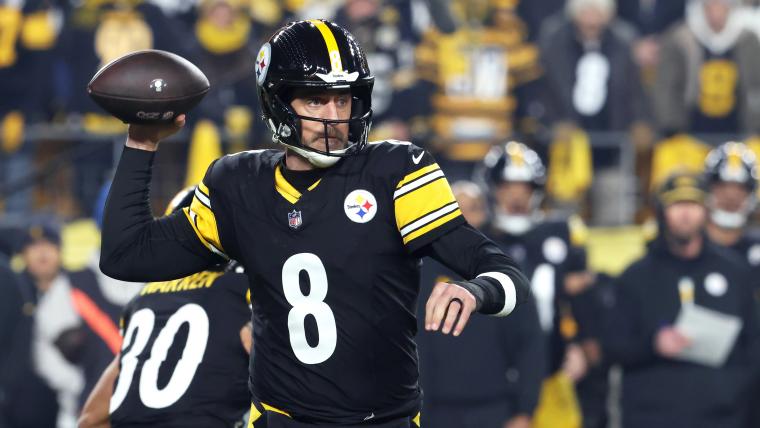
The Gerontocracy Gamble: Steelers’ Super Bowl Bid Hinges on Age, Not Agility
POLICY WIRE — Washington, D.C. — You’d think by now, with all the data, all the consultants, all the advanced analytics, someone would’ve figured out a more elegant path to glory. But here...

POLICY WIRE — Washington, D.C. — You’d think by now, with all the data, all the consultants, all the advanced analytics, someone would’ve figured out a more elegant path to glory. But here we’re. Pittsburgh’s football outfit, the venerable Steelers, finds itself locked in a peculiar high-stakes waiting game, its organizational future seemingly tethered to the whim of a single, well-aged quarterback. Aaron Rodgers. Remember him? He’s the enigmatic gunslinger, turning 42 soon—or he might have already, depending on your publication’s deadlines—and he’s got everyone, from the front office to the beer vendors, holding their collective breath. And it’s not just about if he plays, but how he plays, because frankly, Father Time remains undefeated.
It’s a peculiar scenario, one that speaks volumes about the win-now mentality pervading not just professional sports, but boardrooms and political campaigns across the globe. Pittsburgh isn’t just looking to contend; they’re trying to replicate a past formula with increasingly vintage ingredients. It’s like watching a high-powered startup pivot hard into dial-up modems. But for some, the tried — and true carries an irresistible, if illusory, charm.
The club has made some truly bewildering moves. Look, I’m no gridiron guru, but when you trade for someone like Michael Pittman Jr., sign Jamel Dean and Rico Dowdle, and then dust off guys like Cameron Heyward, T.J. Watt, and Jalen Ramsey—all excellent players, mind you, but none of them spring chickens—it’s less about building a dynasty and more about papering over cracks. Sports Illustrated’s Albert Breer observed it starkly: “It’ll take the Steelers not getting beat up and worn out like older teams tend to.” That’s not exactly a ringing endorsement, is it?
Because they’ve opted for instant gratification over long-term development. No serious push for their younger quarterback prospects, Will Howard or Drew Allar, anywhere in sight. It’s the institutional equivalent of a national government neglecting infrastructure for flashy, temporary projects. It might look good on paper, might even feel good for a bit. But gravity eventually reasserts itself.
“Look, you spend enough years at the top, — and folks start wondering when you’ll just… fade away,” offered Rodgers recently, in a characteristic display of existential musing to a friendly podcaster. “But I’m still here. Or I could be. That’s the beauty of it, isn’t it?” It perfectly encapsulates the alluring unpredictability that makes him a spectacle, and the potentially fatal flaw in Pittsburgh’s grand scheme. Betting the farm on such mercurial genius? It’s certainly a strategy. Perhaps more accurately, it’s a prayer.
Consider the coaching change. Hiring a seasoned hand like Mike McCarthy—Rodgers’ former Super Bowl-winning mentor—to replace the iconic Mike Tomlin (who has since gone on to explore interests ‘outside of football,’ as the official statement politely put it) isn’t about fostering new talent. It’s a clear directive, signed in bold: Win. Now. Or else. Art Rooney II, the Steelers’ long-serving owner, framed it rather bluntly last quarter. “The Pittsburgh Steelers don’t build for next year; we build for now. Our organization, our fans, they expect nothing less than contendership. Sometimes, you gotta bet on experience.” A statement steeped in legacy, ignoring the cold hard facts that experience often comes with creaking joints and diminishing returns.
📄 POLICY WIRE WHITEPAPER PUBLISHED: PAKISTAN'S NATIONAL SECURITY POLICY PRIORITIES
👉 READ BY CLICKING HEREIndeed, NFL player salaries represent a significant investment, with the average active player making about $860,000 annually. For veterans, that number escalates quickly into the multi-millions. If those aging bodies can’t consistently deliver on their gargantuan price tags, it warps the entire financial structure of the team. That’s a gamble few other industries could sustain for long without shareholder revolt. It also contrasts sharply with the lean operational models often seen in developing economies, say in South Asia, where burgeoning youth populations are seen as long-term assets, even if short-term economic gains are harder to extract. The pursuit of fleeting success, in many contexts, has its downsides. You’ve got to find that balance.
What This Means
Pittsburgh’s current strategy serves as a stark metaphor for the inherent tension between immediate gratification and sustainable development, a dilemma not exclusive to the football field. It’s a reflection of political cycles demanding instant policy wins, corporate cultures chasing quarterly earnings boosts, and even nations leaning heavily on charismatic, long-serving leaders—think certain South Asian nations or Middle Eastern monarchies—rather than investing in robust, younger institutions. The hope, it seems, is that Rodgers—a singular, if increasingly volatile, figure—can single-handedly overcome systemic age and inertia. Such bets are inherently risky. When the cornerstone eventually splinters, the whole edifice can come tumbling down. This isn’t just about one football team’s fate; it’s about a widespread societal tendency to mortgage the future for a glimmer of glory today. Just like Napoli’s delicate dance around aging star players struggling to maintain peak performance, or a political party relying solely on its elder statesman, the consequences of relying on ‘proven’ but diminished assets are never cheap, nor are they certain.
It creates a policy tightrope, where every decision becomes a gamble against biology, an act of faith against actuarial tables. The Steelers’ board has gone all-in. They’re chasing a ghost of seasons past. And whether Rodgers actually takes the field, or hangs up his cleats, the long-term repercussions for the organization are set. They’ve picked their poison, or perhaps, their elixir. But the real bill always comes due.