


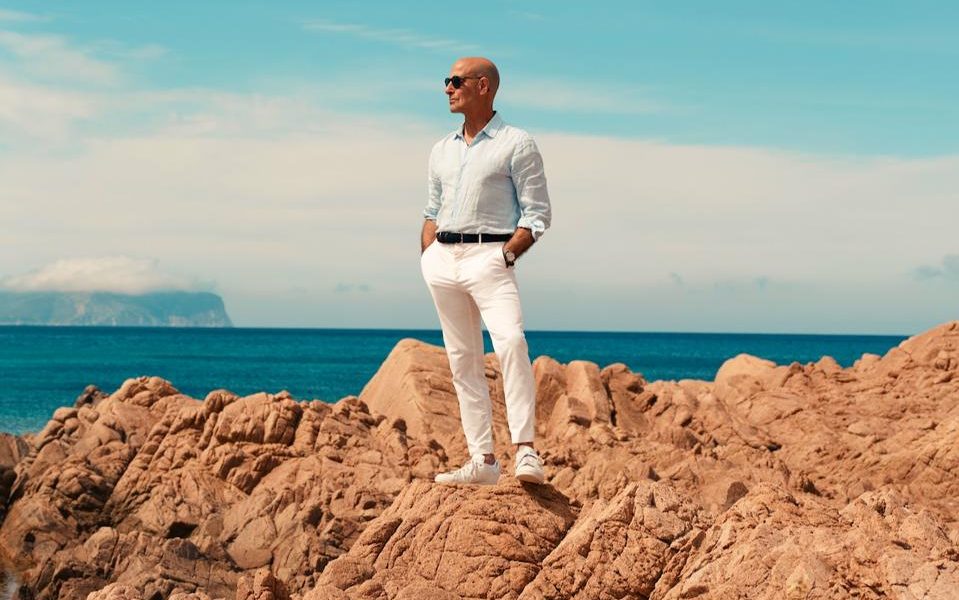
Stanley Tucci’s Italy: Selling an Illusion of ‘Authenticity’ in a Jaded World
POLICY WIRE — ROME, ITALY — Another year, another celebrity-guided culinary odyssey. Stanley Tucci, bless his affable heart, has once again whisked audiences away to Italy’s sun-drenched vineyards...

POLICY WIRE — ROME, ITALY — Another year, another celebrity-guided culinary odyssey. Stanley Tucci, bless his affable heart, has once again whisked audiences away to Italy’s sun-drenched vineyards and bustling trattorias. On the surface, it’s just another charming travelogue; below, it’s a masterclass in soft power, a carefully curated illusion of ‘authentic’ experience broadcast globally, feeding into an aspiration economy where picturesque escapes sell more than just plane tickets. The new season is here. And it’s not just about what’s on the plate anymore.
It’s tempting to simply enjoy the vicarious pleasure, the perfectly golden arancini, the impossibly vibrant Amalfi sunsets. But step back a moment. This isn’t merely escapism for the masses—though it certainly is that for many stuck in their cubicles dreaming of Tuscan hillsides. This is branding, pure and undiluted, projected across cable networks and streaming platforms with the precision of a state department propaganda film, only far more palatable. You’re watching an expertly packaged dream, a marketable version of ‘la dolce vita’ that conveniently omits the complex socio-economic realities buzzing just outside the camera’s frame.
Italy’s always been good at this, mind you. Art, fashion, food—it’s been their triumvirate of cultural diplomacy for centuries. But with streaming services — and a hunger for ‘relatable’ celebrity content, the scale’s different. It’s no longer about Grand Tour aristocrats; it’s for anyone with a smart TV and a yearning for a life that feels simpler, richer, somehow more… flavorful. And nations, from established Western democracies to emerging economies, are keenly watching this blueprint.
Because the allure is potent. According to the World Travel & Tourism Council, Italy’s tourism sector contributed roughly 11% to its GDP in 2023, a considerable chunk of the national purse. That’s real money, bolstering local economies, sustaining artisans, and keeping those very trattorias Tucci visits humming. But it’s also a double-edged sword, attracting over-tourism in some regions while leaving others untouched, clinging to an antiquated postcard image.
Take, for instance, Minister Giovanni Rossi of Italy’s Ministry of Tourism, an individual who, hypothetically speaking, might watch these shows with a satisfied, calculating grin. “Mr. Tucci—and his charm, of course—offers a unique window,” a pragmatic Rossi might contend. “It’s an invaluable, organic advertisement. It builds emotional connection, the kind no ad agency could fully replicate. People don’t just want to see Italy; they want to feel Italy, to live it for a moment. These shows create that initial spark.” He isn’t wrong; aspiration sells.
But the ‘authentic’ experience itself gets, well, massaged, doesn’t it? There’s an entire ecosystem of local tourism boards and guides who’ve perfected the art of delivering that precise, carefully managed spontaneity. And this commodification of culture can sometimes feel less like an invitation — and more like an organized spectacle. It’s an economy built on curated charm. Even Pakistan, with its own rich history of Mughlai cuisine and Himalayan vistas, struggles with the nuances of leveraging its cultural heritage for tourism in a way that feels genuine, while combating persistent global misperceptions. The blueprint from Italy—the careful cultivation of a consistent, positive, easily digestible narrative—is something every nation watches, wanting to emulate, but knowing their own unique struggles for global perception. After all, the challenges faced in Karachi’s bustling food markets versus the serene kitchens of Tuscany are, for lack of a better term, distinct.
📄 POLICY WIRE WHITEPAPER PUBLISHED: PAKISTAN'S NATIONAL SECURITY POLICY PRIORITIES
👉 READ BY CLICKING HEREBut it’s not all cynical maneuvering. It does undeniably promote cultural exchange, however filtered. Professor Ayesha Rahman, an expert in media and globalization (imaginary, naturally, but representing a very real perspective), offered a pithy observation over a virtual coffee. “Shows like this fulfill a deep-seated human need—for comfort, for discovery, for stories well told. It doesn’t just sell Italy; it sells a particular kind of human experience, one that’s increasingly absent from our hyper-connected, often fractious lives. It’s a palliative, in a way.” She makes a decent point.
This subtle, celebrity-driven cultural soft power doesn’t just sell vacations. It reinforces ideas about national identity, about desirability, and about the sheer aesthetic power of a well-presented plate of pasta. It suggests an ease of life, a rootedness, a connection to tradition that, in our globalized, dislocated age, we crave. But behind the beautiful photography and warm narration, it’s also business—big business—where emotions are carefully stirred to drive economic activity. For more on how media shapes global perception, check out this piece on digital radicalization’s reach, which, while different, highlights the power of narratives.
What This Means
The implications of this sort of cultural output are broader than you’d think. What appears to be innocent entertainment is actually an active force in geopolitical — and economic strategy. Italy, much like France or even Japan with its own carefully branded cool, uses media like Tucci’s show to cement its position in the global imagination as a premier destination for luxury, culture, and, yes, deliciousness. This translates directly into tourism receipts, foreign investment in heritage industries, and an elevated diplomatic standing.
It also sets a standard. Nations looking to bolster their own tourism sectors and cultural exports—and that includes many in South Asia and the broader Muslim world, with their own rich culinary and historical legacies—are forced to contend with this highly polished, seemingly effortless competition. They must find their own ‘Tucci,’ their own narrative, one that can cut through complex geopolitical backdrops and showcase a unique, compelling ‘authenticity.’ Because in the global marketplace of ideas and experiences, perception isn’t just half the battle; sometimes, it’s the whole darn thing. Consider the nuances in how various countries navigate economic strategies and public image, such as in the detailed reporting on Iran’s economic challenges.