


Sovereignty in Shreds: Lebanon’s Premier Decries Israel’s Claim Over 68 Villages
POLICY WIRE — Beirut, Lebanon — Along the contested southern flank of Lebanon, life unfolds in a grim, perpetual stasis. Families living in what ought to be their homeland wake each day to borders...

POLICY WIRE — Beirut, Lebanon — Along the contested southern flank of Lebanon, life unfolds in a grim, perpetual stasis. Families living in what ought to be their homeland wake each day to borders that shift like desert dunes, or, worse, become invisible altogether, subsumed by the shadow of a neighboring power. It’s a bitter pill. But the raw data from Prime Minister Najib Mikati? Well, it just ripped that scab clean off.
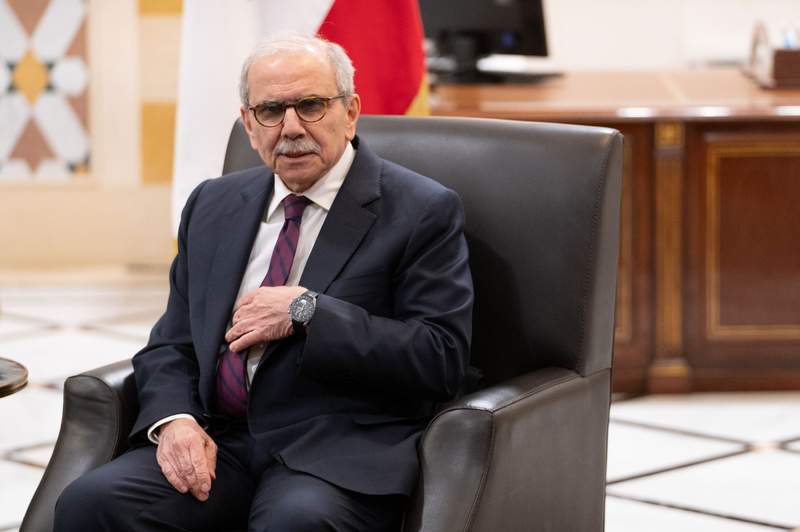
Mikati didn’t mince words recently. He stated unequivocally that Israel, its neighbor to the south, maintains a de facto control over a staggering 68 villages and hamlets within internationally recognized Lebanese territory. Sixty-eight. It’s a number that doesn’t just represent disputed farmland or abstract lines on a map; it represents homes, histories, and a blatant disregard for a nation’s territorial integrity. That kind of statement—cold, hard, numerical—usually gets shrugged off by international diplomacy. Not this time, or so it feels.
For years, observers—including the well-meaning but often toothless United Nations Interim Force in Lebanon (UNIFIL)—have documented the incessant encroachments, the petty skirmishes that sometimes flare into deadly exchanges. It’s a land where the sound of drones is as common as a car horn, and agricultural fences double as defacto barricades against unseen, but ever-present, threats. Mikati’s recent declaration isn’t news to anyone living close to the so-called ‘Blue Line.’ But by putting a precise figure to the problem, he’s effectively screaming into a geopolitical void, hoping for an echo. Or maybe a rescue.
And because the sheer audacity of the claim demanded a response, the regional diplomatic machine sputtered to life. “This isn’t merely a border dispute; it’s an affront to our very sovereignty,” Mikati asserted, his voice carrying the weight of a nation beleaguered by economic collapse and political gridlock. “International law must prevail, not the brute force of occupation that displaces our people and confiscates our land.” His plea isn’t just about sovereignty; it’s a cry for justice, for recognition that Lebanon, despite its internal turmoil, still deserves the bedrock protections afforded to any state. He’s got a point. You can’t just walk in — and claim sixty-eight bits of another country, can you?
But Jerusalem, as ever, wasn’t having any of it. Israeli Prime Minister Benjamin Netanyahu, in a statement that barely masked a sneer of dismissal, quickly parried the accusation. “Israel acts purely in self-defense. Our forces secure our borders against hostile incursions — and protect our citizens from terror. These claims are often exaggerations, a cynical political maneuver designed to divert attention from Lebanon’s own self-inflicted wounds.” That’s the playbook, isn’t it? Deflection, accusation, — and the convenient narrative of existential threat.
And that’s the rub, isn’t it? One man’s defensive perimeter is another’s occupied village. UNIFIL, which works to uphold the shaky ceasefire along the Blue Line, has reportedly documented over 1,300 serious incidents along the separation line since 2006, according to a recent report by the Associated Press, ranging from minor transgressions to hostile fire. This stark figure provides a grim backdrop to Mikati’s declaration, suggesting that even small provocations can unravel fragile peace. It’s a numbers game, where each increment means another family worried sick.
📄 POLICY WIRE WHITEPAPER PUBLISHED: PAKISTAN'S NATIONAL SECURITY POLICY PRIORITIES
👉 READ BY CLICKING HEREWhat This Means
This escalating rhetorical volley, coupled with boots on the ground (or at least watchful eyes, depending on who you ask), means plenty. Politically, it deepens the perennial crisis of Lebanese statehood. Mikati, a caretaker premier governing a fractured coalition, gains a sliver of nationalist legitimacy by pushing back, however symbolically, against Israeli expansion. But it won’t unite a country that’s long been tearing itself apart. Regionally, it pours gasoline on a fire already stoked by the Gaza conflict — and its reverberations. The specter of a wider conflagration across the Levant looms—a very real possibility that keeps diplomats scrambling in Brussels and Washington.
Economically, these contested areas, often rural and agrarian, are denied development, investment, and any semblance of stability. Farmers can’t reliably plant or harvest when their land is in dispute, or when their livestock might stray into a heavily mined area. It’s an erosion of productive capacity, pushing already impoverished communities further to the brink. For countries in the broader Muslim world, like Pakistan, this is just another data point reinforcing a pervasive narrative of Israeli aggression and land grabs. It hardens their resolve in supporting Palestinian causes and further isolates Israel diplomatically within the Islamic bloc, even as certain Gulf states have flirted with normalization. But don’t expect the streets of Lahore or Karachi to be silent about this.
The entire situation highlights an ugly truth: without strong, concerted international pressure—the kind that moves beyond strongly worded condemnations and actually has teeth—this silent annexation will continue, village by painful village. Because, for now, the ‘Blue Line’ is less a boundary — and more a suggestion. A very, very vague suggestion. One can only wonder what the next round of figures will reveal. Sixty-nine? Seventy? This whole sordid affair just makes you think of that European showdown, where billions were held hostage; here, it’s livelihoods.