


Paperwork vs. Patriotism: Ireland’s Youth Stars Caught in Football’s Brutal Economy
POLICY WIRE — Dublin, Ireland — There’s a particular brand of theatre unique to international football, one where high-minded aspirations for national glory frequently collide with the colder, harder...

POLICY WIRE — Dublin, Ireland — There’s a particular brand of theatre unique to international football, one where high-minded aspirations for national glory frequently collide with the colder, harder logic of club finance. We’re not talking about a high-stakes World Cup qualifier here, not yet. We’re talking about a friendly against Grenada, a match meant, ostensibly, for blooding fresh faces and shaping future legacies.
But even these seemingly innocuous fixtures often become miniature battlegrounds for influence. This week, as the Republic of Ireland squad gathered in Murcia, Spain, readying themselves for their Caribbean opponents, the story wasn’t just about who got called up. It was, rather pointedly, about who didn’t, and why—a nuanced ballet of ambition, obligation, and the sometimes-harsh realities governing young careers.
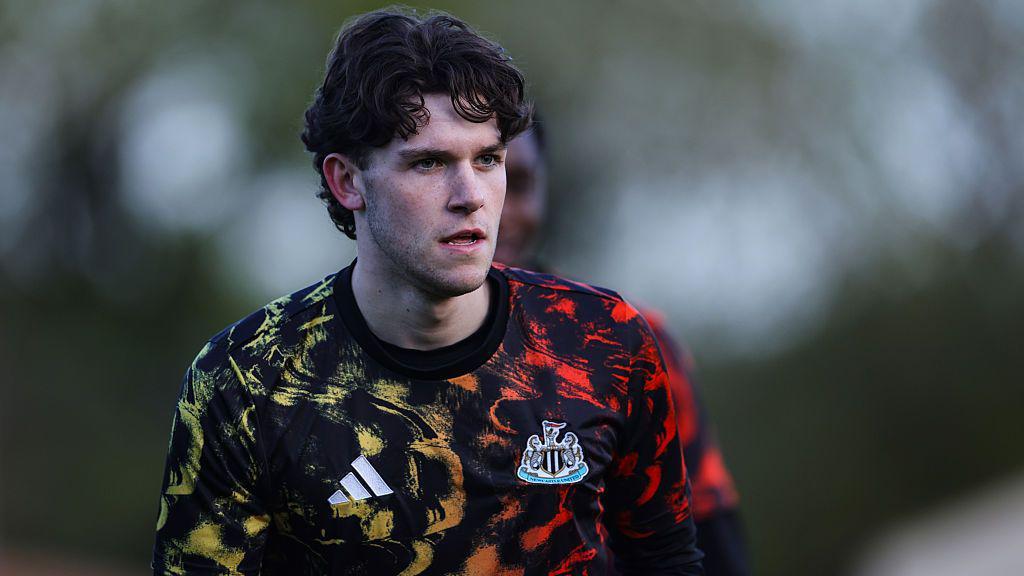
Young Rory Finneran, an 18-year-old midfielder who plies his trade for Newcastle United (after making the switch from Blackburn just this year), got the nod. Good for him. It’s his first senior call-up, a significant step up from his under-17 — and under-19 appearances. That’s the headline everyone expects, the feel-good narrative of progression.
But the true policy exposé here isn’t Finneran’s ascendancy; it’s the peculiar twist surrounding Jaden Umeh, the Benfica attacker, initially pegged for his own senior debut. Umeh, another bright-eyed talent, got yanked. His club said ‘no dice.’ Because, you see, this isn’t a FIFA international window. No obligation. And Benfica, it turns out, really needed him for an under-19 skirmish against Famalicao. They want a shot at the UEFA Youth League. And Umeh, bless his goal-scoring heart, notched a brace just days prior.
“Look, no one likes seeing young talent miss out, especially when they’re chomping at the bit for senior exposure,” Irish manager Heimir Hallgrimsson stated, perhaps with a touch of world-weary resignation. “But we respect the clubs. Their calendars don’t always align with national team hopes, do they? It’s the cost of doing business in modern football.” His voice carried that familiar tone of a coach balancing grand strategy with irritating logistical potholes.
It’s an age-old tussle, this club versus country showdown. But for nascent talents like Umeh and Finneran, still finding their feet in the professional wilderness, it feels particularly sharp. Imagine being told your dream must defer to the needs of a youth squad’s cup run. It’s hardly the stuff of sporting fantasies, is it? Yet, it’s precisely how the machine grinds. Francis Byrne, the FAI Director of Football Development, didn’t pull any punches either: “It’s a tough break for the lad and for us, frankly. Every opportunity for a fresh face against a team like Grenada is gold dust for development. We’re always trying to balance securing our players against—well, against commercial realities. The smaller nations always feel this pinch a bit more.”
This whole situation highlights football’s ruthless global churn. Clubs like Benfica invest colossal sums in scouting, developing, and—critically—owning these players. And when a conflict arises between their immediate institutional goals and a non-FIFA sanctioned friendly, well, guess who usually wins. It’s a purely commercial decision, stripped of sentiment. And that, dear reader, is football’s unvarnished truth.
It echoes, in a sense, the intricate web of global talent migration seen everywhere, from Silicon Valley to the bustling bazaars of Lahore. Skilled individuals are drawn to opportunity, to infrastructure, to financial promise—often by larger, better-resourced entities, regardless of origin or national allegiances. The world over, be it for software engineering in Berlin or football in Lisbon, the flow of talent responds to gravitational pulls of economic advantage.
📄 POLICY WIRE WHITEPAPER PUBLISHED: PAKISTAN'S NATIONAL SECURITY POLICY PRIORITIES
👉 READ BY CLICKING HEREAnd let’s not forget the injury bug, because that never sleeps either. Joel Bagan, Cardiff City defender, and Kasey McAteer, Ipswich Town winger, were also scratched from the lineup due to knocks. One might argue that friendlies outside FIFA windows simply multiply such risks for clubs. According to a 2022 UEFA report on youth academy spending, top-tier European clubs collectively invest over €2 billion annually in their youth systems, reflecting a clear expectation of return on that hefty investment. These youngsters aren’t just footballers; they’re highly speculative, valuable assets.
It puts the Irish management in a bind, forcing them to call upon more ready, or less in-demand, players. Finneran is a beneficiary of this peculiar chess game, even as Umeh became a pawn sacrificed for the greater club good. It’s a stark reminder that professional football, particularly at the youth level, is a constant tug-of-war, with young men’s aspirations often caught in the middle.
What This Means
This episode serves as a rather pointed microcosm of the geopolitical realities within global football, where financial heft almost always outweighs patriotic sentiment. For national teams outside the absolute elite, particularly those relying on developing raw talent, navigating these non-FIFA windows is an exercise in diplomatic exasperation. It’s a stark power imbalance: clubs dictate terms, knowing full well the financial and career leverage they hold over promising young players.
For players like Umeh, it’s a bitter pill. A senior call-up, even for a friendly, can be a game-changer for market value — and career trajectory. Denying that opportunity, while commercially logical for the club, delays a player’s national exposure and perhaps stifles his ascent onto a bigger international stage. This practice ultimately limits the talent pool available to smaller national federations and reinforces the dominance of wealthy club academies.
Economically, it underlines the increasing commercialization of every facet of football. Player development is a strategic asset, and every match, even an obscure U19 league game, is scrutinized for its potential return. For a young Irish player—or any developing talent from, say, Pakistan’s burgeoning youth football scene hoping to make it to Europe—the pathway is paved not just by skill, but by a cold, calculating ledger of institutional needs. Their dreams don’t always align with the spreadsheet. It’s a system designed by power, for power, with sentiment as an occasional, inconvenient byproduct. And that, frankly, is unlikely to change anytime soon.