


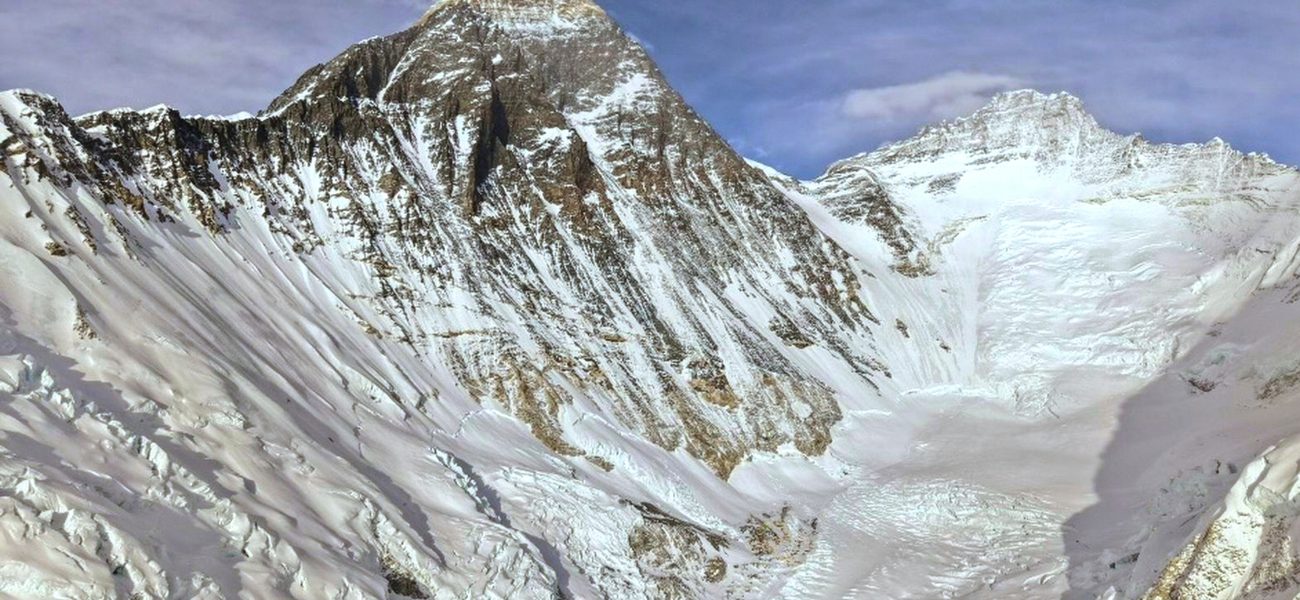
Everest’s Peak Paradox: The ‘Challenge’ Drowning in a Queue of Aspiration and Filth
POLICY WIRE — Kathmandu, Nepal — For roughly a century, Mount Everest symbolized the apex of human endurance, a raw, uncompromising battle against nature itself. But what unfolds at 29,032 feet these...

POLICY WIRE — Kathmandu, Nepal — For roughly a century, Mount Everest symbolized the apex of human endurance, a raw, uncompromising battle against nature itself. But what unfolds at 29,032 feet these days looks less like an epic struggle and more like a high-altitude waiting line, a parade of synthetic gear and often-underprepared ambition. Recent photographs, widely circulated, don’t just show climbers ascending the world’s tallest mountain; they reveal a bottleneck, a human serpent inching its way to the summit, starkly illustrating a paradox where the spirit of adventure collides head-on with industrial-scale tourism. It’s an almost comical spectacle—if it weren’t so deadly serious.
And it’s a scene that plays out year after year, especially during the narrow weather windows. That ‘spirit of challenge’ they talk about? It’s often reduced to waiting in line at the Hillary Step, literally queuing for a moment atop the world. It’s a commercial circus, plain and simple, where Sherpa guides, often the unheralded backbone of the industry, fix ropes and ferry oxygen bottles for paying clients who sometimes lack basic climbing proficiency. Because, let’s face it, money talks loudest, even on the planet’s highest peaks.
Nepal, a nation of stunning beauty — and grinding poverty, finds itself in an economic bind. Revenue from Everest permits — and tourism is a lifeline, a significant chunk of its national income. But it’s a Faustian bargain, isn’t it? The sheer volume of climbers brings with it environmental degradation, ethical quandaries, and, inevitably, tragedy. They say ‘reduce the permits,’ but that’s easier said than done when so many livelihoods depend on the annual influx of thrill-seekers and ego-chasers.
“We’re acutely aware of the challenges on Everest, from safety concerns to waste management,” stated Khem Raj Bhattarai, Undersecretary at Nepal’s Ministry of Culture, Tourism, and Civil Aviation. “But this isn’t just about recreation; it’s the economic backbone for thousands of Nepali families. Our approach must be balanced, strengthening regulations while sustaining vital income. We can’t just turn off the tap overnight.” But how, exactly, does one ‘balance’ human lives against foreign currency?
But the true cost isn’t just in dollars — and cents; it’s in the erosion of what mountaineering once represented. Mingma Sherpa, a seasoned guide with multiple Everest summits under his belt, expressed his unease: “The mountain is not like it used to be. Too many people, too much rubbish. We respect the mountain, but sometimes, for new climbers, it’s just about the summit, not the journey or the respect. It’s becoming dangerous for everyone, even for us. It’s no longer just the wind that talks on Everest; it’s the rattle of oxygen bottles and the click of Instagram posts.” His observation carries a weight that only someone intimately familiar with Everest can truly convey, a subtle lament for a changing era.
The numbers don’t lie. In 2023, the Nepali government issued a record 478 permits to foreign climbers, an all-time high, contributing millions to the national coffers, according to the Department of Tourism. Each permit, currently set at a cool $11,000, doesn’t even cover the entire expedition cost, which can soar to well over $50,000 for a guided ascent. It’s an astronomical sum that attracts not just seasoned alpinists, but those who might confuse financial means with physical capability or mental fortitude.
📄 POLICY WIRE WHITEPAPER PUBLISHED: PAKISTAN'S NATIONAL SECURITY POLICY PRIORITIES
👉 READ BY CLICKING HEREThe situation isn’t unique to Nepal, of course, though Everest is perhaps the most glaring example. Throughout the Himalayas and the Karakoram range in neighboring Pakistan—home to K2, the ‘Savage Mountain,’ which by many measures remains a far more dangerous climb—authorities grapple with similar dilemmas: the tantalizing allure of tourism dollars versus the undeniable ecological and human toll. But on K2, there’s a different kind of ‘Riyadh’s Ring Diplomacy’: the ring of unforgiving ice, where fewer dare to venture, and commercialization hasn’t yet reached Everest’s hyper-level. Pakistan’s peaks retain a grittier, less tamed reputation, perhaps for now safeguarding them from the sheer traffic seen further east.
What This Means
The increasing commercialization of Mount Everest presents a complex web of political and economic implications for Nepal. Economically, the high permit fees and tourism spending provide desperately needed foreign currency and employment for thousands of Sherpas and local villagers. It’s a powerful incentive for the government to maintain open access, particularly given the global interest in such extreme tourism. However, this dependence breeds its own problems. The reliance on permit revenue means officials are reluctant to implement stringent quotas that might significantly reduce overcrowding and, by extension, reduce the risk to climbers and the environmental impact.
Politically, Nepal faces a delicate balancing act. On one hand, it seeks to brand itself as an adventure tourism hub, capitalizing on its natural assets. On the other, it faces growing international scrutiny and criticism over safety standards, waste management, and the overall ethics of commercial expeditions. Failure to manage these challenges effectively risks damaging Nepal’s international reputation, potentially affecting other vital sectors of its economy in the long term. the lack of robust regulatory oversight could lead to more tragic incidents, fueling negative publicity and further calls for reform. The mountain, then, becomes a barometer of Nepal’s governance and its ability to negotiate global demands while safeguarding its people and natural heritage.
It’s a stark reminder that even the grandest natural wonders aren’t immune to the relentless pressures of human economics and aspirations, good or ill. The photographs from Everest don’t just show climbers; they depict a policy dilemma playing out at extreme altitude, a gamble on ice where the stakes couldn’t be higher.