

Silent Shadow on the Seas: Hantavirus Sparks Global Health Jitters Amidst Repatriation Chaos
POLICY WIRE — Madrid, Spain — It’s not every day six paratroopers, British Army medics no less, jump from an RAF transport plane to deliver medical oxygen and supplies to one of the most remote...

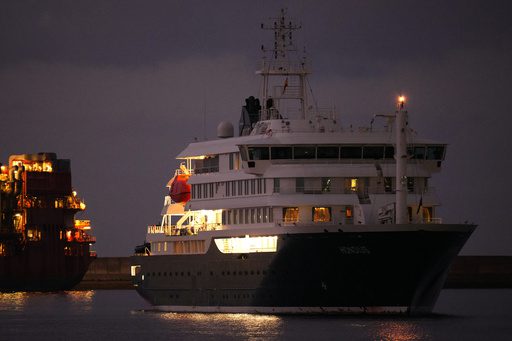
POLICY WIRE — Madrid, Spain — It’s not every day six paratroopers, British Army medics no less, jump from an RAF transport plane to deliver medical oxygen and supplies to one of the most remote places on Earth—Tristan da Cunha, a tiny dot in the South Atlantic. And yet, there they were, because an isolated case of hantavirus, suspected in a former cruise ship passenger, sent ripples of alarm across oceans, long after the primary vessel, the MV Hondius, had finally limped its way to a Canary Islands port. This isn’t a gripping tale of daring rescue; it’s a cold, hard illustration of just how easily a localized health threat can tangle up global logistics and diplomatic nerves, prompting nations to scramble their resources like a child tidying a room before their parents walk in. The whole saga feels a bit like a bad film script, but it’s real, it’s messy, and it’s a headache for everyone involved.
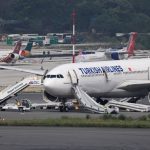
The MV Hondius, that floating petri dish of sorts, became a stark reminder of our interconnected-yet-fragile global transit systems. Passengers, trapped aboard with an unseen threat, finally started their complicated journeys home this week, whisked away on a fleet of military and government planes. Think about it: a recreational voyage turning into an infectious disease management nightmare—you just can’t make this stuff up. And the nightmare isn’t over. One American traveler, among 17 repatriated from the vessel, has now tested positive for the hantavirus, though they’re thankfully asymptomatic. Meanwhile, on a separate flight back to France, a French citizen developed symptoms, throwing an immediate wrench into careful quarantine plans.
French Prime Minister Sebastien Lecornu, navigating the delicate balance between public safety and avoiding outright panic, issued a statement reflecting the gravity. “Our first priority is the health and security of our citizens, but we must also prevent broader public apprehension,” he stated, his words clipped, cautious. “We’re deploying every necessary measure to ensure isolation and containment are absolute.” It’s a tightrope walk, isn’t it?
Because while officials like WHO Director-General Tedros Adhanom Ghebreyesus repeatedly insist this isn’t a sequel to the COVID-19 pandemic—“This is not another COVID. And the risk to the public is low. So they shouldn’t be scared, and they shouldn’t panic,” he hammered home—the visible measures tell a different story. From port workers in hazmat suits in Tenerife to disembarking passengers sprayed with disinfectant and donning protective gear themselves, the optics scream “containment crisis.” And nations aren’t taking chances, opting for aggressive protocols despite WHO reassurances.
Passengers left the cruise ship with nothing but a small bag of essentials—cellphone, charger, documents. Their main luggage, their entire lives for the last few weeks, stayed behind, destined for a sterilization chamber in Rotterdam. It’s an almost biblical sense of stripping bare before a forced reintegration into a world that, quite frankly, doesn’t trust you until you’ve been cleared. For the international passengers, a complicated array of individual national health policies awaits. Some, like the French, had plans for 72-hour hospitalization followed by six weeks of self-isolation. Now, it’s just ‘until further orders’.
This situation really underscores the yawning disparities in global health infrastructure. Take the diverse group aboard the Dutch repatriation flight: eight Dutch citizens alongside travelers from India, Greece, Argentina, and the Philippines. For nations with robust public health systems, active monitoring — and managed quarantines are feasible. But consider populous countries, especially in South Asia, where such tightly controlled follow-ups on returning travelers—say, from Pakistan or Bangladesh—can stretch resources thin. Even a theoretically ‘low-risk’ contagion demands vigilance that isn’t universally achievable, meaning these distant outbreaks send subtle shivers through global policy, particularly for economies that rely on fluid international movement.
The risk of person-to-person spread for hantavirus is generally low, transmitted mostly through aerosolized rodent droppings. But the Andes virus strain, reportedly implicated here, is the exception, able to spread between humans in rare cases. Symptoms can take anywhere from one to eight weeks to show, prolonging the anxiety — and complicating contact tracing. One specific instance highlights the meticulous — borderline obsessive — level of detail in this unfolding drama: an American tested positive but is asymptomatic. U.S. health officials confirmed one of 17 American passengers from the MV Hondius carried the virus, triggering immediate transport to a specialized biocontainment unit at the University of Nebraska Medical Center, rather than simply going home. It’s a single, alarming data point, but one that sets off a cascading response, affecting millions of dollars in resources.
The whole operation is a microcosm of pandemic-era anxieties persisting long after COVID-19 supposedly faded from our immediate headlines. Everyone, it seems, is a little jumpy.
What This Means
This incident, small in raw numbers though it may seem, packs a significant policy punch. Firstly, it spotlights the continuing fragility of global travel in the face of novel or unusual pathogens. Despite improvements in international health regulations since the peak of COVID, the ad-hoc, national-level responses to repatriate citizens show a clear lack of universal, unified protocols beyond basic WHO guidelines. This patchwork approach inevitably creates inefficiencies, strains diplomatic relations, and prolongs the period of uncertainty. Economically, while not impacting global trade directly, these high-profile scares affect tourism, especially the cruise industry, which is still reeling from past crises. it disproportionately burdens smaller nations or those with developing health infrastructures that cannot easily dispatch military planes or set up specialized biocontainment units for every returning national. It’s not about stopping pandemics; it’s about handling what’s perceived to be a high-risk situation, which, often enough, becomes reality in the absence of robust global coordination. The episode reveals that for all our talk of global cooperation, when a health scare hits, most countries still operate in their own silos, prioritizing domestic optics above all else. This isn’t just about a virus; it’s about sovereign fear — and a surprising reluctance to trust external reassurances.