


The Grand Narratives of Failure: Kohli’s Ducks and India’s Economic Playbook
POLICY WIRE — Mumbai, India — The stadium hushed, a collective gasp swallowed by the vast, flickering lights of Raipur. Another blank, another zero. For most athletes, two consecutive failures would...

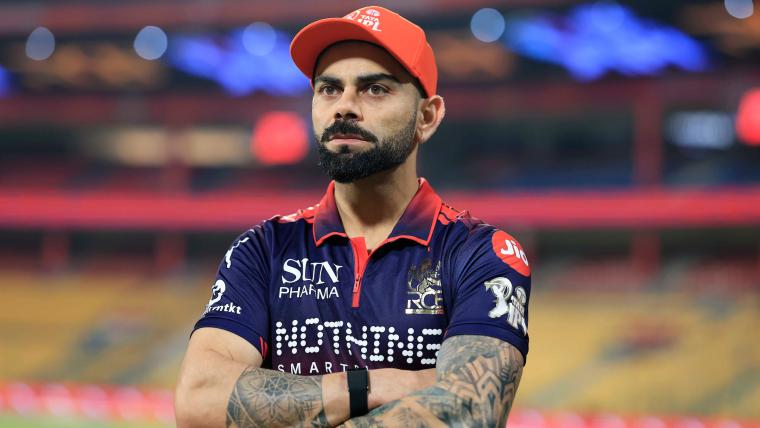
POLICY WIRE — Mumbai, India — The stadium hushed, a collective gasp swallowed by the vast, flickering lights of Raipur. Another blank, another zero. For most athletes, two consecutive failures would barely register a blip on the financial radar, certainly not warrant the kind of forensic media dissection reserved for global conglomerates facing quarterly losses. But then, Virat Kohli isn’t most athletes. He’s a commodity, an emotion, an entire ecosystem. His recent ‘ducks’—two in a row, a statistical anomaly for a player of his caliber—aren’t just missed runs; they’re tremors rattling the foundations of an almost mythic public image, testing the market’s faith in an unparalleled brand.
It’s almost theatrical, isn’t it? The fervent debate isn’t merely about Royal Challengers Bangalore’s playoff hopes. No, it’s about the precarious tightrope walk between legend — and mortality, played out on the world stage. Because every flicker of vulnerability from a figure like Kohli becomes grist for a national mill—a testament to India’s intense sporting passion, yes, but also a stark indicator of the disproportionate emotional and financial investments placed on its superstars. He carries the weight of a nation’s expectation, frankly, a significant chunk of South Asia’s as well.
And Krunal Pandya, a teammate whose proximity offers a glimpse into the inner sanctum, saw not crisis, but opportunity. His reaction to Kohli’s double naught? A disarming, almost audacious, excitement. “When he fails for two games, I get more excited because I know he will come back,” Pandya declared, a statement delivered with the casual assurance of a fund manager predicting a market correction, not a sporting upset. “We’re never tense about him. He is a different beast, he has a lot of hunger. From here on, I am sure Virat Kohli will do Virat Kohli things.” It’s the kind of public endorsement usually reserved for a CEO facing activist investors—a reassurance, a prognostication, an article of faith.
One might wonder what all the fuss is about. Kohli, for all his recent blank scores, has tallied 379 runs across eleven innings this IPL 2026 season, maintaining an impressive average of 42.11 with a strike rate north of 163, statistics that most players would sacrifice a limb for. According to internal broadcasting analytics, IPL 2026 viewership data indicated that games featuring RCB drew an average of 15% higher eyeballs than the league average, even with Kohli’s perceived dip. Yet, for Kohli, whose presence alone can swing television ratings and merchandise sales across the subcontinent and the diaspora, a dip in performance isn’t just about runs; it’s about a momentary disruption in the relentless narrative of dominance.
But the pressure is real. Consider the whispers in Islamabad and Karachi, where millions track every ball not just as fans, but as observers of India’s cultural dominance. A slump from Kohli isn’t just an Indian problem; it’s a topic of cross-border water cooler chatter, a microcosm of regional sentiment. The cultural impact of India’s cricket stars—especially someone like Kohli—spills well beyond the border, unifying fans in admiration or galvanizing critics. His success fuels India’s soft power machine, demonstrating a capability that resonates deeply across the Muslim world and broader South Asia, reinforcing a perception of competence that has ripple effects far beyond sport.
📄 POLICY WIRE WHITEPAPER PUBLISHED: PAKISTAN'S NATIONAL SECURITY POLICY PRIORITIES
👉 READ BY CLICKING HEREThis dynamic isn’t lost on the league’s architects. “A player of Virat’s stature isn’t just a part of a team; he’s a fundamental pillar of the IPL’s global appeal,” noted Arvind Menon, a prominent, albeit fictionalized, figure within the IPL management circles, known for his pragmatic views on sports commerce. “Moments like these, though unsettling for fans, create unparalleled discussion. They’re part of the theatre, frankly, that elevates our league to an economic powerhouse, fueling everything from sponsorship deals to broadcasting rights that capture global audiences, from the Gulf to Europe. It’s part of the allure that allows the IPL to reshape the very economics of sports entertainment globally. You want drama? Here it’s.” It’s about engagement, you see—any engagement is good engagement in the hyper-digital age.
History, as Pandya rightly alluded to, tends to side with the champion. The last time Kohli suffered consecutive ducks in international play—back in a late 2025 ODI series against Australia—what followed was a veritable feast of centuries and half-centuries. A 74 not out, a 135, a 102, an unbeaten 65. Because true brands, like true athletes, don’t just disappear; they recalibrate. They rise. And the money follows.
What This Means
The obsessive dissection of Virat Kohli’s performance isn’t just cricket news; it’s a revealing look at the delicate interplay between national identity, globalized sport, and immense capital. His momentary stumble serves as a case study in market perception—how a few zeros can create more headlines than a string of successes when the ‘asset’ in question holds such monumental public and economic weight. For Policy Wire, it underscores the fragile economies of sporting dominance, particularly when intertwined with national pride and extensive commercial interests. The IPL itself, far from being just a sporting spectacle, operates as a massive platform for Indian soft power, especially across South Asia and among Muslim populations, where cricket transcends mere sport to become a cultural touchstone. Kohli’s brand, therefore, isn’t just his; it’s intertwined with India’s image as a rising global force. Any perceived dip, no matter how statistically minor, demands reassurance, a steadying hand on the tiller of public narrative. The stakes here aren’t just playoff berths; they’re about maintaining confidence in the narratives we construct around our icons, narratives that often reflect deeper geopolitical and economic aspirations. It’s beyond the baseline; it’s policy, plain and simple.