

Gulf on Edge: Drones Pierce Fragile Truce as Iran Dials Up Nuclear Stakes Amid Mediation
POLICY WIRE — DUBAI, UAE — The whisper of diplomatic maneuvering barely outlasted the whine of a drone slicing through Gulf skies this week. While Islamabad brokered what was optimistically termed a...

POLICY WIRE — DUBAI, UAE — The whisper of diplomatic maneuvering barely outlasted the whine of a drone slicing through Gulf skies this week. While Islamabad brokered what was optimistically termed a ceasefire proposal from Washington, the air itself crackled with something far less peaceful. The region, it seems, has mastered the art of talking peace while preparing for the next skirmish.
Iran, through Pakistani channels, finally delivered its long-anticipated response to the latest U.S. proposal. State media back in Tehran made it clear: the talk isn’t about mere de-escalation; it’s about permanently silencing the war drums everywhere, from the Mediterranean—where Israeli forces clash with Iranian-backed Hezbollah—right down to the critical shipping lanes.
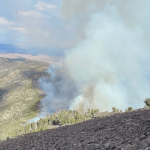
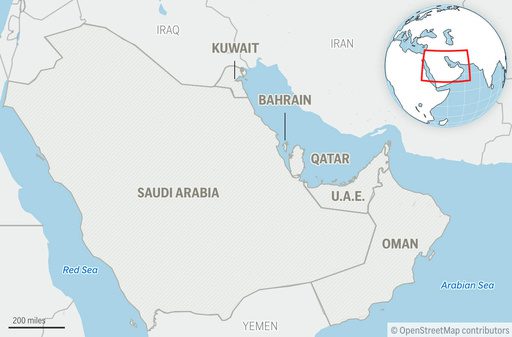
But how does one negotiate peace when phantom threats lurk just over the horizon? On Sunday, just as news of Iran’s reply began circulating, a drone-sparked fire flared on a ship near Qatar. Then came reports from the United Arab Emirates and Kuwait: unmanned aerial vehicles—UAVs, as they call ’em—violating their airspace. The UAE even shot down two. And blame quickly settled on Tehran, a familiar accusation in this endlessly tangled conflict. “It’s a dangerous — and unacceptable escalation,” Qatar’s Foreign Ministry didn’t mince words. They know what’s at stake for those critical trade routes.
Because that’s the rub, isn’t it? Even as a tentative ceasefire proposal was supposedly on the table, the Strait of Hormuz—that choke point for about a fifth of the world’s oil supply—remained a theater of maritime cat-and-mouse. Washington had floated an offer that supposedly bundled an end to hostilities with reopening the Strait and reining in Iran’s nuclear ambitions. But Iran? They’d rather park that nuclear bit for later, thank you very much.
The White House has kept quiet, but President Donald Trump? Not so much. He hit his favored social media platform, accusing Tehran of “playing games” for half a century. And then, the typical Trumpian flourish: “They will be laughing no longer!” It’s that blend of bombast and diplomatic overture that defines the American approach right now.
“We’re giving diplomacy every chance we possibly can before going back to hostilities,” U.S. Ambassador to the United Nations Mike Waltz told ABC, articulating a posture of reluctant forbearance that—to many regional observers—sounds an awful lot like a slow-burning fuse.
Iran, for its part, seems to be pushing an entirely different narrative, flexing its military muscle. Reports surfaced—courtesy of state broadcasters, naturally—that Iran’s new Supreme Leader, Mojtaba Khamenei (who hasn’t been seen in public since this whole mess began), issued “new and decisive directives for the continuation of operations and the powerful confrontation with the enemies.” Ominous, wouldn’t you say? And just what those directives entail, nobody’s saying. But you don’t issue ‘decisive directives’ when you’re looking for a quiet hand-off.
Beyond the drones, there’s the lingering shadow of the nuclear program. Trump keeps threatening to unleash full-scale bombing if Iran doesn’t toe the line. Iran, meanwhile, has largely sealed off the Strait, sending global energy markets into a tailspin. Washington responded by blockading Iranian ports; a move that saw two Iranian oil tankers—allegedly trying to run the blockade—struck just last week. This isn’t just brinkmanship; it’s practically a brawl.
📄 POLICY WIRE WHITEPAPER PUBLISHED: PAKISTAN'S NATIONAL SECURITY POLICY PRIORITIES
👉 READ BY CLICKING HEREAnd let’s not forget the big one: Iran’s enriched uranium. The U.N. nuclear agency has confirmed Tehran now holds more than 440 kilograms of uranium enriched to 60% purity. That’s a hair-raising figure—just a short, technical hop, skip, and jump from weapons-grade material. Israeli Prime Minister Benjamin Netanyahu certainly hasn’t forgotten it. “Trump has said to me, ‘I want to go in there,’ and I think it can be done physically,” he claimed in a recent interview, referring to taking out Iran’s enriched uranium. A pleasant thought, no doubt, for those committed to a stable, albeit explosive, status quo.
Brig. Gen. Akrami Nia, an Iranian military spokesperson, wasn’t mincing words either. Their forces are on “full readiness” to protect those nuclear sites. “We considered it possible that they might intend to steal it through infiltration operations or heli-borne operations,” he told the IRNA news agency, portraying Iran as a victim preparing to defend against theft, rather than a proliferation risk.
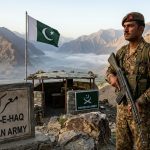
Russia’s Vladimir Putin, ever the pragmatist, continues to offer to take Iran’s enriched uranium. But Tehran’s priorities appear to lie elsewhere. For Pakistan, a Muslim-majority nation keenly aware of regional stability, the mediation efforts are hardly academic. Army Chief Field Marshal Asim Munir reiterated Islamabad’s commitment to finding an end to the fighting. Prime Minister Shehbaz Sharif has been on the phone with his Qatari counterpart, showing solidarity and discussing strategies for de-escalation. But it’s an uphill battle, trying to douse fires while other players are pouring on accelerant.
Even a planned French-British effort to secure maritime activity in the Strait has met with Tehran’s icy reception. Iran’s deputy foreign minister, Kazem Gharibabadi, threatened a “decisive — and immediate response” to any such presence. Because in this high-stakes chess match, every move by one side is seen as a provocation by the other. It’s a dance of threats, not diplomacy, where the slightest misstep could spark something far more catastrophic.
What This Means
The current back-and-forth isn’t merely posturing; it’s a dangerous erosion of diplomatic norms. Iran’s insistence on discussing nuclear issues later, coupled with its increasing uranium enrichment, signals a strategic deferral that could harden the positions of adversaries like Israel and the U.S. This doesn’t look like a pathway to peace, but a sophisticated, drawn-out gamble on who blinks first. Economically, the constant threat to the Strait of Hormuz will keep oil markets on tenterhooks, impacting global energy prices and freight insurance—a sort of silent tax on global trade. Politically, the situation strains U.S. alliances in the Gulf, forcing Arab nations to calibrate responses between Iran’s aggression and Washington’s perceived hesitation. It’s not just a regional conflict anymore; it’s an entanglement with global repercussions, and nobody’s entirely sure who’s pulling which string.