
Shadow Play: Iran’s Ceasefire Reply Lands Amidst Drone Swarms in the Gulf
POLICY WIRE — DUBAI, UAE — The ink wasn’t even dry on Tehran’s ceasefire reply, delivered quietly through Pakistani intermediaries, before the very waters it purported to pacify were...

POLICY WIRE — DUBAI, UAE — The ink wasn’t even dry on Tehran’s ceasefire reply, delivered quietly through Pakistani intermediaries, before the very waters it purported to pacify were roiled by more explosions. A precarious Gulf simmered, drone engines buzzing a defiant counterpoint to the quiet diplomatic ballet unfolding in distant capitals. This isn’t just about peace talks; it’s a gritty, complex jig between overtures and hostile acts, a high-stakes game where what’s said and what’s done often contradict each other. Nobody’s exactly fooled, but the motions must be made.
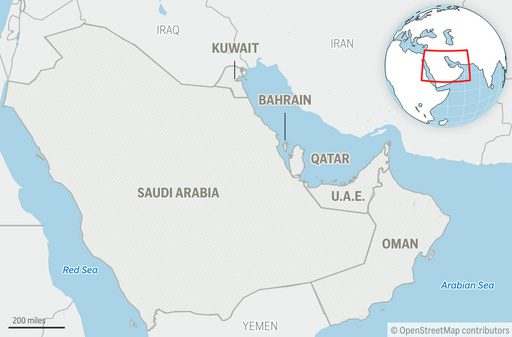
Iran says it wants the war on all fronts to cease, pushing for an end to hostilities from Lebanon to its own shores. Fine words. Yet, simultaneously, unmanned aircraft — drones, in less genteel terms — started popping up near critical shipping lanes. One even ignited a small fire on a commercial vessel off Qatar, while others encroached on Kuwaiti and Emirati airspace. That’s some messy synchronicity, isn’t it? The UAE, not exactly known for pulling its punches on this matter, wasted no time blaming Tehran. Funny how these things happen just when everyone’s talking ‘peace.’
The Washington-backed ceasefire proposal, apparently seeking to unblock the critical Strait of Hormuz and (eventually) reel in Iran’s nuclear program, feels a bit like negotiating while someone’s still got their foot on your throat. And, really, it doesn’t quite seem to have impressed everyone. White House types aren’t saying much, though President Donald Trump, according to the U.S. Ambassador to the UN, Mike Waltz, is giving diplomacy “every chance we possibly can before going back to hostilities.” It’s the standard diplomatic boilerplate, isn’t it? Means little until someone actually stops shooting.
And then there’s the unseen hand. Iran’s new supreme leader, Mojtaba Khamenei — a man more heard than seen these days — supposedly issued “new and decisive directives” to military brass. We don’t know what they were. But we can hazard a guess. Meanwhile, Brig. Gen. Akrami Nia, an Iranian military spokesperson, declared his forces “on full readiness” to guard nuclear facilities, claiming a belief that foes “might intend to steal it through infiltration operations or heli-borne operations.” It smacks of calculated bluster, a grim charade played for internal audiences and external provocateurs alike.
This escalating dance also touches a wider network of players. Pakistan, maintaining its careful neutrality, continues to act as the primary go-between, hosting talks and facilitating communication. Islamabad, in its quiet, consistent way, seeks stability in a neighborhood where chaos reigns. Field Marshal Asim Munir, the army chief, offered rare public remarks underscoring Pakistan’s commitment to mediating this whole mess. But diplomacy is often slow-cooked in a pressure cooker. Because who benefits from this persistent instability?
📄 POLICY WIRE WHITEPAPER PUBLISHED: PAKISTAN'S NATIONAL SECURITY POLICY PRIORITIES
👉 READ BY CLICKING HEREThis particular episode comes as the US has blockaded Iranian ports, countered by Iran largely closing off the Strait of Hormuz, that slender choke point that handles roughly a fifth of the world’s crude oil. America, in return, just Friday smacked two Iranian oil tankers for allegedly trying to bust through that blockade. The Revolutionary Guard shot right back with threats of “heavy assault” on U.S. bases should Iranian commercial vessels get hit. Just Tuesday, a U.S. naval official confirmed they’ve turned back 61 commercial ships — and taken out four since April 13. They’re making a point, that’s for sure.
And let’s not forget the nuclear elephant in the room. The U.N. nuclear watchdog, the IAEA, reports Iran now holds over 440 kilograms (970 pounds) of uranium enriched to 60% purity — a mere skip, hop, and jump from weapons-grade material. Israeli Prime Minister Benjamin Netanyahu doesn’t mince words on the topic: “Trump has said to me, ‘I want to go in there,’ and I think it can be done physically,” he declared, referring to the enriched uranium. Russian President Vladimir Putin, ever the pragmatist (or opportunist), still has an offer on the table to whisk Iran’s uranium away. A “new peril,” indeed, for an already volatile region.
What This Means
This latest tit-for-tat — a ceasefire offer met by drone sorties, diplomatic messages alongside naval blockades — signals less a path to resolution and more a deepening entanglement. Iran’s two-faced approach of negotiating while permitting low-level aggression through proxies, or perhaps direct action (its denials notwithstanding), isn’t just about tactical gains. It’s about leveraging every available tool to bolster its bargaining position. The Gulf Arab states, meanwhile, are caught in the crosshairs, forced to contend with threats to their maritime trade and air sovereignty, adding another layer to an already simmering regional power struggle. Economically, global energy markets remain hostage to the whims of the Strait, its reliability a constant question mark for oil and gas shipping. We’re witnessing a precarious, slow-motion political economy where perceived strength often trumps practical peace, leaving everyone on edge and ready for the next move, but rarely the definitive one. It’s less a war, more a continuous state of semi-conflict — a nasty limbo.