
Tehran’s Foreign Legions: A Crutch, Not a Shield, in Domestic Strife
POLICY WIRE — Washington, D.C. — They say that when a household calls in hired muscle to keep its own kids in line, things are truly sideways. And that’s pretty much the grim reality now...

POLICY WIRE — Washington, D.C. — They say that when a household calls in hired muscle to keep its own kids in line, things are truly sideways. And that’s pretty much the grim reality now festering in Iran, where Tehran isn’t just flexing regional muscle through its proxy network; it’s increasingly bringing those foreign-born, often foreign-trained, fighters home—or at least within its borders—to handle domestic discontent. Forget grand geopolitical maneuvers for a minute; we’re talking about basic crowd control — and protest suppression. It’s a stark tell, isn’t it?
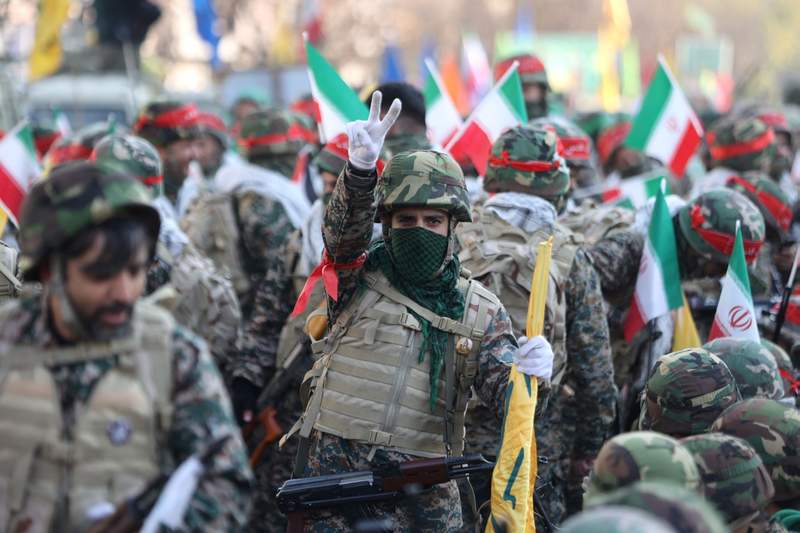
For decades, the Islamic Revolutionary Guard Corps (IRGC) nurtured, funded, and deployed a veritable constellation of non-state actors across the Levant and beyond. From Hezbollah in Lebanon to various Shia militias in Iraq and Syria, these groups served as the regime’s long arm, projecting power without direct, overt Iranian boots on the ground. But now, sources close to various intelligence circles and Iranian dissident groups—not exactly Tehran’s biggest fans, admittedly—suggest elements from some of these very groups are being funneled inwards. Not just as advisors, but as enforcers.
This isn’t about some dramatic shift in foreign policy, per se. It’s about a leadership looking around — and realizing its own populace might be a bigger threat than any external enemy. Or maybe they just trust their Afghan and Pakistani conscripts more than a young Basij volunteer who grew up under crippling sanctions. It’s a pragmatic, if utterly cynical, choice.
“We observe a regime that prioritizes self-preservation above all else, even if it means importing coercion,” stated Matthew Miller, spokesperson for the U.S. State Department, earlier this year. “It’s an admission of its profound unpopularity, an act of desperation that speaks louder than any propaganda.” He’s got a point. You don’t bring in outsiders to manage internal affairs if your own house is in perfect order, do you?
And let’s be frank, these aren’t elite counter-terrorism units, mostly. They’re often men — sometimes very young men — recruited from economically devastated regions, promised a salary that’s life-changing by their standards. We’re talking Hazara Shias from Afghanistan, fleeing Taliban rule, or poor Pakistanis drawn by economic incentives. The Fatimiyoun Brigade, comprised primarily of Afghan refugees, and the Zainabiyoun Brigade, made up of Pakistanis, have long fought in Syria. Their presence in a domestic security capacity—however small—represents a profound expansion of their utility for the Iranian state, transforming them from regional instruments to internal muscle. For a deeper dive into this shadowy strategy, consider Tehran’s Quiet Gambit.
Because ultimately, when homegrown protests erupted in 2022 and early 2023, following the death of Mahsa Amini, the official response was brutal. Human Rights Activists in Iran (HRANA), an independent watchdog group, reported over 500 protest-related fatalities and some 19,000 arrests by late 2022, a sobering statistic that highlights the scale of the regime’s crackdown. But the whispers from the ground suggest a mix of local — and ‘unfamiliar’ faces among the enforcers.
📄 POLICY WIRE WHITEPAPER PUBLISHED: PAKISTAN'S NATIONAL SECURITY POLICY PRIORITIES
👉 READ BY CLICKING HEREIranian Foreign Minister Hossein Amir-Abdollahian, naturally, offers a different tune. “Our nation is under constant attack from external enemies seeking to destabilize our sacred revolution,” he’s been quoted saying on state television. “Any allegations of foreign interference in our internal security operations are baseless fabrications designed to malign Iran’s strength and resilience.” Yeah, right. Convenient, that. It’s always ‘external enemies’ when the internal ones start getting uppity.
What This Means
This isn’t just a grim curiosity; it’s a strategic concession with significant implications, both domestically and internationally. Politically, relying on foreign militias is an implicit acknowledgement of a deepening trust deficit between the regime and its own conventional security forces—a suspicion that elements within the Basij or even parts of the IRGC might hesitate to fire on their neighbors with sufficient enthusiasm. Economically, while precise figures are guarded, sustaining these proxy networks isn’t cheap. Funding foreign fighters when your own populace struggles under sanctions represents a staggering allocation of resources, speaking volumes about the regime’s priorities: regime survival at any cost. And that cost isn’t just financial; it’s also about international legitimacy, however little of it Iran has left. From Pakistan to Afghanistan, recruitment for these forces—often preying on poverty and religious zeal—can exacerbate sectarian tensions and deepen regional instability, effectively exporting Iran’s internal problems beyond its borders.
But there’s another, perhaps less obvious, ramification: morale. What message does this send to ordinary Iranian citizens, or even dedicated revolutionary guards, when their leaders opt for foreign proxies to do the dirty work of internal suppression? It certainly doesn’t project confidence or national unity, does it? If anything, it screams fear. Fear of its own people. Fear of crumbling from within. And sometimes, fear is a more destructive weapon than any militia.