
Berlin’s Awkward Embrace: The Schröder Spectre Haunts German Diplomacy
POLICY WIRE — Berlin, Germany — A curious shadow looms over Berlin’s intricate dance on the global stage: the familiar, yet increasingly unwelcome, specter of former Chancellor Gerhard...

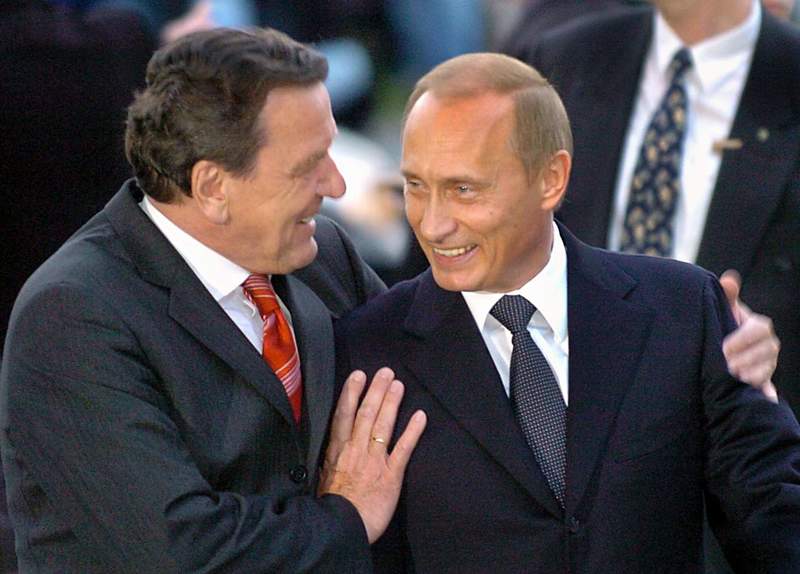
POLICY WIRE — Berlin, Germany — A curious shadow looms over Berlin’s intricate dance on the global stage: the familiar, yet increasingly unwelcome, specter of former Chancellor Gerhard Schröder. It isn’t just his continued affinity for Moscow that rankles, it’s the audacious suggestion by none other than Vladimir Putin that this old friend could broker peace in Ukraine. And then, the gasp—Germany’s ruling Social Democratic Party (SPD), Schröder’s own, isn’t flat-out saying no.
It’s an uncomfortably familiar rerun for German politics. Schröder, once a titan of the SPD, now mostly a controversial echo, remains entwined with Russian state-owned energy giants—a fact that, even now, gives some in his party severe indigestion. He’s been the Nord Stream poster child, an oil executive, a symbol of a past Ostpolitik that many now view with bitter regret. Putin’s proposal, made in an interview that seemed almost designed to needle Europe, pulls the curtain back on Germany’s ongoing dilemma: how do you deal with a prodigal son who won’t just fade away?
But the SPD, rather than slamming the door shut on such an improbable mediator, has offered a response characterized by its bureaucratic fuzziness. Party co-leader Lars Klingbeil, speaking with the cautious inflection of a diplomat traversing a minefield, hinted at a practical, albeit distant, approach. "Our primary objective is peace, and if genuine diplomatic channels open, Germany, like any responsible nation, must explore them," Klingbeil is said to have told internal party colleagues. "But one must question the sincerity of such offers, especially when they emanate from a position of aggression. It’s an inconvenient truth, isn’t it?"
Many critics, both inside Germany and beyond, view this as something between an absurdity and a deliberate provocation from the Kremlin. Norbert Röttgen, a senior foreign policy expert from the opposition Christian Democratic Union (CDU), didn’t mince words. "To seriously entertain a figure so compromised, so deeply invested in the Russian petro-state, as an impartial arbiter is frankly insulting to Ukraine," Röttgen likely thundered, a familiar exasperation coloring his hypothetical remarks. "It only serves to legitimate Moscow’s maneuvering, and it exposes Germany’s continued difficulty in fully severing problematic ties."
And that’s the rub. Schröder isn’t some rogue independent; he represents a policy school within the SPD that long advocated for engagement over confrontation with Russia. A legacy, in some ways, they’re still battling to either own or disavow. Because it isn’t just about Ukraine, is it? It’s about Germany’s strategic autonomy, its post-war identity, and its relationship with a volatile Eastern neighbor that supplied, prior to the war, a staggering 55% of its natural gas imports, according to data from the German Ministry for Economic Affairs and Climate Action.
This internal debate in Europe reverberates far beyond its borders. In regions like South Asia, nations accustomed to navigating complex great power dynamics watch closely. Pakistan, for example, heavily reliant on imported energy and commodity prices, keenly observes any shifts in global stability. A perceived German hesitancy or division on Ukraine isn’t just an internal European matter; it affects market confidence, diplomatic alignments, and the general prognosis for global peace – all of which impact Islamabad’s own precarious economic balancing act. The ongoing diplomatic maneuvering often feels like a chess match, with the welfare of millions hanging in the balance.
What This Means
The SPD’s guarded reaction to Putin’s Schröder gambit throws a harsh light on Germany’s foreign policy tightrope. Politically, it signals an internal struggle within the ruling coalition, where Greens and Liberals are far more hawkish on Russia than segments of the SPD. This creates friction, potentially eroding domestic trust and presenting a disunited front to both allies and adversaries. Internationally, it risks reinforcing perceptions of German ambivalence or weakness in confronting Moscow, which could strain relations with key European partners and the U.S. It certainly doesn’t help calls for a unified front against Russian aggression.
Economically, any prospect, however remote, of a high-profile, Russian-backed mediation effort keeps a flicker of uncertainty alive in European energy markets, even as Germany scrambles to secure alternatives. For states in the wider Muslim world and South Asia, prolonged conflict in Europe, or perceived European indecisiveness, translates directly into persistent food and energy price volatility. It fuels arguments for non-alignment, pushes nations like Pakistan to diversify their strategic partnerships, and, perhaps most pointedly, undermines the notion of a robust, cohesive Western response. Diplomacy is messy; this brand, however, feels especially grimy, pulling decades of German-Russian history into the unforgiving light of current geopolitics.