


Rain, Records, and Raw Instinct: The Loucks Games Upends Conventional Wisdom
POLICY WIRE — White Plains, New York — Everyone says practice makes perfect, don’t they? That grit, that grind, day in and day out—it’s supposed to be the secret sauce for winning. But...

POLICY WIRE — White Plains, New York — Everyone says practice makes perfect, don’t they? That grit, that grind, day in and day out—it’s supposed to be the secret sauce for winning. But sometimes, just sometimes, raw, undeniable talent —or maybe a dash of calculated risk—walks onto the stage, shoves convention aside, and claims its crown anyway. We saw plenty of that peculiar alchemy last Saturday at the Loucks Games.
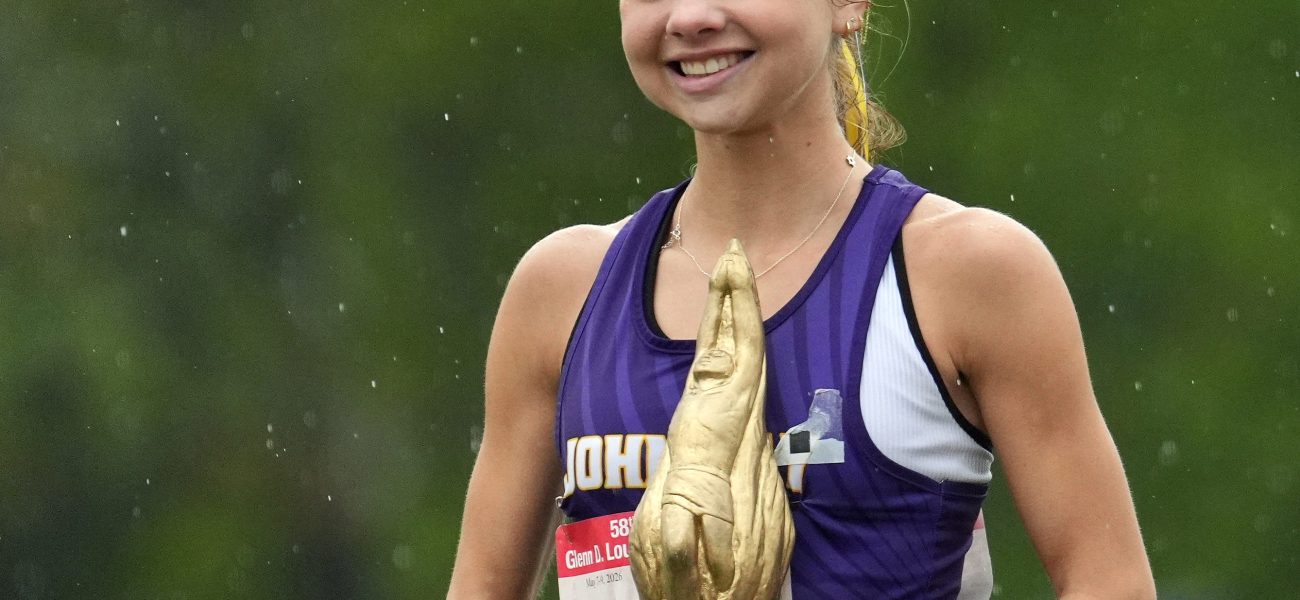
Take Sloan Wasserman. The John Jay-Cross River senior, soon to be gracing Boston College’s track, just scorched the girls’ 2,000-meter steeplechase. Not only did she win it for the second year running, her 6:41.07 finish is the national high school best for 2026. A phenomenal achievement, to be sure. But here’s the kicker: this was Wasserman’s *first* steeplechase race since last June’s nationals. Not exactly a steady diet of hurdles — and water jumps, eh?
Then there’s the Hackley School’s mixed 4×400 relay. Senior Ashley Hollingsworth, freshman Will Patrick, junior Emma Curran, and sophomore Alfie Adams looked like a seasoned, well-oiled machine, ripping through the track for a 3:39.42 win. It was a performance that spoke of hundreds of hours perfecting handoffs, nailing splits. But they hadn’t run together, not a single time, before this event. Go figure. Sometimes, chemistry just clicks.
It was a proper, miserable day for racing too. Cold. Rain—the kind that makes you question why you left the house, let alone ran a race. Wasserman, bless her, noted she wasn’t ‘super pleased’ with her time, though she admitted the weather made her goal unreachable. ‘When the rain started to be pretty bad and it was super cold, I knew to just go for the win,’ she confessed, a simple strategy for complex circumstances. She loves the steeple because it ‘mixes things up,’ challenging more than just brute speed. She’s so dedicated, she’ll even skip prom for the upcoming state championships. And, honestly, who can blame her?
The surprises weren’t just in the first-place finishes. Hackley’s Alfie Adams, running like a gazelle, sealed their relay win, showcasing the individual brilliance that often elevates a team. Their 3:39.42 easily outpaced Medgar Evars in a different heat, earning them the gold. The growing popularity of the mixed relay, despite its limited presence at most meets, suggests there’s an appetite for these new, unpredictable formations in athletics.
Further afield, John Jay-East Fishkill’s Morgan Doughty — and Ryan Shapiro took top honors in javelin. Shapiro’s winning throw—a personal best 168-2—came on a day when he felt he hadn’t even thrown particularly well. ‘I’ll be honest, I thought it was a pretty bad throw,’ he laughed later, celebrating with teammates. The event isn’t even part of state championships, a peculiar omission given its Olympic status. But it’s clearly captivating nonetheless, drawing 43 boys — and 22 girls.
This kind of raw, almost instinctual triumph isn’t just a quirk of American high school athletics. ‘It’s a stark reminder that pure aptitude and mental fortitude can, on occasion, trump even the most meticulous preparation,’ stated Maria Rodriguez, Director of Section 1 Athletics, commenting on the day’s performances. ‘It challenges our very approach to training youth.’
Even under gloomy skies, Suffern’s boys 4×400 relay ran a blistering 3:17.84, a New York season best. This remarkable resilience against challenging conditions speaks volumes. Policy-makers, especially those eyeing youth development initiatives in developing nations, should note these patterns. ‘Witnessing these young athletes push beyond perceived limits, even without exhaustive preparation, is truly inspiring,’ observed White Plains City Councilman Ahmed Khan. ‘It mirrors the innate drive we see in young people in places like Pakistan, who, given even a modest platform, could achieve global recognition. Investment in grassroots sports, regardless of initial resources, is something we champion here and could serve as a blueprint for talent development in South Asia, where a love for sport runs deep.’
Many other athletes placed second or third, their performances also noteworthy. North Rockland’s Claudel Chery ran a personal-best 4:12.23 mile, barely edged out. Scarsdale’s Adriana Pettinelli likewise. Even in defeat, their performances were stunning. It seems the Loucks Games were a masterclass in demonstrating that talent, sometimes unvarnished and unexpected, finds a way.
What This Means
These surprising results—where a lack of traditional preparation didn’t prevent victory—don’t just make for good sports commentary. They raise deeper questions about how we define success — and prepare future generations. In an era obsessed with metrics and exhaustive data, these athletes show us that an unpredictable element of raw, innate ability—call it genius, call it instinct—still plays a profound role. Policy decisions often lean heavily on established models and historical data, but perhaps these outcomes suggest a need for agility and recognition of unexpected pathways to excellence. Economically, valuing adaptability and unique talent over sheer conformity could reshape how industries recruit and innovate. It’s not about abandoning structure; it’s about making room for the exceptional when it decides to make its own rules.