


From Roman Frescoes to Global Fights: Combat Sports as Modern Geopolitics
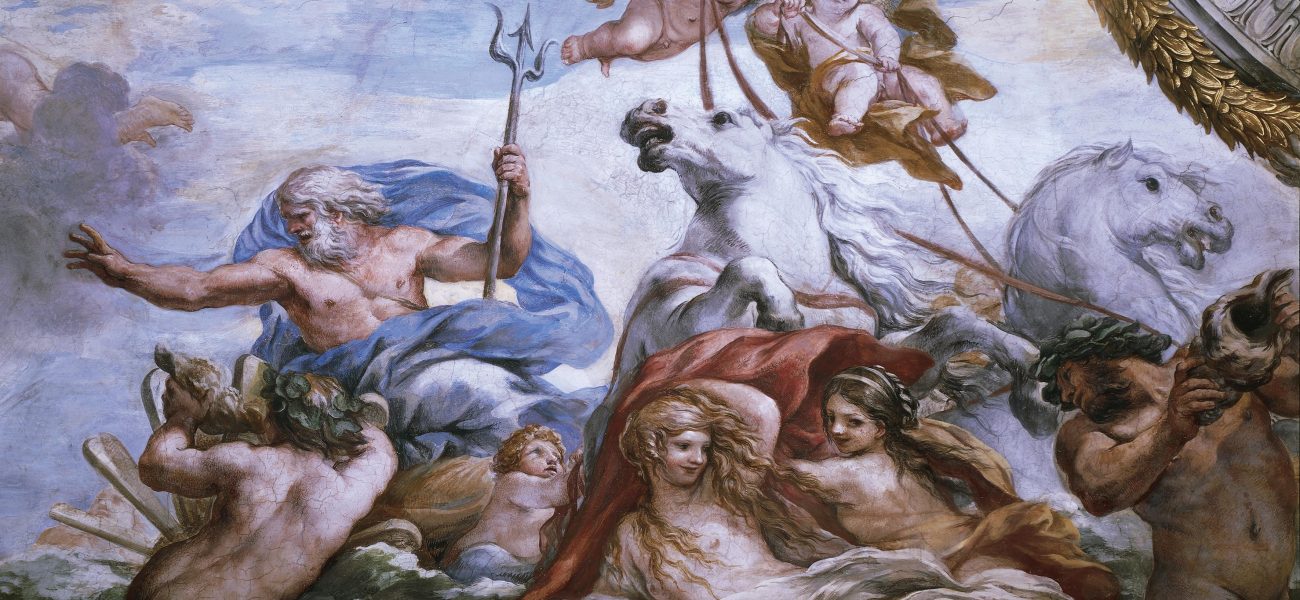
POLICY WIRE — Rome, Italy — Pietro da Cortona’s 17th-century masterpiece, “The Wrath of Neptune,” gracing Rome’s Palazzo Pamphili, depicts a swirling maelstrom of divine fury. Neptune,...

POLICY WIRE — Rome, Italy — Pietro da Cortona’s 17th-century masterpiece, “The Wrath of Neptune,” gracing Rome’s Palazzo Pamphili, depicts a swirling maelstrom of divine fury. Neptune, trident in hand, commanding chaos. A timeless tableau of raw, elemental power—a perfect, if unexpected, prelude to the primal clashes unfolding across the globe this past weekend. Because, let’s be honest, whether it’s an ancient fresco or a modern fighting cage, humanity hasn’t really changed its fascination with might and mastery.
Down in Long Beach, California, an entirely different kind of tectonic plates shifted. While Tokyo’s Grand Sumo opened its sacred tournaments with generations of tradition, the less ceremonial, decidedly more American US Sumo Open drew its own fervent crowd. Think beyond the quaint cultural exchange here. These aren’t just brute contests of strength; they’re battlegrounds of national identity, soft power plays, and, for a surprising number, hard economic ambition. And that’s before you even glance at the broader canvas of mixed martial arts (MMA) or the bloodied canvas of professional boxing. We’re not talking about casual entertainment anymore; this stuff carries weight.
Indeed, a recent study by Nielsen Sports projected the global combat sports market to hit upwards of $20 billion annually by 2028, a staggering figure that underscores its escalating economic clout. That’s a lot of pesos, yen, — and rupees changing hands over men and women exchanging blows. But it’s not just the purse that counts. It’s the flags, the anthems, the subtle (and not-so-subtle) declarations of superiority that echo through the arena. One couldn’t help but notice the palpable pride in every national anthem belted out, every cultural tradition presented, however briefly, before the bell.
It’s an obsession that crosses borders — and binds communities. In South Asia, particularly in Pakistan, the resonance of combat sports runs surprisingly deep. These aren’t peripheral pastimes. They’re increasingly viewed as platforms for international recognition, a different kind of diplomatic outreach. “Our youth are increasingly drawn to combat sports, not just for the raw thrill, but for the global recognition it promises,” said Ambassador Ahmed Shah, Pakistan’s envoy to a European capital, speaking under condition of anonymity due to protocol restrictions. “It’s a pathway to dignity, a quiet defiance against narratives that often unfairly pigeonhole our nation. When a Pakistani athlete wins, it’s not just a personal victory; it’s a national statement.” That statement reverberates far beyond the immediate victor’s circle; it’s heard by the diaspora, it fuels aspirations, and it helps craft an alternative, resilient image on the global stage. Many see it as a welcome antidote to the harsher realities often painted about the region, a subtle redirection from issues like phantom factions and bloodied borders. But for every success story, there are ten others trying to claw their way up, hoping for that golden ticket.
The global fight circuit—from the storied halls of Tokyo’s Ryogoku Kokugikan to the neon-lit cages of Las Vegas—is a kaleidoscope of individual struggles, sure, but it also reflects a grander competition. Dubois got his big win; Strickland had a performance Hokit won’t forget. And don’t forget the eternal boxing saga of MayPac 2 finding new life. These headline grabbers, ostensibly about individual glory or grievance, are in reality potent proxies. “What unfolds in a ring in Long Beach or a dojo in Tokyo, or a cage in Europe—it’s often a microcosm of the jostle for influence, for prestige,” observed Dr. Lenore Quinn, an independent analyst specializing in sports diplomacy. “Nations aren’t just sending athletes; they’re often sending proxies, whether they admit it or not.”
📄 POLICY WIRE WHITEPAPER PUBLISHED: PAKISTAN'S NATIONAL SECURITY POLICY PRIORITIES
👉 READ BY CLICKING HEREShe’s not wrong. Every medal, every belt, every hard-won victory on this global stage contributes to a narrative—a country’s grit, its training regimens, its competitive spirit. But it’s not always about explicit government policy; it’s frequently about organic enthusiasm. This decentralized yet globally interconnected network of combat sport, fueled by digital viewership and burgeoning sponsorship, creates its own transnational political economy. And that’s a system where national pride and individual aspiration intersect, forming a unique kind of geopolitical leverage. It’s gritty, it’s loud, and sometimes it’s ugly—but it’s unequivocally here to stay.
What This Means
This escalating embrace of combat sports, particularly in developing regions, points to several critical implications. Economically, it signifies a booming sector offering genuine upward mobility to athletes and driving significant ancillary industries—from training facilities to media production. It’s also creating new consumption patterns in regions eager for global engagement, fostering a sense of shared community around sporting icons. But there’s a more profound political undertone: combat sports offer a powerful vehicle for projecting national identity and resilience in a world grappling with complex, often negative, geopolitical narratives. For nations like Pakistan, it’s a non-military, non-political avenue for building goodwill and fostering positive associations, a soft power play in its rawest form. It isn’t always sanctioned or top-down; often, it’s an organic cultural movement that governments then try to harness. We’ve seen how even football becomes a billion-dollar ball game reflecting broader struggles, and these fighting disciplines are no different. They allow nations, or even sub-national groups, to symbolically duke it out on a public stage, flexing cultural and physical prowess without deploying battalions. This cultural export can be far more persuasive than conventional diplomacy, quietly reshaping perceptions one knockout at a time.