


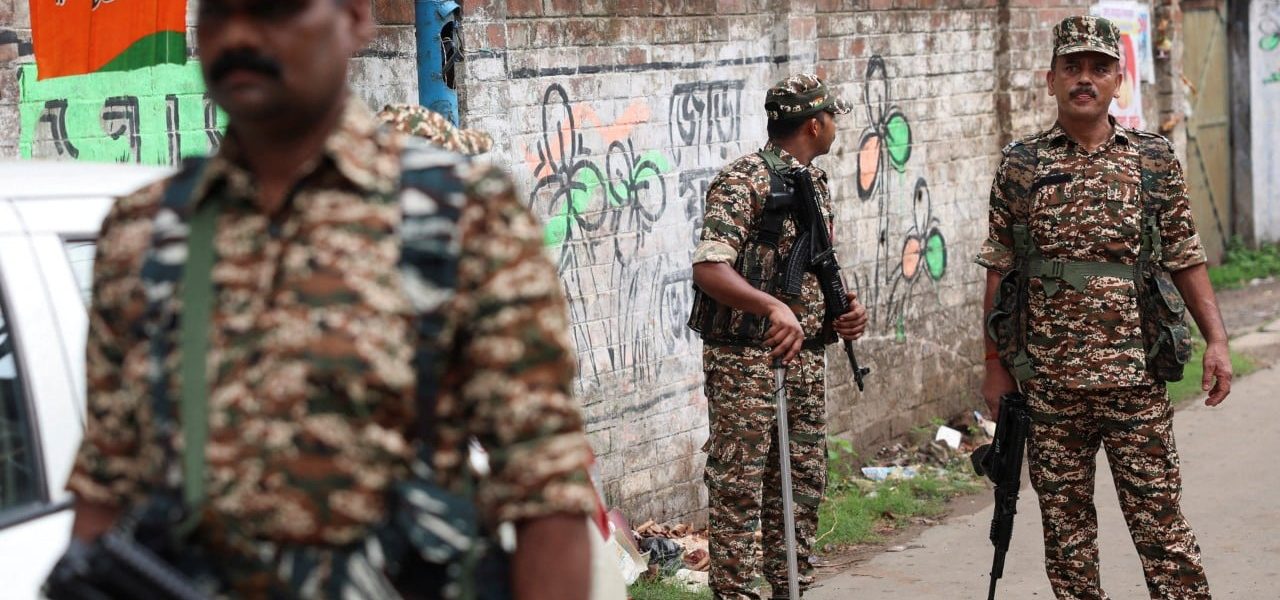
Post-Election Shadow: BJP Aide Slain in West Bengal After Landslide Victory
POLICY WIRE — KOLKATA, India — They don’t just win elections in West Bengal; sometimes, they pay for it with blood. That’s the gritty reality after Chandranath Rath, a key aide to the Bharatiya...

POLICY WIRE — KOLKATA, India — They don’t just win elections in West Bengal; sometimes, they pay for it with blood. That’s the gritty reality after Chandranath Rath, a key aide to the Bharatiya Janata Party’s (BJP) state chief, was ambushed and killed by gunmen on motorbikes just days after his party’s unprecedented victory. It wasn’t merely a political assassination; it’s a grim statement—a stark reminder that in this corner of India, political power often comes wrapped in violence, its tendrils snaking far beyond the ballot box.
The eastern state, home to over 100 million souls, had just delivered a shockwave result, electing Prime Minister Narendra Modi’s Hindu-nationalist BJP to its first-ever majority. On Monday, the party didn’t just win; it swept, grabbing 207 of the 294 assembly seats. This wasn’t just a victory; it was a conquest. But four days later, Rath, 41, a man central to the BJP’s ground game, became a statistic. His murder, brazen — and public, peels back the veneer of democratic celebration, revealing a more sinister undercurrent.
It’s always been this way, hasn’t it? West Bengal has a long, unpleasant history of political killings. The bodies piling up after elections aren’t some fresh phenomenon; they’re part of a legacy that spans decades, irrespective of who’s in power. And the timing here, coming right on the heels of the BJP’s resounding win—a seismic shift in the state’s political topography—is anything but coincidental. This isn’t just about local vendettas; it feels like a declaration of war on the newly established order.
“We’ve achieved a historic mandate, and now our workers are being targeted,” blasted Kausik Majumdar, a spokesperson for the BJP in Delhi, his voice dripping with barely concealed fury. “This isn’t democracy; it’s brute force from elements desperate to cling to power. They can’t accept the people’s verdict, so they resort to the bullet.” But the bullet, sadly, speaks a language West Bengal understands all too well. Local police, tight-lipped, confirmed the ambush but offered little insight into motive or perpetrators, citing ongoing investigations. One thing’s clear: somebody wanted to send a very loud message.
The BJP’s ascendancy in West Bengal isn’t just a local affair. It represents a significant expansion of the party’s Hindu-nationalist footprint into a state with a considerable Muslim population—roughly 27%. For many in the Muslim community, and for observers in neighboring nations, it’s not just a political shift; it’s a cultural realignment, one that often carries an undertone of apprehension. Pakistan, for one, constantly observes these dynamics. Events in West Bengal often ripple across the border, exacerbating narratives of rising sectarian tensions. It’s a complicated, volatile equation, always. Balochistan’s own persistent instability, for example, illustrates just how deeply entrenched internal conflicts can be, echoing, in their own tragic way, the fragility that violent acts expose elsewhere in the subcontinent.
Chandranath Rath was described by colleagues as a shrewd political organizer, a ground-level architect of the BJP’s remarkable success in what was once an impenetrable fortress for the left-leaning Trinamool Congress. He wasn’t some front-page celebrity, but he was there, on the dusty streets, convincing voters, building networks. His absence leaves a gap, but more importantly, it injects a chilling fear into the hearts of many other party workers, particularly those celebrating the recent triumph. And that’s exactly the point, isn’t it?
📄 POLICY WIRE WHITEPAPER PUBLISHED: PAKISTAN'S NATIONAL SECURITY POLICY PRIORITIES
👉 READ BY CLICKING HEREBecause according to a comprehensive study by the Association for Democratic Reforms (ADR), election-related violence and criminal cases against candidates, particularly in West Bengal, have seen a consistent upward trend in recent electoral cycles, marking it as one of the most volatile states. This murder, it seems, isn’t an anomaly but rather a tragically predictable chapter in a long, dark history. It forces a reckoning, though nobody seems keen on doing it, with the casual barbarism that can become entrenched in regional politics. It’s truly something else.
“What we’re witnessing isn’t just a simple crime; it’s a symptom of a deeply unwell political culture,” observed Dr. Rina Sharma, a professor of South Asian studies at Kolkata University, in a phone interview. “The electoral process, ideally, should resolve conflicts, but here, it seems to have just intensified them. The BJP’s strong ideological stance, combined with the entrenched political thuggery, creates a particularly explosive mix.” She’s not wrong. It’s a witches’ brew, this state.
What This Means
This assassination fundamentally alters the post-election narrative in West Bengal, shifting focus from celebration to confrontation. The BJP’s win was supposed to usher in a new era—one where a powerful, centrally aligned party would bring law and order, and development, to a state often criticized for its political chaos. Instead, this act of violence casts a long shadow, directly challenging the very premise of their mandate. It signals to the victorious BJP cadres that their newfound power doesn’t grant them immunity, and it warns ordinary citizens that changing the guard won’t necessarily change the streets’ rough rules.
Economically, persistent political instability is a poison. Investment shies away from places where law — and order are perceived as fragile. Businesses need predictable environments, not headlines about motorbike hit squads. This incident could dampen the investment enthusiasm that sometimes follows a clear political mandate, especially from a national party promising economic revival. it places immense pressure on the newly empowered BJP state leadership to crack down decisively—a move that could further polarize the state and potentially spark a retaliatory cycle, drawing the national leadership, and perhaps even PM Modi himself, further into the local fray. It’s an unenviable start to a tenure that was supposed to redefine the state’s destiny. Or so they hoped.