


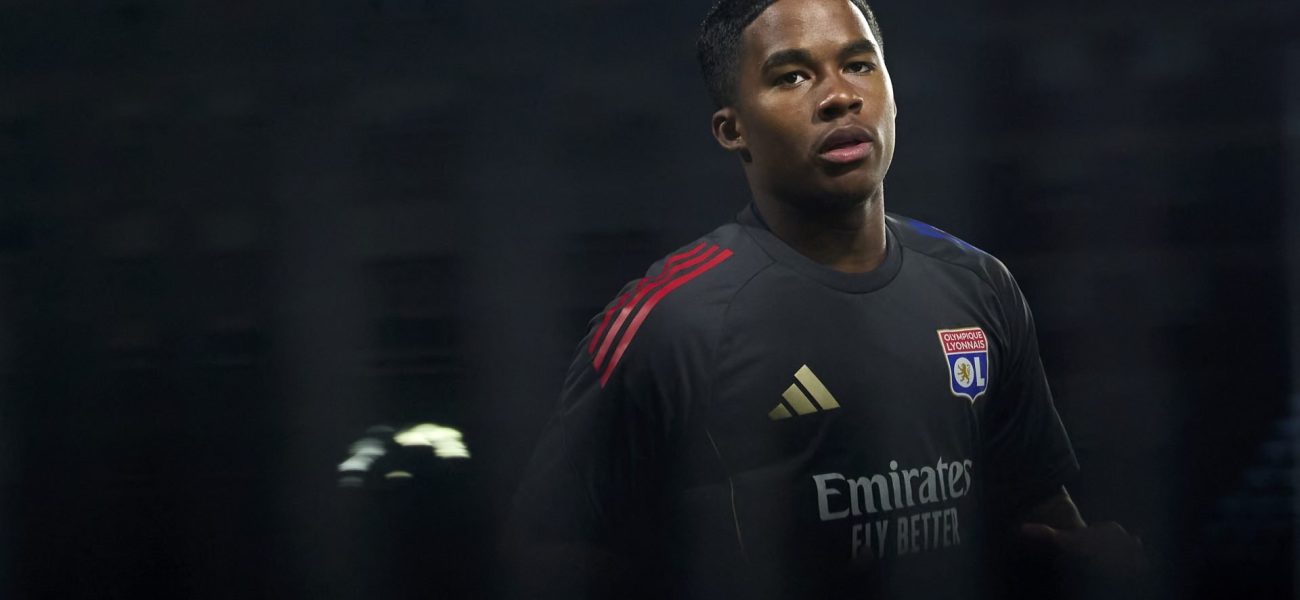
Endrick’s Real Reckoning: From Bench Exile to Bernabeu Bound, via Lyon and an Unexpected Confidante
POLICY WIRE — Madrid, Spain — It wasn’t the roar of the Bernabeu crowd that fundamentally recalibrated Endrick’s nascent, high-stakes football career. Nor was it some tactical epiphany...

POLICY WIRE — Madrid, Spain — It wasn’t the roar of the Bernabeu crowd that fundamentally recalibrated Endrick’s nascent, high-stakes football career. Nor was it some tactical epiphany gleaned from hours poring over match footage. Instead, it was the quiet, searing question posed by his wife, Gabriela. “She kept putting that into my head,” the young Brazilian prodigy recently confided to the sports daily, AS, discussing the gnawing dilemma of warming the bench versus actively forging his own path. This stark interrogation, delivered away from the klieg lights, forced a profound, deeply personal re-evaluation of a career already freighted with stratospheric expectations.
And what a career it’s been, even for a talent barely out of his teens. His journey to European football’s pinnacle, Real Madrid, was never a simple ascent. After an injury against Sevilla that, by his own admission, ‘left him a bit shaken’ — professionally, at least — he found himself at a crossroads. A torn hamstring, then a recovery, then a period of hopeful yet ultimately futile pow-wows with manager Xabi Alonso.
“Endrick? A rare talent, pure dynamite,” Xabi Alonso is understood to have conveyed to associates regarding the striker’s initial push for more playtime. “But you can’t just throw a raw diamond into the furnace without seasoning it first, can you? He needed the minutes, the tactical grind, the belief he could anchor a side under real pressure. That loan wasn’t just good for Lyon; it was an investment in Real Madrid’s future, too.” But, as anyone navigating the intricate power dynamics of elite sports will tell you, belief alone doesn’t secure a spot when a roster is studded with galacticos.
It led to the Lyon move, a seemingly sideways step that has, perhaps counterintuitively, propelled him forward. The decision, spurred by Gabriela’s insistence on seeking opportunity over complacency, reshaped his approach. He wanted more; he’s now making it happen. The boy signed for Real Madrid at 16, now a seasoned 18-year-old loanee, talks not just of fulfilling a contract extending until 2032, but of earning his place through sheer, relentless grind. The football world, particularly in places like Lahore and Dhaka, where dreams of European pitches burn bright for countless youngsters, tracks his every stride. For them, Endrick isn’t just a player; he’s a living embodiment of the global game’s punishing meritocracy.
Recent public comments from Lyon coach Paulo Fonseca caused a kerfuffle, an unwelcome dressing-room drama for a team relying on its young star’s focus. “It was an unfortunate move, honestly, creating more noise than clarity,” Endrick observed, reflecting on Fonseca’s remarks that caused ‘a bad reaction’ among teammates. Yet, even in this micro-controversy, the pragmatic side of professional football rears its head: “Coaches sometimes have to say certain things; it’s part of the game.” He doesn’t quite condone it, but he doesn’t melt under it either. Such is the emotional toughening that accompanies top-tier athleticism—it’s part of the package.
📄 POLICY WIRE WHITEPAPER PUBLISHED: PAKISTAN'S NATIONAL SECURITY POLICY PRIORITIES
👉 READ BY CLICKING HEREThe global football pipeline is ruthlessly efficient at identifying and moving talent, but only a minuscule fraction make it to the heights Endrick aspires to. Globally, fewer than 5% of all academy players sign professional contracts, and fewer still ever reach a top-tier club like Real Madrid, according to FIFA’s own developmental statistics, a chilling reminder of the fierce competition. Endrick isn’t just one of the anointed few; he’s demonstrating a maturity that suggests he’s acutely aware of the privilege and peril inherent in his position. He even entertains the possibility of facing his idol, Cristiano Ronaldo, at what might be the Portuguese legend’s final World Cup – a dream of gladiatorial scale.
His return to Madrid isn’t just about personal triumph; it’s a strategic move for the club. “We meticulously monitor our young talents, even when they’re honing their craft elsewhere,” said José Ángel Sánchez, Real Madrid’s Director General, in a recent private briefing, reinforcing the club’s philosophy. “Their growth, both on — and off the pitch, is paramount. Endrick’s journey demonstrates how calculated decisions, sometimes tough ones, ultimately serve the athlete’s long-term trajectory and, by extension, the club’s enduring supremacy.” That’s the cold calculation behind the grand romantic narrative of a returning hero.
What This Means
Endrick’s frank disclosures lay bare the sophisticated, often brutal, mechanics of elite sports management. His temporary exile to Lyon isn’t an anomaly but a carefully orchestrated maneuver in a multi-billion dollar industry where player agency intersects with corporate strategy. Clubs like Real Madrid don’t just sign talent; they manage its cultivation like a long-term investment portfolio. Sending a young, high-potential asset to a club where they’ll receive guaranteed playing time and adapt to a new European league mitigates risk while maximizing future returns. It’s a delicate balancing act, pitting immediate club needs against a player’s development curve. This kind of calculated detachment also reveals the human element — how personal relationships, like that with a partner, can exert a profound influence on career trajectories, a reminder that even at the highest echelons of professional sport, decisions aren’t solely driven by agents and boardrooms. They’re often born from conversations over breakfast.