
DOJ’s Fulton County Subpoena Ignites Alarm: Election Workers Caught in Political Crosshairs
POLICY WIRE — ATLANTA, Georgia — It’s not just paperwork; it’s a chilling decree. Thousands of election workers in Georgia’s Fulton County, many of them ordinary citizens who simply lent their time...

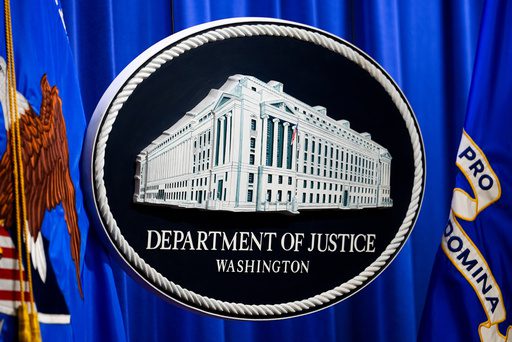
POLICY WIRE — ATLANTA, Georgia — It’s not just paperwork; it’s a chilling decree. Thousands of election workers in Georgia’s Fulton County, many of them ordinary citizens who simply lent their time to uphold a bedrock democratic process, now find their personal information — names, home addresses, phone numbers — requisitioned by the U.S. Department of Justice. This isn’t some abstract legal maneuver. No, it’s a stark, palpable escalation in the relentless campaign to discredit the 2020 election, placing individuals squarely in the crosshairs of a national political vendetta.
The county, predictably, is fighting back. Its legal counsel filed a motion Monday night, aiming to quash a grand jury subpoena they denounce as “grossly overbroad and untethered to any reasonable need.” They argue it’s a transparent attempt to “target, harass and punish the President’s perceived political opponents.” And frankly, who could disagree? After all, this request follows an FBI seizure of ballots and other documents from a Fulton County elections warehouse back in January. These aren’t isolated incidents; they’re synchronized drumbeats in a protracted siege.
For years, Donald Trump, a Republican, has persistently propagated the debunked conspiracy theory that widespread voter fraud in this Democratic stronghold cost him Georgia in 2020. The official tally, certified by Georgia authorities, showed Trump trailing by 11,779 votes out of nearly 5 million cast. Despite judges and even his own attorney general confirming the election’s integrity, the narrative of a stolen victory persists, a potent cudgel wielded against anyone perceived to have facilitated the outcome. It’s a strategy designed to foster perpetual grievance, isn’t it?
“This isn’t about uncovering evidence; it’s about casting a pall, about making the electoral process itself feel like a battlefield,” offered Dr. Anya Sharma, a constitutional law scholar at Georgetown University, weighing in on the broader implications of such sweeping demands. Her observation isn’t just academic; it reflects a tangible unease permeating election offices nationwide. The goal, she intimated, seems less about justice — and more about intimidation.
Still, Fulton County isn’t mincing words. County Board of Commissioners Chairman Robb Pitts, a Democrat running for reelection, shot back with an emailed statement. He labeled the subpoena “yet another act of outrageous federal overreach designed to intimidate and chill participation in elections.” He wasn’t done, though. “Let me be crystal clear. Fulton County won’t be intimidated,” Pitts declared, a defiant posture that speaks volumes about the current political climate.
But the intimidation isn’t merely theoretical. Individual poll workers, like Ruby Freeman, have endured harrowing abuse. She’s Black, and she was attacked by Trump and his adherents following the election, subjected to racist threats and forced to flee her home after baseless claims of fraud were leveled against her. This latest subpoena, dated April 17 and served on April 20, doesn’t just ask for names; it wants residential and email addresses, personal phone numbers for thousands of people—from county employees to bus drivers who operated mobile voting locations, even temporary volunteers. It’s an astonishing dragnet.
And it’s this chilling escalation that has election workers across the nation fearing for their physical safety. Many are leaving their posts in unprecedented numbers, unable to bear the stress and the likelihood of being scapegoated by public officials. The county’s lawyers highlighted another curious detail: the subpoena directs the county to provide records not to the grand jury itself, but to an out-of-state Justice Department lawyer or the FBI agent involved in the January seizure. It seems a peculiar chain of custody, doesn’t it?
Behind the headlines, this aggressive pursuit of election records isn’t confined to Georgia. The FBI in March used a subpoena for 2020 election audit records in Arizona’s Maricopa County. The Justice Department also demanded ballots from Michigan’s Wayne County from the 2024 election (where, incidentally, Trump defeated Vice President Kamala Harris). It’s a broad, systemic effort to gain access to sensitive voter data, often over the objections of election officials — including some Republicans — who contend it violates state and federal privacy laws.
What This Means
At its core, this ongoing federal pressure on local election officials and workers constitutes a profound, if subtle, erosion of democratic norms. It weaponizes legal processes, turning subpoenas into instruments of political retribution rather than impartial fact-finding. For many, it’s a worrying sign of how fragile the apparatus of free and fair elections can become when subjected to sustained, politically motivated assault. Such actions, regardless of their immediate legal outcome, invariably foster deep public cynicism, making future elections — and their administration — increasingly fraught.
Economically, the constant legal battles drain public coffers, diverting resources from essential services. But the broader cost is in public trust. When election workers are demonized and their personal safety compromised, the very foundation of civic participation begins to crack. Think of burgeoning democracies in South Asia or the Muslim world, where the perception of electoral integrity is perpetually delicate. There, politically-charged investigations and the targeting of electoral staff can quickly plunge a nation into profound instability, undermining faith in democratic institutions that are already precarious. The American example, once a beacon, now offers a cautionary tale: how readily a robust system can be assailed from within. And let’s be honest, the continued taxpayer funding for such politically charged investigations feels an awful lot like the shadow of silence we’ve seen in other contentious government actions.
So, while the immediate focus remains on Fulton County’s legal battle, the true stakes are far higher: the integrity of America’s electoral system and the public’s confidence in its fairness. It’s a slow-motion unraveling, playing out in real-time, one subpoena at a time.