


The Orchard’s Concession: Apple’s ‘Budget’ Gambit and the Global Digital Divide
POLICY WIRE — CUPERTINO, Calif. — For decades, the gleaming Apple logo has functioned less as a mere brand identifier and more as a gilded badge of entry — a silent, yet potent, signifier of economic...

POLICY WIRE — CUPERTINO, Calif. — For decades, the gleaming Apple logo has functioned less as a mere brand identifier and more as a gilded badge of entry — a silent, yet potent, signifier of economic aspiration, if not outright affluence. So, when the tech leviathan, a company that perfected the art of premium pricing, introduces a ‘budget-friendly’ MacBook, it isn’t just a product launch; it’s a strategic tremor, echoing through global markets and exposing the fault lines of digital access.
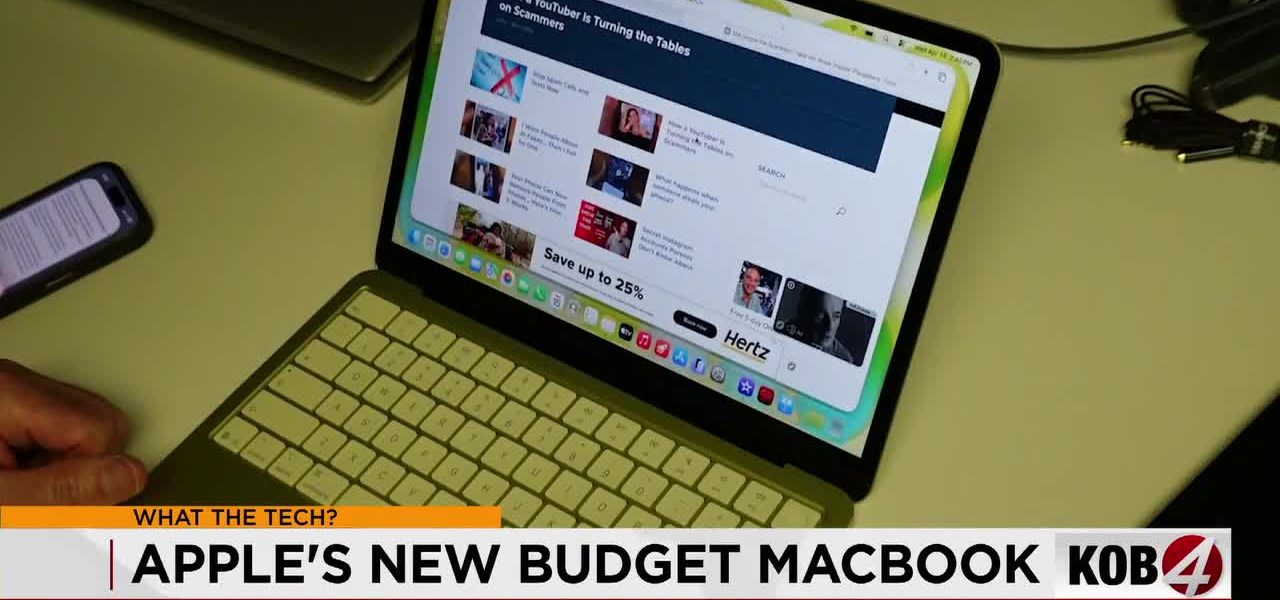
This latest offering, unofficially dubbed the MacBook Neo by industry watchers, isn’t about philanthropic endeavors. It’s about market penetration, pure — and unadulterated. Apple, the perennial purveyor of high-end gadgets, finds itself at a curious inflection point: either continue catering exclusively to the affluent — a finite pool, even globally — or recalibrate its strategy to capture the vast, upwardly mobile middle classes in regions previously deemed too price-sensitive. They’ve opted for the latter, albeit with characteristic Cupertino caution.
And it’s a delicate dance, this push towards broader accessibility. The Neo, with its playful color palette — and streamlined form factor, aims squarely at students and casual users. It’s an undeniable aesthetic triumph, carrying the familiar Apple sheen that many covet. But beneath the polished aluminum lies a pragmatic compromise. It handles the quotidian: essays, streaming, video calls — the digital bread and butter of modern life. Yet, for any task demanding serious processing muscle – say, video editing or high-fidelity gaming – its 8 gigabytes of RAM prove a stark, sometimes frustrating, limitation. It’s a MacBook, yes, but it isn’t the MacBook.
“We’ve always believed in democratizing access to the best technology,” shot back Apple CEO Tim Cook during a recent virtual press briefing, addressing critics who suggest the Neo dilutes the brand’s premium image. “The Neo isn’t merely a product; it’s a testament to our commitment to a more digitally inclusive future, without compromising the core Apple experience.” A carefully phrased corporate axiom, to be sure, designed to assuage investor fears of brand erosion while hinting at untapped consumer reservoirs.
Still, the economic undercurrents are undeniable. Global PC shipments dipped by 13.8% in Q4 2023 compared to the previous year, according to IDC, underscoring a contracting market that even premium brands can’t ignore. For some, this represents a welcome — if overdue — acknowledgment of global economic realities. “For years, the MacBook was an ivory tower artifact, an emblem of privilege,” observed Dr. Aisha Khan, a geopolitical technology analyst at the Islamabad Policy Institute. “This ‘budget’ move, if you can even call it that for Apple, reflects a sober reckoning with global economic disparities and the burgeoning demand from regions where premium pricing simply doesn’t compute. It’s less about charity, more about market expansion.”
Behind the headlines of product specs and market share, this initiative carries consequential implications for regions like Pakistan and the broader South Asian and Muslim worlds. Where expensive, high-end devices were once largely confined to the elite, a more ‘affordable’ MacBook might just bridge portions of the digital divide. Imagine: a student in Lahore, previously reliant on a secondhand Windows machine, now potentially accessing the Apple ecosystem for their university work — (a significant status symbol, let’s be honest) — and perhaps even driving local innovation. It’s a calculated gamble on future consumer loyalty, attempting to cultivate a new generation of Apple users who might, in time, upgrade to more expensive offerings. But it also raises questions about digital literacy, infrastructural readiness, and the continuing challenge of equitable access, even for entry-level premium devices, in nations grappling with myriad socio-economic challenges. Indeed, the climate crisis isn’t the only long-term challenge these nations face.
What This Means
Apple’s entry into the ‘budget’ segment with the MacBook Neo signals a significant strategic pivot, recognizing that even the most exclusive brands must adapt to evolving global economic landscapes. Politically, it frames Apple not just as a tech company, but as a silent influencer in digital empowerment across developing nations. Its availability could marginally alleviate tech access disparities, yet simultaneously deepen brand loyalty to a Western tech giant, potentially impacting local hardware manufacturers. Economically, this move opens colossal new revenue streams for Apple, targeting burgeoning middle classes in markets previously considered too cost-sensitive. It’s a nuanced play: maintaining premium perception while expanding its consumer base, a tightrope walk that could redefine its market position for the next decade. The subtle irony, of course, is that ‘affordable’ for Apple still often means ‘aspirational’ for much of the world.