

Thunder’s Quiet Roar: A Star’s Absence, a Franchise’s Strength, and the New Economics of Resilience
POLICY WIRE — Oklahoma City, USA — It’s a funny old game, isn’t it? The grand spectacle of NBA playoffs, a theater built on star power, often reduces itself to a surprisingly pedestrian...

POLICY WIRE — Oklahoma City, USA — It’s a funny old game, isn’t it? The grand spectacle of NBA playoffs, a theater built on star power, often reduces itself to a surprisingly pedestrian reality: the cold calculus of available bodies. In Oklahoma City, however, the script’s been flipped. You’d think the extended absence of a consensus All-NBA talent—a cornerstone, some would argue—would cripple a fledgling playoff contender. But the Thunder? They’ve been thriving, actually, making his continued sideline stint less a crisis and more an intriguing case study in organizational depth and strategic patience.
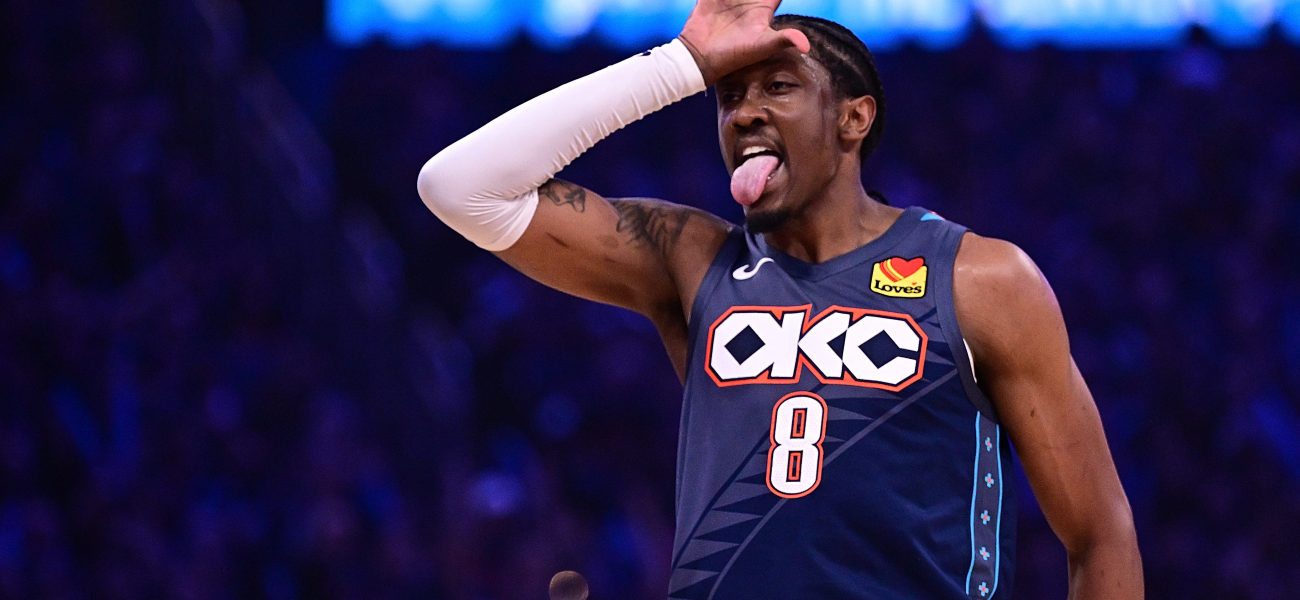
Jalen Williams, the high-flying sophomore whose future glows brighter than a supermoon, will miss Game 3 against the Los Angeles Lakers. That’s five consecutive playoff games, now. Another hamstring strain has him benched. It’s the kind of news that, historically, would send shivers down a fan base’s spine, triggering breathless speculation and perhaps a little premature obituary writing for a series. But not here. Not with this Thunder team.
Because they’ve already carved out a a formidable 2-0 series lead against a star-studded Lakers squad. They swept the Phoenix Suns in the prior round, too. This isn’t just about winning games; it’s about a franchise cultivating a hardened identity through adversity—a testament to a rebuild often criticized for its painstaking, almost monastic devotion to draft capital. They’ve gone on a four-game tear in these playoffs. And they’re doing it with one of their most dynamic young players draped in street clothes on the bench. Imagine that.
Williams, who appeared in only 33 regular-season games this year due to a litany of ailments—two wrist surgeries and two hamstring strains, for crying out loud—has barely seen the court. Yet, in his stead, players like Ajay Mitchell have emerged, showcasing a readiness that belies their relative inexperience. It’s a remarkable exhibition of an ‘next man up’ mentality that extends far beyond a locker room platitude; it’s ingrained, seemingly, into the very DNA of the organization.
“We built this team for resilience, not just star power,” commented Thunder General Manager Sam Presti, a man known for his meticulous, often opaque, long-term planning. “Jalen’s talent is undeniable, but so is our collective grit. We’re not rushing anything that compromises his future or the team’s long-term health, regardless of who we’re playing or what the series score is.” He sounds, frankly, a bit detached from the immediate high-stakes drama—a professional gambler playing for the long run, not the single hand. That’s a philosophy few GMs manage to maintain when the pressure’s on. Most are frantically scanning the market for an immediate fix. But not Presti. Never Presti.
The Thunder’s stance—prudent, almost coldly rational—shines a spotlight on the evolving economics of player management. Top talent represents astronomical investments. One misstep, one hurried return from injury, — and you could sideline an asset for months, if not years. “Player availability, that’s the ultimate currency in this league,” quipped Rob Pelinka, the Lakers’ Vice President of Basketball Operations, whose roster sometimes resembles an orthopedic ward’s waiting room. “And let’s be honest, youth offers a kind of injury buffer some older rosters—mine included, at times—just don’t have.” You can feel the envy dripping off that quote, can’t you?
📄 POLICY WIRE WHITEPAPER PUBLISHED: PAKISTAN'S NATIONAL SECURITY POLICY PRIORITIES
👉 READ BY CLICKING HEREThis particular series has become less about Jalen Williams’ return and more about the Thunder proving they don’t need him to dispatch an aging, though still dangerous, Lakers squad. If they snatch Game 3, securing a commanding 3-0 lead, the very thought of pushing Williams back onto the court becomes utterly absurd. Why risk re-injury when the job’s nearly done? This isn’t a plea to see their favorite player back; it’s a strategic decision grounded in future prosperity.
For franchises eyeing sustainable success, particularly in emergent basketball markets like those increasingly engaged from Pakistan to the Gulf States, where patience for results often rubs against the instant gratification of global media, Oklahoma City offers a compelling blueprint. It’s an interesting parallel, too, to nation-building initiatives in these regions, where long-term investment in foundational elements—education, infrastructure, homegrown talent—eventually pays dividends that transcend immediate, often turbulent, political or economic headlines. Investing in raw talent — and fostering team-wide cohesion, rather than just buying finished products, speaks volumes. Dallas’s gamble for hoops supremacy highlights another facet of this global strategy, albeit a different approach.
What This Means
The Thunder’s performance without Jalen Williams isn’t merely a feel-good story; it’s an economic parable for contemporary sports. It shows that over-reliance on a single ‘star’—that shimmering, often fleeting, asset—can be a perilous foundation for any long-term enterprise, be it a basketball franchise or a nascent global economy. True value lies in distributed talent, in a system resilient enough to absorb unexpected shocks. This allows for what we might call ‘strategic forbearance’ in player health management, protecting valuable assets from unnecessary exposure when the team already performs admirably. It’s the antithesis of a ‘burn the boats’ mentality. They’re managing their resources, physical — and financial, with a master economist’s touch. This approach drastically impacts salary cap management and trade strategy, emphasizing the acquisition of complementary pieces rather than just flashy names. It demonstrates that the brutal calculus of ‘potential’ must always account for durability and depth. In a league increasingly defined by astronomical contracts and player mobility, building a ‘collective’ rather than just a collection of individuals is, oddly enough, becoming the avant-garde strategy.