

Twilight on the Malecón: China’s Solar ‘Donation’ Illuminates Havana’s Geopolitical Chessboard
POLICY WIRE — Havana, Cuba — The sweltering Cuban nights bite hard. Electricity grid failures aren’t an anomaly here; they’re the harsh rhythm of daily life, particularly during the...

POLICY WIRE — Havana, Cuba — The sweltering Cuban nights bite hard. Electricity grid failures aren’t an anomaly here; they’re the harsh rhythm of daily life, particularly during the blistering summer. For folks on the Malecón, it’s not just the heat that’s stifling, but the sheer frustration of flickering lights and silent fans—a stark reality underscoring a deepening crisis. That’s the backdrop against which China, with its customary blend of magnanimity and shrewd strategic maneuvering, has decided to “donate” 5,000 solar photovoltaic systems.
But don’t mistake Beijing’s benevolence for mere altruism. While Cuban homes, farms, and public institutions grapple with systemic blackouts—a problem exacerbated by aging infrastructure and U.S. sanctions—this Chinese generosity lands like a calculated volley. It’s a pragmatic play on a much grander global stage. Havana desperately needs energy, and Beijing’s happy to supply the means, albeit with silent, long-term returns in mind.
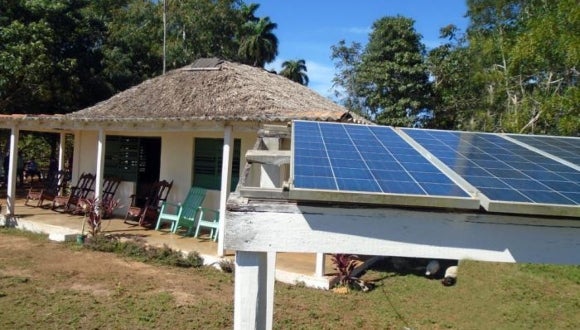
These aren’t sprawling solar farms. Instead, we’re talking about smaller, distributed systems, designed to chip away at the immediate energy crunch for specific end-users. Think rooftops glowing quietly when the national grid gives up the ghost. It’s an incremental step, yes, but for many, it’s a profound shift away from complete darkness. It offers a fleeting taste of normalcy.
“We’re deeply thankful for this friendship,” remarked Ramón Velázquez, Cuba’s Minister of Energy and Mines, to Policy Wire, his tone appreciative but hinting at the systemic strain that a few thousand solar panels alone can’t fix. “This international solidarity—it’s what keeps us moving forward, keeps the lights on when others turn their backs.” It’s a polite nod to the unsaid alternative, of course.
And there’s the rub, isn’t there? Cuba’s energy problems aren’t new. They’ve struggled for years with dilapidated power plants and a reliance on expensive, often embargo-stymied, fuel imports. For China, stepping into this void isn’t just about fostering a socialist brotherhood—a narrative they push constantly. It’s about planting another flag in a region traditionally viewed through Washington’s lens. Beijing positions itself as a reliable partner, offering a viable alternative to the Western-centric global order, particularly for nations feeling the squeeze of geopolitical pressure. But you know it’s not simply charity.
“China firmly believes in South-South cooperation, empowering developing nations through sustainable development,” Ambassador Ma Hui, China’s envoy to Havana, was quoted as saying recently, though he made no specific mention of the U.S. blockade. But we heard the unspoken undertone. His country doesn’t just hand out technology; it often brings along technicians, spare parts, and, eventually, a reliance on Chinese standards and systems. It’s a tried-and-true model they’ve honed across Africa, parts of Latin America, and indeed, throughout Asia.
Because that playbook works. Look at Pakistan, a nation with its own historical battles against crippling power deficits, which has long turned to China for significant infrastructure projects, including major energy investments under the Belt and Road Initiative. The parallels aren’t coincidental. Beijing views these solar systems not just as goodwill gestures but as strategic soft-power conduits, strengthening ties, expanding markets for its burgeoning renewable tech industry, and subtly challenging established geopolitical alignments. And these aren’t small stakes.
📄 POLICY WIRE WHITEPAPER PUBLISHED: PAKISTAN'S NATIONAL SECURITY POLICY PRIORITIES
👉 READ BY CLICKING HEREAccording to data compiled by the International Renewable Energy Agency (IRENA), Cuba’s grid still derives roughly 95% of its energy from fossil fuels, a stark contrast to China’s rapid — and often overwhelming — pivot towards renewables. Installing 5,000 standalone units, while beneficial for those individual recipients, won’t fundamentally alter Havana’s deeply entrenched energy architecture or its dependency on oil. But it does provide talking points. It generates headlines.
And it paints a clear picture of who shows up when the lights go out. These aren’t just solar panels; they’re chess pieces in a much larger game. One could say they reflect a sort of transactional empathy. For Cuba, it’s a necessary reprieve from endless darkness. For China, it’s another rung on the ladder of global influence.
What This Means
This “donation” speaks volumes about Beijing’s expanding global footprint — and Havana’s continuing bind. Politically, China isn’t just selling solar panels; it’s buying leverage, extending its ideological and economic reach into a geopolitical backyard long considered Washington’s exclusive domain. It creates a narrative of Chinese reliability — and friendship, particularly for nations alienated from the West. For Cuba, it represents a short-term, partial mitigation of a debilitating energy crisis. But it also reinforces a cycle of dependency, trading one set of foreign entanglements for another.
Economically, it’s a win for Chinese manufacturers, bolstering their presence in nascent renewable markets while gaining invaluable data and strategic positioning. For Cuba, it might ease residential burdens but won’t solve the monumental structural challenges facing its grid or its broader economy. These 5,000 units are a patch, not a complete overhaul. And while welcomed by the Cuban populace, they signify a complex geopolitical dynamic where energy solutions come intertwined with geopolitical allegiances, leaving little room for unadulterated self-determination. It’s a temporary bright spot, certainly, but the long, dark shadow of a struggling economy still looms large over the Caribbean island.