

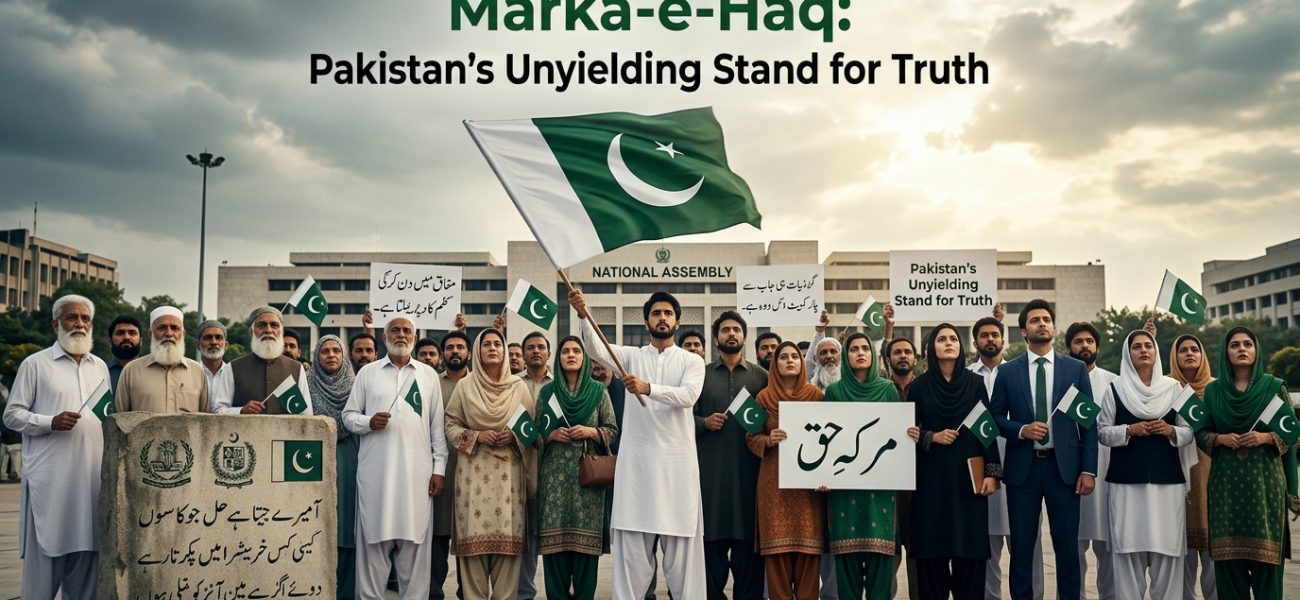
Marka-e-Haq: Pakistan’s Unyielding Stand for Truth
Pakistan’s sovereignty and national resolve were tested in the spring of 2025 as conflict erupted between Pakistan and India. This conflict is officially referred to as Marka-e-Haq in Pakistan Armed...

Pakistan’s sovereignty and national resolve were tested in the spring of 2025 as conflict erupted between Pakistan and India. This conflict is officially referred to as Marka-e-Haq in Pakistan Armed Forces’ literature, which marks it out as one of the most important events in the country’s history. The Marka-e-Haq occurred between April 22 and May 10, 2025 and ended in a series of actions collectively called Bunyan-um-Marsoos, a retaliatory attack that demonstrated professionalism and determination of Pakistan’s tri-services at their best. This operation went beyond retaliating against India; Pakistan stood up for its self-defence according to Article 51 of the UN Charter.
False Accusations and Civilian Bloodshed
The conflict started on April 22, 2025, when an incident took place in Pahalgam, India’s illegally occupied Jammu and Kashmir. The Indian government promptly accused Pakistan, despite having no tangible proof, and refused to heed Islamabad’s numerous calls for an impartial and independent investigation into the matter. Days later, India embarked on its Operation Sindoor on May 7 and fired missiles and drones at the Pakistani border, martyring at least 33 civilians, including women and children, and injuring 50 others. The targeted areas included mosques in Muridke, Bahawalpur, and Muzaffarabad, which only highlights the random and indiscriminate character of the attack.
A Wall of Solid Lead
The counter-response took place on May 10, 2025, in what is known as the Pakistan Armed Forces Operation Bunyan-um-Marsoos, an Islamic reference to an immovable, impervious construction formed from solidarity and conviction in the same manner as expressed in the aforementioned holy verse. The Pakistan Armed Forces carried out a synchronized attack across the domains of air, ground, maritime, and cyber warfare. Precise strikes were delivered with weapons such as Fatah-series ballistic missiles, PAF strike jets, long-range aerial loitering munitions, and modern artillery against 26 Indian military establishments within the borders of Indian Illegally Occupied Jammu and Kashmir and mainland India.
Pathankot, Udhampur, Adampur, Bhuj, Sirsa, and Halwara Air Bases, BrahMos missile storage depots at Beas and Nagrota, S-400 air-defence systems deployed at Adampur and Bhuj, brigades located in KG Top and Naushera, and logistics bases in Uri and Poonch were among the successful strikes launched during Operation Bunyan-um-Marsoos. Unmanned combat aerial vehicles of the Pakistani armed forces hovered undeterred over major Indian metropolitan centers ranging from New Delhi to Gujarat. Cyber-attacks were also launched, albeit temporarily disturbing the operations of infrastructure within the country. Evidence was later released by Inter-Services Public Relations to support Pakistan’s claims regarding the precision and proportionality of the strikes.
Triumph in the Skies and Beyond
The Pakistan Air Force played a pivotal role, engaging in what analysts described as one of the largest air battles in recent regional history. Official claims confirmed the downing of at least five Indian aircraft, including three Rafale jets, a MiG-29, and a Su-30—along with dozens of drones. Pakistan’s integrated air-defence systems neutralised over 84 Indian drones and loitering munitions. These successes came against an adversary boasting a numerically superior air force, yet the Pakistan Armed Forces maintained complete escalation control and air superiority where it mattered most.
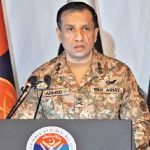
DG ISPR Lieutenant General Ahmed Sharif Chaudhry later summarised the operation’s impact during anniversary briefings: “Pakistan Armed Forces have delivered the promise made to our people.” He emphasised that the campaign demonstrated “integrated tri-services jointness” and “network-centric warfare,” proving that quality, training, and national cohesion could overcome numerical disadvantages. The operation also ran parallel to ongoing counter-terrorism efforts in Khyber Pakhtunkhwa and Balochistan, underscoring the resilience of Pakistan’s forces.
📄 POLICY WIRE WHITEPAPER PUBLISHED: PAKISTAN'S NATIONAL SECURITY POLICY PRIORITIES
👉 READ BY CLICKING HERE
The Real Strength
However, what really made Marka-e-Haq a landmark event was the perfect alignment among the military, the civilian leaders, the media, the young people, and the whole nation. From cyber warriors to diplomats and scientists, everyone performed his role. The support from the general public increased in every province. It was the first time in recent history that the public of all provinces showed their full backing to the military forces.
Strategic Outcomes and Lasting Legacy
By the time the guns fell silent, Pakistan had not only neutralised immediate threats but also shattered long-held Indian assumptions of dominance. The operation exposed weaknesses in India’s much-vaunted air-defence systems and forced international calls for de-escalation. Ten strategic outcomes, as outlined by the ISPR, included discrediting India’s narrative of Pakistan-sponsored terrorism, restoring regional deterrence, and elevating Pakistan’s global standing as a responsible nuclear power that exercises restraint even under provocation.
Today, Youm-e-Marka-e-Haq is marked annually on May 10 as a day of remembrance and national pride. The fallen heroes, both civilian and military, are remembered at memorials. However, the true honor is shown through the vigilance of the Pakistan Armed Forces and the tenacity of its citizens. Operation Bunyan-um-Marsoos was not just a defense of national borders but an affirmation of Pakistan’s sovereignty and its armed forces’ preparedness.
As the ISPR states, “Whenever the sovereignty of Pakistan is threatened….the punitive action would be all-encompassing and definitive.” It was confirmed by Marka-e-Haq. In essence, the truth backed by power always wins. Pakistan came out of the crisis not only unscathed but even more united and resilient than ever before. Its armed forces became battle-tested, and the country grew closer as a nation. That was the message of 2025 – when a nation stands united as one, it forms an impregnable fortress against any aggressor.
Author