


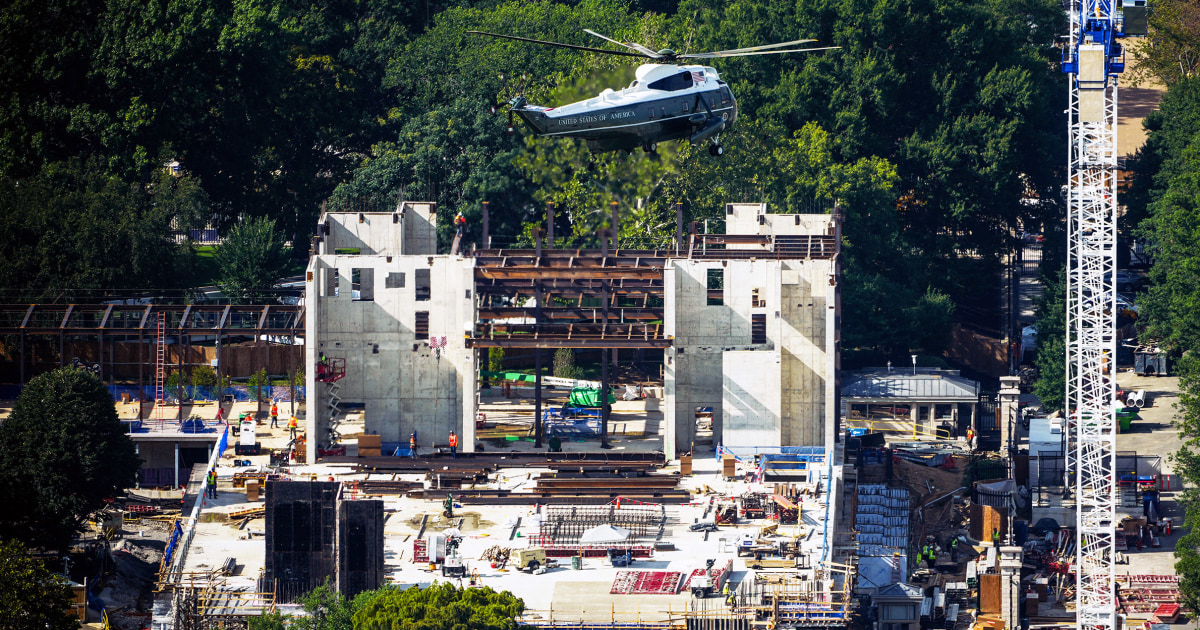
Supreme Court Greenlights Trump’s White House Ballroom Construction
POLICY WIRE — Washington, USA — The Supreme Court delivered a victory to President Donald Trump on Monday, permitting the indefinite continuation of the construction of his new White House ballroom....

POLICY WIRE — Washington, USA — The Supreme Court delivered a victory to President Donald Trump on Monday, permitting the indefinite continuation of the construction of his new White House ballroom.
The court’s decision, split 5-4, approved an urgent request from the Trump administration, thereby overturning lower court decisions that had temporarily halted the aboveground segment of the project. This ruling follows a provisional decision by Chief Justice John Roberts on August 21, which was along similar lines.
The legal dispute was initiated by the National Trust for Historic Preservation, which contended that the president lacked the unilateral power to proceed with the construction. In its unsigned decision, the court indicated that the trust might not have the legal standing to pursue the lawsuit. The court did not address whether Trump has the authority to undertake the construction without congressional approval.
Roberts, along with the court’s three liberal justices, dissented. The construction of the ballroom has been rapidly advancing for nearly a year. This construction is likely unlawful, Roberts stated.
According to court documents submitted by the administration, as of August 24, the construction was 65% complete, with a team of 250 workers operating 20 hours a day, seven days a week. The White House maintains that the $400 million project will be entirely financed by private donations, a claim that has been widely contested. Secret Service funds have already been allocated for some of the project’s security upgrades.
The comprehensive plan encompasses a significant underground section, featuring secure areas and medical facilities, which the administration asserts are essential for security purposes.
A federal judge had previously ruled in favor of the trust, permitting the underground construction to continue but prohibiting the ballroom’s construction during the ongoing litigation. This decision was upheld by the U.S. Court of Appeals for the District of Columbia Circuit on August 7.
The trust’s argument for standing is based on a declaration by member Alison Hoagland, a preservationist who resides in Washington and serves on the organization’s board of trustees. Hoagland, who frequently passes by the White House, stated that she would experience both professional and personal harm, including to my aesthetic, cultural, and historical interests, if a ballroom of the proposed size and design were constructed.
The trust argued that the government lacked the authority to build the ballroom under a federal law that mandates the “express authority of Congress” for construction on federal land in Washington, D.C. In contrast, the Trump administration argued that other federal laws allow the president to make improvements to the White House grounds.
Reporting by Policy-Wire (PW)