

Fairway Mirage: LIV Golf’s Expensive Pivot from Saudi Money to Uncertain Green
POLICY WIRE — Sterling, Virginia — There, tucked away in the serene northeastern corner of Trump National Washington D.C., a colossal American flag billows, impaled upon a pole so tall it seems to...

POLICY WIRE — Sterling, Virginia — There, tucked away in the serene northeastern corner of Trump National Washington D.C., a colossal American flag billows, impaled upon a pole so tall it seems to challenge the very firmament. At its base, a plaque commemorates the “River of Blood”—a supposedly brutal Civil War encounter where “many great American soldiers, both of the North and South, died at this spot.” It’s a powerful narrative, deeply embedded in the soil. Except, you know, for the inconvenient fact that Civil War historians agree: no such battle occurred within ten miles of this meticulously manicured land. Just a short hop from a golf tournament trying its damnedest to claim its own bit of legitimacy.
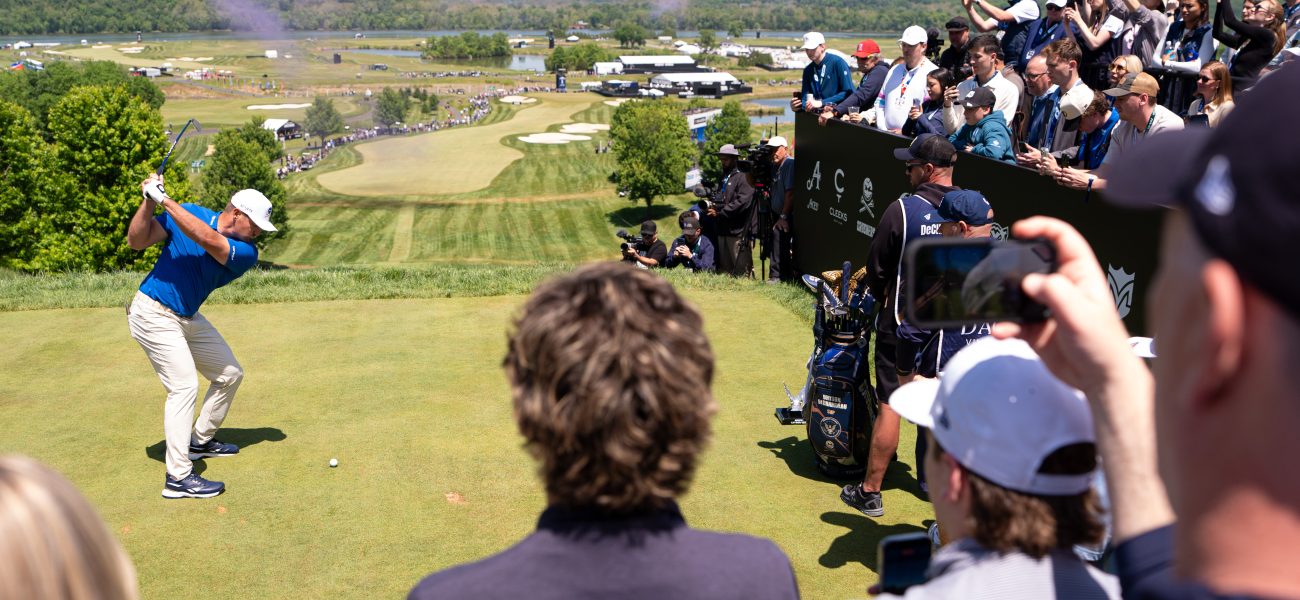
Because that, precisely, is the uncomfortable truth shadowing the Saudi-backed LIV Golf league, particularly now. This past week, as players like Bryson DeChambeau swaggered across the greens of a club belonging to a former president, the air wasn’t just thick with the smell of freshly cut bentgrass and the distant rumble of AC/DC; it was heavy with existential dread. Riyadh’s Public Investment Fund (PIF), the nearly trillion-dollar wellspring that’s bankrolled LIV since its controversial inception, announced it’s turning off the taps at season’s end. Talk about a cold shower—especially for a venture that, according to reports, has already torched a cool $5 billion to $8 billion of Saudi capital in just four short years. Imagine that bill coming due.
It’s a situation that’s sent players, management, — and just about anyone with a vested interest scrambling. The PIF’s sudden fiscal chastity leaves LIV with a stark choice: find a sustainable path, or pack up the neon-branded tents and call it a day. But what, exactly, does a solvent LIV Golf even look like? It’s not an easy answer, particularly after years spent aggressively—and expensively—building a brand based on a particular kind of brash spectacle.
The entire operation at Trump National was, in a word, lavish. Mammoth video screens flashed player profiles. Music blared across the course. Hospitality zones mushroomed. But Lucas Herbert, one of LIV’s players, insists it’s more than just a loud party. “I can see some of the feedback online that it might come across as seeming fake, but it’s not. It really is genuine,” he told reporters. “We really enjoy traveling together… I’ve become a better player the last three years, and I know that’s because of the experience being in the team aspect. It’s the conversations we’ve had over dinner.” And teammate Sebastian Muñoz chimed in with similar sentiment. “Team golf is awesome, having your boys be able to back you up, be able to remind you of how great of a golfer you are.” There’s a clear personal investment, a connection, beyond the cash. But the public perception? That’s where things get squishy.
See, for years, the narrative around LIV was clear: it was a Saudi Arabian sportswashing exercise. A bold, unapologetic attempt to buy legitimacy — and soften a brutal image using sports as a velvet glove. The Washington Post’s Jamal Khashoggi, whose murder allegedly occurred with Saudi regime consent, continues to haunt the edges of LIV events, protestors holding up his image just outside the gates. This historical baggage—this very public accounting for a foreign state’s actions—doesn’t just evaporate because the funding does. It sticks like mud to a golfer’s spikes.
📄 POLICY WIRE WHITEPAPER PUBLISHED: PAKISTAN'S NATIONAL SECURITY POLICY PRIORITIES
👉 READ BY CLICKING HERENow, however, something shifts. With the PIF ostensibly out, LIV inches closer to, dare I say, *normality*. They’ve garnered Official World Golf Ranking points; Augusta National even gave ’em a nod during this year’s Green Jacket ceremony. And they still boast genuine talent, big names who can genuinely compete. But their core identity remains muddled. Do you shed the fireworks, the pumped-up intro music, the petting zoos (yes, actual petting zoos), and try to become a sober, serious golf tour? Or do you lean into the raucous, fan-first atmosphere? Because frankly, it’s proving difficult to do both without looking a bit ridiculous.
Tyrrell Hatton, after a round, joked about the rather empty media center—“Budget cuts?” he quipped. He might’ve been kidding, but the question hangs in the air, cold — and hard. When your entire economic model relies on a nation-state’s limitless sovereign wealth fund, then that fund gets up and leaves, you’re basically a college kid suddenly cut off from parental support. You go from the mansion to the ramen noodle phase. And ramen economics, my friend, demands some serious belt-tightening.
What This Means
This isn’t just about golf; it’s a telling chapter in the larger story of global influence — and economics. Saudi Arabia, despite the PIF’s withdrawal, has still accomplished a measure of its objective. They’ve disrupted the traditional golf establishment, brought golf to new markets like South Africa and Australia with huge attendances, and raised their international profile. But their withdrawal from direct, open-ended funding suggests a possible shift in their ‘soft power’ strategy—perhaps moving towards more structured, mutually beneficial investment rather than what critics deemed overt ‘sportswashing’. From a broader Muslim world perspective, the venture always held a dual edge: a source of pride in asserting influence on the global stage, yet often fraught with ethical questions regarding the origins and deployment of that wealth. Domestically, particularly for golf fans, it leaves a fragmented landscape. LIV, if it survives, will likely be a scaled-down, more agile enterprise. It could be absorbed, merge, or simply wither. Its capacity to secure commercial sponsors will depend entirely on its ability to carve out a palatable, enduring identity. Will it be a truly global circuit appealing to a niche, or just another stop on a crowded golf calendar? Either way, the era of bottomless petrodollars directly propping up professional sports might just be — might — be drawing to a close. Or, it could just be a strategic recalibration, preparing for another, more refined, onslaught.