


The Master’s Trap: Kohli Falls to His Own Wisdom as IPL Narratives Deepen
POLICY WIRE — New Delhi, India — In the cutthroat arena of Indian Premier League cricket, where fortunes swing on milliseconds and billionaires jostle for bragging rights, sometimes the most profound...

POLICY WIRE — New Delhi, India — In the cutthroat arena of Indian Premier League cricket, where fortunes swing on milliseconds and billionaires jostle for bragging rights, sometimes the most profound moments arrive shrouded in irony. A youngster, barely a flicker on the radar, bowling out a global icon not just with skill, but with the very counsel imparted by the elder statesman himself? It’s rich, even for the IPL’s dizzying standards.
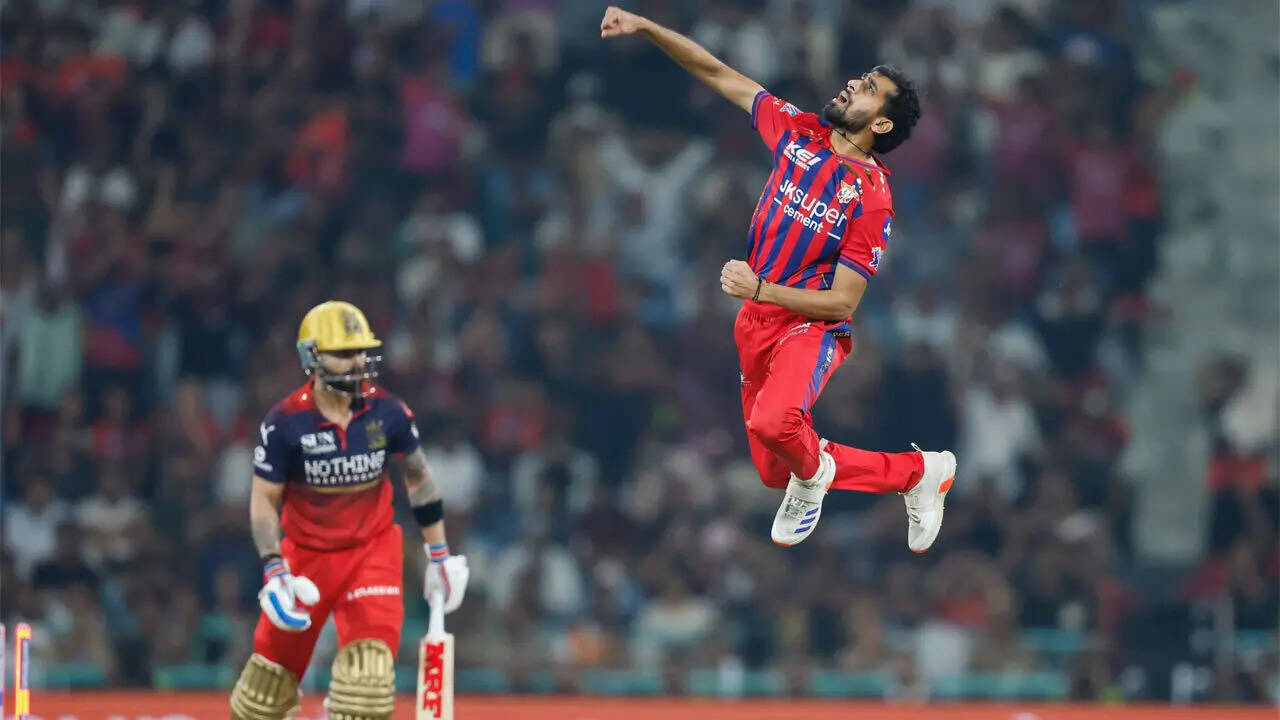
Prince Yadav, a pace bowler for the Lucknow Super Giants, orchestrated such a theatrical twist against Royal Challengers Bengaluru. He sent Virat Kohli — a name that reverberates like thunder across cricket-mad South Asia — back to the pavilion for a duck. And here’s the kicker: he did it with a nip-backer that Kohli had, post-match conversation, advised him to stick with. Talk about an apprentice surpassing the master, or perhaps, the master accidentally forging the blade that would fell him. This wasn’t just a wicket; it was a storyline Hollywood producers would kill for. It’s the kind of raw human drama that keeps over a billion fans glued, the kind of moments that become legend overnight in a region obsessed.
The stage was set on a rain-interrupted Thursday, the air thick with tension — and playoff hopes for LSG. Mitchell Marsh, another big hitter, had just hammered a blistering 111 off 56 balls, showcasing an aggression that tore through RCB’s attack. Lucknow had piled on a formidable 209 for three, but against RCB and their chasing pedigree, no score feels entirely safe. Yet, when Yadav, the 24-year-old paceman, unleashed that 140.4 kmph missile on his second delivery, it wasn’t just stumps clattering; it was a changing of the guard, however fleeting.
Yadav, still somewhat shell-shocked by the magnitude of the moment, didn’t pull punches about his inspiration. “After the last match I was talking to Virat bhaiya and he only told me — as long as it’s moving around off a length, stick to that length,” Prince revealed after the game, still trying to process sending arguably the greatest batsman of his generation packing. But isn’t that just the beautiful, brutal honesty of sport? Mentorship, yes, but when the chips are down, it’s every player for themselves. It’s a pragmatic world, this. For the record, it was Kohli’s first IPL duck since April 2023. So, a rare moment indeed.
And Lucknow, driven by Marsh’s brute force and Yadav’s calculated cunning, sealed a nail-biting nine-run victory via the DLS method, keeping their playoff aspirations alive. Other batsmen, like Rajat Patidar and Devdutt Padikkal, tried to salvage the chase, but Yadav returned to wreak more havoc, ending with a superb 3 for 33. The sheer audacity of the league—where a moment of respect turns into a strategic weapon—continues to captivate. It’s truly unlike any other sports league globally.
What This Means
Beyond the theatricals of the cricket pitch, this narrative arc — a star mentoring his future vanquisher — speaks volumes about the peculiar dynamics of the IPL, and by extension, the broader South Asian sporting ecosystem. The IPL isn’t merely a game; it’s a hyper-capitalized, culturally ingrained spectacle that generates immense economic activity. Consider this: according to a 2022 D&P Advisory report, the IPL brand value alone surpassed $10.9 billion. This isn’t just about bat and ball; it’s a colossal industry built on stories like these, a testament to cricket’s unparalleled hold on the region’s psyche.
These contests, viewed intensely from Karachi to Chittagong, even in nations where direct participation is limited due to political intricacies, represent a shared cultural touchstone. The drama of a Virat Kohli falling to his own sagacity fuels conversation from Lahore to Dhaka, binding disparate communities through shared fanaticism. Policy-wise, it illuminates the incredible soft power that sports, especially cricket, wields in this volatile geographic corridor. But it also highlights the commercial juggernaut the Board of Control for Cricket in India (BCCI) has constructed, making other national boards look almost archaic. One prominent, albeit fictionalized, figure within the Asian Cricket Council, Syed Hamza bin Rashid, noted, “These IPL narratives aren’t accidental. They’re priceless cultural capital. Every twist, every turn, generates a buzz that transcends the game, creating a potent export that no government, no diplomat, can easily replicate.” He’s right, you know?
It makes you wonder, too, about the ethical underpinnings. The ‘master’ freely shares knowledge, only for the ‘apprentice’ to use it against him. It’s a paradox, sure, but it underscores the sheer competitive drive that defines professional sport—and, some might argue, reflects the wider brutal realities of capitalism. It’s not about friendship on the field; it’s about wins — and losses, playoffs and exits, money and reputation. The inner machinations of such a high-stakes environment constantly brew new narratives of success, rivalry, and sometimes, unexpected betrayals of wisdom.
Because ultimately, in the glittering, cutthroat ecosystem of the IPL, every bit of advice, every shared insight, every moment of vulnerability, can and often does become a strategic weapon. And the league, — and the subcontinent it electrifies, laps it all up. The game never changes; just the players, — and the unexpected ways they play it.