


Israel’s Far-Right Fusion: A Jolt for the Nation’s Political Core
POLICY WIRE — Tel Aviv, Israel — The Israeli political thermometer, perpetually oscillating between frenzied debate and outright chaos, just registered another sharp spike. It’s not a new...

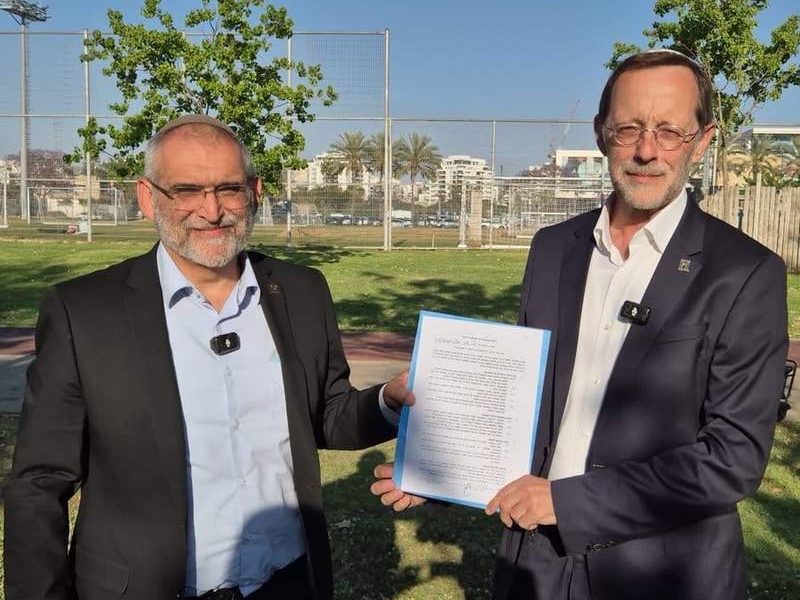
POLICY WIRE — Tel Aviv, Israel — The Israeli political thermometer, perpetually oscillating between frenzied debate and outright chaos, just registered another sharp spike. It’s not a new skirmish on the border or a contentious legal ruling this time; it’s a consolidation on the country’s furthest political edge, the kind that might just redefine what ‘fringe’ really means. After years of tactical dance and ideological skirmishing, Zehut party leader Moshe Feiglin has formally declared his intent to run on a joint electoral list with a figure often synonymous with Israel’s unapologetic right wing: former Otzma Yehudit chair Itamar Ben-Gvir. That’s a partnership many thought was unthinkable just a cycle or two ago, or at least undesirable for anyone aspiring to mainstream appeal. And yet, here we’re.
This isn’t merely an electoral arrangement; it’s a statement. It’s a loud, unblinking declaration that the boundaries of acceptable political discourse in Israel are — once again — being stretched, perhaps irrevocably. Feiglin, once known for a unique blend of libertarian economics and hawkish nationalism, now throws his lot in with Ben-Gvir, whose political brand has been forged in the crucible of outright Kahanist ideology. They’re making common cause, trading erstwhile distinctions for collective muscle.
The implications are substantial. Ben-Gvir, never one to mince words, made his position crystal clear. “For too long, true Jewish power and Jewish identity have been sidelined in our own land by politicians afraid of their own shadows,” Ben-Gvir stated in a brief, unadorned release from his office. “This alliance isn’t just about seats; it’s about unapologetically reasserting who we’re and what this nation stands for.” It’s a sentiment that, for his base, resonates deeply, a promise of a more muscular, more ideologically pure government. You can bet they’re already salivating at the prospect of legislative battles to come.
But how does Feiglin, with his distinctive emphasis on individual liberty and economic freedom—even advocating for cannabis legalization, believe it or not—fit into this hardline mold? Well, that’s where the shared foundation of deeply held nationalist — and religious convictions kicks in. “When the stakes are this high, and the foundational identity of our Jewish state is debated daily, minor divergences become exactly that: minor,” Feiglin observed in an interview with Policy Wire. “Our common vision for a strong, proud Israel, governed by its ancient heritage, overrides all else. We’re offering a clear, unambiguous path forward for the true right.” It’s the old ‘bigger picture’ argument, dusted off and applied to an election campaign.
This coalition’s strength isn’t just numerical; it’s psychological. Recent polls indicate that roughly 15% of Israeli voters identify with parties to the right of the Likud, according to a recent survey conducted by the Israel Democracy Institute. This potential fusion seeks to tap into that discontent, to harness the frustration of those who feel traditional right-wing parties haven’t gone far enough. And frankly, they might just succeed in consolidating a segment of the electorate that feels marginalized by the political establishment. It’s the ultimate ‘take no prisoners’ strategy.
Because, make no mistake, this alliance signals a move further right for Israel’s body politic, irrespective of who actually forms the next government. Parties on the mainstream right, like Likud, will now find themselves needing to contend with a more extreme flank—pulling them even further away from the center. It forces them to either tack right to stem the bleeding or risk losing segments of their own base. That’s a dynamic that rarely fosters moderation. And for Israel’s increasingly globalized neighbors, including those across the broader Muslim world, this shift means very little room for diplomatic maneuver or softening of stances.
📄 POLICY WIRE WHITEPAPER PUBLISHED: PAKISTAN'S NATIONAL SECURITY POLICY PRIORITIES
👉 READ BY CLICKING HEREConsider the region. In a place where national identity and religious conviction so frequently intermingle, like Pakistan—which often frames its national security and foreign policy through an Islamic lens (Is Pakistan’s Navy Rewriting the Rules of Maritime Deterrence?)—Israel’s own domestic shifts toward religiously inflected nationalism are keenly observed. A harder, more religiously assertive line from Tel Aviv could exacerbate regional tensions, further entrenching positions on both sides and making prospects for any broader detente seem even more distant. It’s a mirror reflecting an uncomfortable truth about identity politics on a grand scale.
What This Means
The Feiglin-Ben-Gvir partnership isn’t just another wrinkle in Israeli election lore; it’s a seismic tremor for the entire political landscape. Economically, a government heavily influenced by such figures could prioritize ideologically driven projects over broader fiscal prudence. We might see accelerated settlement expansion, for instance, funded at the expense of other national priorities. On the security front, their approach suggests an even more assertive and less compromising posture against perceived threats, both internal and external. That’s a given, isn’t it?
Politically, the move challenges the long-held notion that outright Kahanist elements couldn’t gain significant electoral traction without some sort of ‘mainstream’ camouflage. Now, they’re not even pretending. This alliance could potentially pull the entire conversation rightward, normalize ideas that were once considered beyond the pale, and push any semblance of a two-state solution further into the realm of fantasy. It also means increased friction with international partners who often decry the hard-right’s policies, making global diplomacy even more of a high-wire act for Jerusalem.
But the raw political power these two figures aim to aggregate means parties that might otherwise scoff at their extremist views might now need them for coalition math. And in the zero-sum game of Israeli governance, having even a few seats can mean you hold the keys to power. It’s a pragmatic (and rather unromantic) truth about coalition building everywhere. The question isn’t whether this union will impact the elections, it’s how profoundly it will reshape the very definition of political viability for Israel’s future governments. This isn’t just about electing politicians; it’s about encoding a new ideological template into the national psyche, for better or for worse.