


Octagon Diplomacy: UFC Grapples with Geopolitics and Unruly Stars at Crossroads Event
POLICY WIRE — Newark, New Jersey — The thud of a fist on a canvas mat, while seemingly a straightforward consequence of athletic competition, often reverberates far beyond the octagon. For the...

POLICY WIRE — Newark, New Jersey — The thud of a fist on a canvas mat, while seemingly a straightforward consequence of athletic competition, often reverberates far beyond the octagon. For the Ultimate Fighting Championship, long a master of monetizing visceral appeal, this weekend’s main event presents not just a title bout, but a high-stakes, ethically complex tightrope walk—one where the prize money feels almost secondary to the political and commercial ramifications.
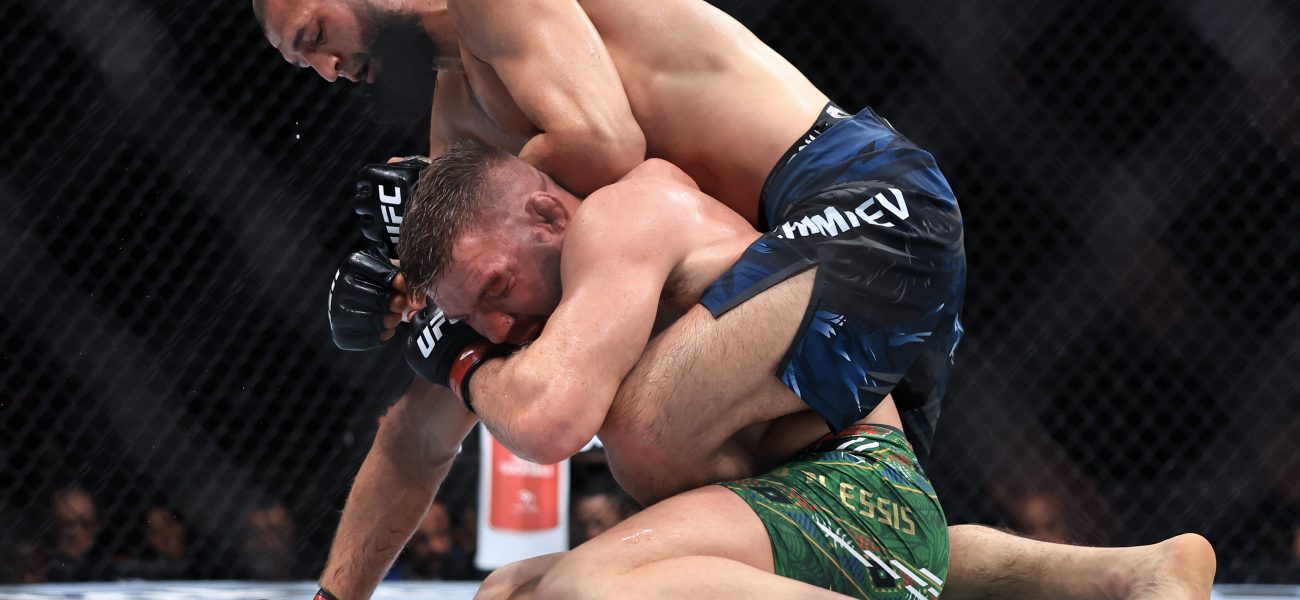
It isn’t simply a matter of who wins or loses between middleweight contenders Khamzat Chimaev — and Sean Strickland. It’s a referendum on the murky waters where athletic ambition collides with inconvenient alliances and explosive public personae. And let’s be honest, the organization finds itself in a truly awkward position, choosing between two brands of chaos that both promise profit and present potential PR nightmares.
Strickland, the outspoken former champion, has cultivated a polarizing brand built on confrontational, often offensive, rhetoric. He rails against “culture wars,” espouses deeply uncomfortable views, and hasn’t shied away from openly insulting UFC leadership. During a recent pre-fight presser, Strickland reportedly labeled UFC CEO Dana White everything from a “narcissist” to a “sociopath,” an internal critique that no corporate entity relishes hearing from its top talent. “Look, we manage personalities,” White reportedly stated in a private exchange this week. “These guys aren’t boy scouts. But sometimes, even for us, you wonder if they’re pushing too hard. It’s a balance—always is.”
But the alternative isn’t exactly pristine. Khamzat Chimaev, a prodigious talent whose wrestling dominance excites fight fans, brings a different kind of baggage. He’s got direct ties to Ramzan Kadyrov, the controversial leader of Chechnya. Kadyrov, a man widely condemned for human rights abuses, often appears with Chimaev, leveraging the fighter’s popularity for his own soft-power narrative. For an organization striving for broader acceptance, this association sends shivers down more than a few spines. It’s a geopolitical landmine buried beneath athletic spectacle. This dynamic often echoes in regions like Pakistan and across the Muslim world, where public figures are often viewed through the prism of state association. While some see Chimaev’s affiliation as an assertion of identity, others view it with deep apprehension, concerned about the normalizing of authoritarian regimes through sports.
For the UFC’s brass, the calculus becomes brutally simple: Which public relations hit is more manageable? The consistent, homegrown, sometimes bigoted tirades of Strickland? Or the infrequent, but deeply troubling, association with a foreign strongman through Chimaev? One alienates a portion of the domestic audience; the other raises questions on an international stage, impacting brand perception in critical emerging markets—like those eyeing Europe’s burgeoning sports commercialization.
“The financial stakes for organizations like the UFC are astronomical,” commented Dr. Anya Sharma, a Policy Wire analyst specializing in global sports commerce. “When you consider that the UFC, now a division of TKO Group Holdings, reported nearly $1.3 billion in revenue in 2023, every fighter’s public profile—and potential liabilities—gets weighted on a very finely calibrated scale. They’re playing chess, not checkers, with fighter optics.” And this particular chess match is played for billions.
📄 POLICY WIRE WHITEPAPER PUBLISHED: PAKISTAN'S NATIONAL SECURITY POLICY PRIORITIES
👉 READ BY CLICKING HERECasual observers might think the choice is clear—opt for the less controversial fighter. But commercial realities aren’t so tidy. Strickland, despite everything, sparks debate. He creates storylines. He drives social media engagement, however negative, keeping eyeballs glued. Chimaev, conversely, struggles with consistency—his bouts are rare, and his potential marketability often constrained by his associations.
What This Means
The outcome of this fight transcends athletic merit. Should Strickland emerge victorious, the UFC inherits a champion who openly lambasts its leadership and provides ammunition to critics of the sport’s ethics. But hey, he’s magnetic, in a train-wreck kind of way, — and sells pay-per-views. He guarantees fireworks—inside and outside the cage. His brand of domestic controversy often garners local attention, even if it alienates global partners.
A Chimaev victory, on the other hand, puts a belt around the waist of a fighter tied to a regime synonymous with state-sponsored violence. It’s a stark message, intended or not, that the allure of a marketable talent trumps questions of ethics. The long-term implication is a normalization of sports-washing efforts by international strongmen. But it doesn’t give Dana White a public headache every other week, either. Policy-wise, the UFC might prefer a quiet headache to a screaming one. The ultimate choice for promoters always boils down to balancing short-term profit with long-term brand integrity—a task that gets trickier with every controversial statement and geopolitical handshake.
This isn’t about mere athletic preference. It’s about navigating the tricky intersection of celebrity, commerce, — and international relations. Neither outcome is without its challenges. The only guarantee is that Saturday night, the biggest winner might just be the sheer messy complexity of modern professional sports.