

The Gold Standard of Attention: Simone Biles, Jonathan Owens, and the Public Weight of Perfection
POLICY WIRE — Houston, United States — For some, it’s just another Tuesday. But for an entire industry—an economy, even—dedicated to the minutiae of high-profile lives, the recent public...

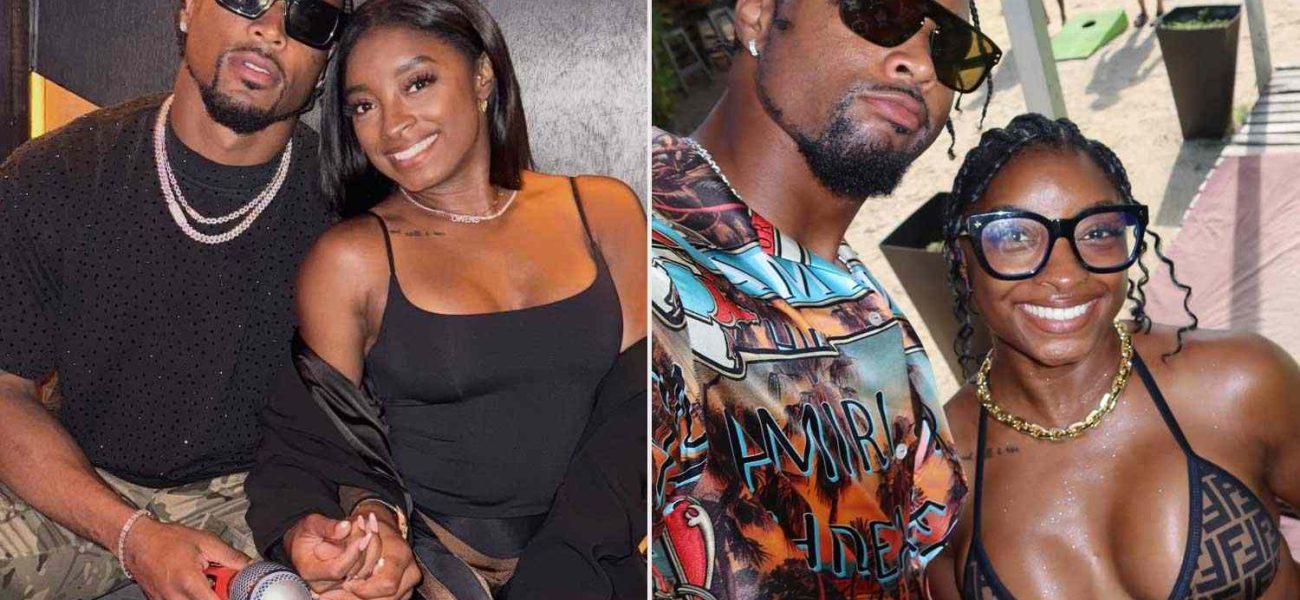
POLICY WIRE — Houston, United States — For some, it’s just another Tuesday. But for an entire industry—an economy, even—dedicated to the minutiae of high-profile lives, the recent public acknowledgment of Simone Biles and Jonathan Owens’ third wedding anniversary isn’t just a sweet domestic moment. It’s a transaction. A performance. It’s content.
It’s no surprise, is it? Two celebrated athletes, one a gymnastics phenom with a medal count that dwarfs small nations’ GDPs, the other a professional football player. Their union is, frankly, too valuable to exist solely as a private affair. Biles, whose online pronouncements generate headlines with an almost frightening consistency, shared a customary tribute to Owens. It was brief. Saccharine. Utterly predictable for the modern celebrity.
And that’s where the policy wire starts humming. Because this isn’t just about two people in love. It’s about the apparatus that demands their love be seen, validated, — and packaged for mass consumption. This isn’t just American reality TV writ large; it’s a global phenomenon, shaping expectations from Texas to Islamabad. Their relationship, perpetually filtered through the lens of social media and tabloid journalism, morphs into a sort of publicly traded sentiment.
“The marriage of two high-profile athletes isn’t just about love; it’s a meticulously managed brand extension,” asserted Dr. Eleanor Vance, a cultural sociologist at the University of Texas, known for her studies on media influence. “Their shared image, their public displays—it’s capital, both symbolic and economic, that they leverage whether they intend to or not. It’s an American dream on steroids, sure, but also a cage for authentic intimacy.” Her tone was dry. Sharply analytical.
Owens, the NFL safety, reportedly posted his own homage. Good for them. They’re navigating a minefield, these two. The very public nature of their individual successes—Biles’s gymnastic artistry, Owens’s brute-force NFL career—demands a parallel performance of domestic bliss. A harmonious, inspirational narrative must be maintained. Anything less feels, to the market, like a glitch.
The stakes? They’re not just personal. They’re corporate. Think endorsements. Think media rights. Think public perception, which in the age of global brands, directly translates to profit margins. Consider for a moment how much public relations machinery supports a marriage like this. It’s quite astonishing. Because every shared photo, every carefully crafted caption—it’s part of a broader tapestry that validates their aspirational status for millions. And it costs. Big.
📄 POLICY WIRE WHITEPAPER PUBLISHED: PAKISTAN'S NATIONAL SECURITY POLICY PRIORITIES
👉 READ BY CLICKING HEREIn regions far removed from the lavish anniversary celebrations, say, in parts of Pakistan or South Asia, the concept of such highly public declarations of marital affection remains a foreign, if fascinating, construct. While celebrities like cricketers enjoy immense adoration, the boundaries between private life and public spectacle are often drawn more stringently, or at least differently. But even there, social media platforms ensure Biles’s anniversary wishes ripple across borders. It shows just how porous cultural barriers have become. They might not understand American football or gymnastics with the same fervor, but they get the spectacle of wealth and public devotion.
A recent survey by the Pew Research Center found that 72% of young adults (ages 18-29) in the U.S. report often seeing highly curated relationship content on social media, often leading to feelings of inadequacy. This isn’t a small side effect. It’s the entire point, isn’t it?
But how do we disentangle genuine affection from marketing strategy? It’s becoming increasingly difficult. “We’re seeing a shift, aren’t we? Athletes aren’t just athletes anymore,” observed Senator Lena Khan, a Democrat from California, known for her incisive comments on digital culture. “They’re influencers. They’re benchmarks for a consumerist vision of happiness. And sometimes, you just wish they’d get a moment of actual peace away from the lens. It’s a cruel game, this pursuit of perceived perfection.” She has a point. It seems like it’s never enough.
What This Means
This perpetual performance, even of something as ostensibly personal as a wedding anniversary, holds significant implications. Economically, it solidifies a new kind of influencer market where athletic prowess merges with lifestyle branding. For athletes, the financial rewards of a strong personal brand now compete with—and sometimes overshadow—earnings from their sport alone. This drives a powerful incentive to maintain an aspirational public image, regardless of the emotional cost.
Politically, the narrative of the ‘power couple’ subtly reinforces certain societal values—ambition, success, idealized romance—that can serve as distractions from less savory economic realities or policy shortcomings. When the discourse is dominated by the shimmering facade of celebrity achievement, public attention can be diverted from systemic issues that truly impact everyday lives. Because if the rich — and famous are doing so well, why worry about the rest? And culturally, it creates a new metric for relationship success, one often unattainable for the average citizen. It’s aspirational, yes, but also deeply performative, creating an unrealistic standard against which personal lives are measured. We’re all performing, aren’t we? Just on different stages.