

Beirut’s Lethal Cadence: A Commander Falls, But Hezbollah’s Echoes Resound
POLICY WIRE — Beirut, Lebanon — The rhythm’s familiar, isn’t it? A sudden flash, a violent end, a targeted elimination—then the collective holding of breath, awaiting the inevitable...

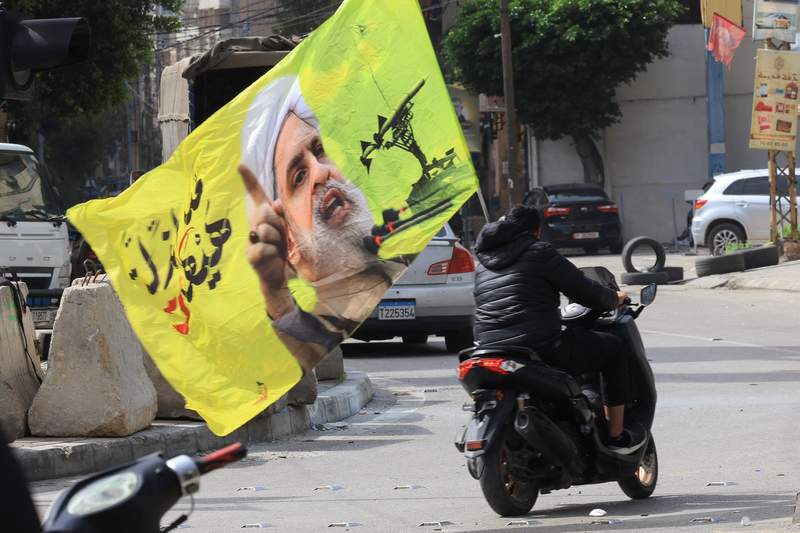
POLICY WIRE — Beirut, Lebanon — The rhythm’s familiar, isn’t it? A sudden flash, a violent end, a targeted elimination—then the collective holding of breath, awaiting the inevitable counter-punch. Another prominent figure gone, etched into the grim ledger of Mideast shadow wars. This time, it’s a commander from Hezbollah’s elite Radwan Force, snatched from a quiet Beirut neighborhood. And like every time before, the grand pronouncements of a weakening foe ring hollow in the streets of Lebanon.
It’s an act designed to send shivers down spines, to decapitate, to disrupt. The specific target, not yet definitively named in open sources but widely understood to be Wissam al-Tawil (also known as Jawad al-Tawil), represents a tangible loss. He was no foot soldier. Commanders of his ilk—highly trained, deeply embedded—don’t grow on trees. They’ve spent decades honing their craft, managing sophisticated networks, — and executing complex operations. His absence will sting. It really will.
But does this signify Hezbollah’s looming collapse? That’s a romantic notion for pundits eager for quick takes. Hezbollah is an octopus, tentacles reaching far beyond its known operational structure. It’s an organization woven into the very fabric of Lebanese society, a state-within-a-state that provides everything from hospitals to groceries to security. They’ve seen leaders fall before, bigger fish than this, frankly. Yet, they don’t just endure; they adapt.
“This incessant tit-for-tat doesn’t just destabilize our border; it tears at the very fabric of Lebanese society,” bemoaned Gebran Bassil, a prominent Lebanese Christian politician, speaking informally to reporters shortly after the incident. “We’re tired, but tragically, we’re caught in this larger, far deadlier game.” His words echo a palpable fatigue across the nation, exhausted by proxy conflicts playing out on its soil.
And let’s not pretend this is a clean fight. It’s a multi-layered chess match played with very real, bloody pawns. Israel, widely presumed to be behind the strike (they don’t usually claim such things publicly, a studied ambiguity that frustrates but also serves a strategic purpose), undoubtedly views it as a necessary attrition. “Our patience has its limits. Every blow struck against terror leadership aims to restore deterrence — and ensure our security. It’s a precise surgery, not an act of vengeance,” an Israeli defense official, who requested anonymity due to the sensitivity of ongoing operations, was quoted saying. That’s their line. And they stick to it.
Because, for them, this isn’t just about Hezbollah’s presence on Israel’s northern border. It’s about Iran’s broader regional strategy, its so-called ‘Axis of Resistance.’ Tehran’s got its hands on the levers of power, influence, and mayhem from Beirut to Baghdad, and all the way to Sana’a. These aren’t isolated conflicts; they’re interconnected fronts in a cold—sometimes hot—war for regional dominance. Iran’s financial support to Hezbollah alone is estimated to exceed 700 million dollars annually, according to reports from the Foundation for Defense of Democracies (FDD), cementing the group’s financial independence from local economic woes.
📄 POLICY WIRE WHITEPAPER PUBLISHED: PAKISTAN'S NATIONAL SECURITY POLICY PRIORITIES
👉 READ BY CLICKING HEREThis Iranian model of asymmetric warfare—bolstering proxy groups, equipping them, training them—it resonates throughout the Muslim world. Consider Pakistan. While geographically distant, Islamabad grapples constantly with its own complex relationships with non-state actors, facing both the geopolitical pressure of external powers and the existential threat of extremism within its borders. The efficacy, or perhaps futility, of targeted killings versus sustained, comprehensive strategies is a recurring policy debate in many Muslim-majority nations, keenly observing how such events unfold in places like Lebanon and Palestine.
Sure, a dead commander impacts morale. It demands a succession plan, a recalibration. But what it absolutely doesn’t do is dismantle the ideological backbone or the institutional strength that Hezbollah has spent decades building. They’ve learned the hard way. The party’s deeply ingrained. Its loyalties are forged in fire — and faith.
Casualties of this sort are simply the cost of doing business in this grim geopolitical landscape. Don’t believe anyone who tells you differently. The smoke hasn’t even cleared, and you can bet the replacement is already stepping up, ready to fill those bloody shoes. Geopolitical power plays often uncover deeper rot, but also, paradoxically, surprising resilience.
What This Means
The elimination of a high-ranking Radwan commander won’t weaken Hezbollah in any long-term, strategic sense. Instead, it signals an escalation of the ongoing, undeclared war between Israel — and Iran’s proxies in the Levant. For Lebanon, this means even more instability and an increased risk of full-scale conflict, a prospect no one there truly desires but seems inexorably drawn towards. Economically, this heightens risk premiums, scares away investment, — and ensures Lebanon’s financial quagmire persists. Politically, it empowers Hezbollah further internally, allowing them to consolidate support among their base as protectors against external aggression.
But the broader implications stretch beyond the Levantine coast. Iran will undoubtedly view this as a direct challenge, possibly responding with heightened activity in other regional hotspots or through other proxy groups. It effectively tightens the bonds within its ‘Axis of Resistance’—a grim tightening, granted, but a tightening nonetheless. For Western powers, it translates into sustained instability in a critical oil-producing region, complicated diplomatic efforts, and the ever-present threat of a broader conflagration. It’s not a checkmate; it’s just another costly, dangerous move in a game nobody seems capable of ending.