


Beijing’s Iron Curtain Tremors: Generals on Death Row Unmask a Deeper Rot
POLICY WIRE — Beijing, China — It wasn’t a casual Friday evening communiqué. But a swift, clinical announcement from China’s often-opaque judicial system. Two former defence ministers, pillars...

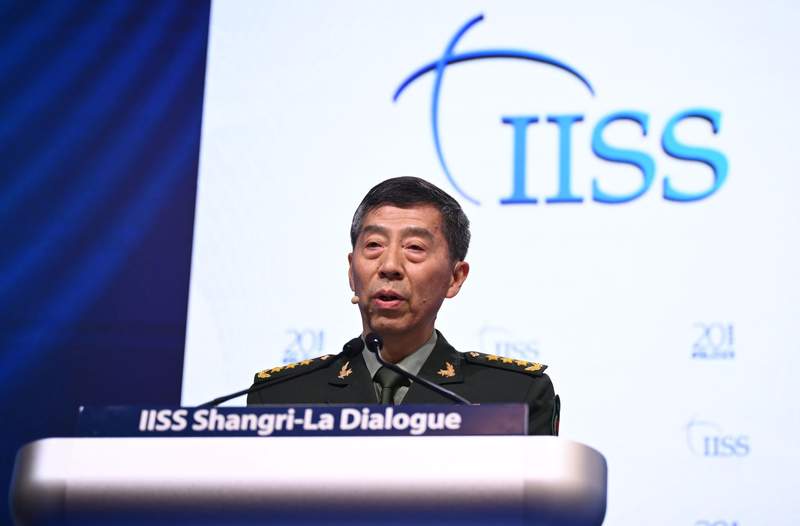
POLICY WIRE — Beijing, China — It wasn’t a casual Friday evening communiqué. But a swift, clinical announcement from China’s often-opaque judicial system. Two former defence ministers, pillars of the People’s Liberation Army’s (PLA) top brass, now face the death penalty for corruption. Not life imprisonment. Not a quiet, dignified exile. Death. This isn’t merely another skirmish in President Xi Jinping’s decade-long anti-graft crusade; it’s a seismic tremor ripping through the bedrock of Party loyalty and military hierarchy.
For years, the Party’s message was consistent: clean up or face the music. But that music typically meant a quiet retirement, a lengthy prison stint, or, at worst, political oblivion. This? This is a stark, public decapitation of high-ranking power—a grim performance meant to convey an absolute, unyielding grip on authority. It’s a statement. And it says everything.
Because let’s be frank, corruption in China isn’t some back-alley deal for a bag of rice. It’s a complex, multi-layered beast, especially in an organization as vast — and well-funded as the PLA. We’re talking about colossal sums, whispers of lucrative contracts, procurement kickbacks, and appointments sold like prized real estate. This ruling confirms the rot isn’t just in the lower echelons; it infects the very top. “The Party’s unbending commitment to root out all forms of malfeasance is undeniable,” a spokesperson for the Central Commission for Discipline Inspection, who wished to remain unnamed citing protocol, declared in a tight-lipped briefing this week. “No one is above the law, no matter their former station.” It’s boilerplate. But this time, it felt less like a warning — and more like a pronouncement.
But many analysts aren’t buying the narrative at face value. They don’t just see a moral purge; they see an elimination of dissent. “While undoubtedly a corruption issue, one can’t ignore the inherent power struggle these kinds of actions reveal,” observed Dr. Evelyn Reed, a seasoned China military expert at the East Asia Institute in London. “Xi isn’t just cleaning house; he’s reshaping the furniture—and anyone who doesn’t fit his new aesthetic gets tossed out, sometimes quite literally.”
The scale of money involved remains largely speculative, but informed estimates place military procurement corruption alone in the hundreds of billions of yuan over the past decade. For context, global defense spending hit an unprecedented $2.2 trillion in 2022, a significant chunk of which came from rising budgets in the Asia-Pacific, according to the Stockholm International Peace Research Institute (SIPRI). And where there’s massive money, there’s always an outstretched hand.
The severity of these sentences—death for generals—sends a shiver far beyond China’s borders. Countries like Pakistan, which relies heavily on Chinese military equipment and technological transfers, will be watching this intensely. Pakistan’s strategic defense relationship with Beijing is one of its most critical foreign policy pillars. And the integrity of their supplier, the professionalism of the PLA leadership, suddenly looks less unblemished. Would this internal turmoil affect supply chains? Technology sharing agreements? It’s a thorny question they’re certainly asking in Islamabad, even if no one dares to say it aloud.
These convictions aren’t about deterrence for the average citizen. No, this is for the inner circle, the princelings, the men and women who thought their connections and status placed them beyond earthly judgment. They’ve just been shown otherwise. And that’s terrifying for anyone who’s gotten a little too comfortable.
What This Means
This extreme measure marks a dangerous inflection point in Chinese politics. On one hand, it’s presented as an unshakeable commitment to internal rectitude, vital for maintaining Party legitimacy and public trust (what’s left of it). On the other, it represents an aggressive consolidation of power by Xi Jinping, silencing potential rivals or even just those with too much independent influence. It’s an internal warning shot across the bow of any who might dare question his leadership or challenge his vision for the PLA as a fighting force rather than a patronage network.
Economically, persistent high-level corruption can hamstring efficiency and resource allocation, particularly in the opaque military-industrial complex. While the clean-up might theoretically boost efficiency long-term, the immediate shockwaves could lead to paralysis in some decision-making, as officials become more risk-averse. And geopolitically, while Beijing seeks to project an image of strength and unwavering discipline, such a drastic public display of internal rot risks unsettling allies and adversaries alike. It hints at deep-seated vulnerabilities, something no aspiring global superpower wants to advertise.