

PSG’s Throne: Domestic Dominance a Foregone Conclusion, European Conquest the True Prize
POLICY WIRE — Paris, France — Another French league title for Paris Saint-Germain? Yawn. It’s becoming less a story of triumph — and more a statistical inevitability. The true narrative, the...

POLICY WIRE — Paris, France — Another French league title for Paris Saint-Germain? Yawn. It’s becoming less a story of triumph — and more a statistical inevitability. The true narrative, the one that makes headlines across European capitals (and the occasional boardroom in Doha), isn’t about domestic supremacy; it’s about a relentless, decade-long pursuit of Europe’s most coveted crown. Anything less than lifting the Champions League trophy in Budapest is, frankly, considered a failure for this Qatari-backed behemoth.
Because let’s be honest, winning Ligue 1 has transformed from an objective into a mere procedural check-off. A formality. The capital club, drenched in the largesse of Qatar Sports Investments, operates on a financial playing field so radically different from its French counterparts that competition often feels—to put it delicately—quaint. We’re talking about an enterprise that, according to analysts at Deloitte, boasted the fourth-biggest revenue in world football last year. Estimates suggest PSG’s annual budget dwarfs that of the next five wealthiest French clubs combined. That’s not just a lead; it’s a chasm, isn’t it?
So, as the league campaign winds down and PSG prepares to essentially walk to their 14th French title, the collective gasp, the anxious hope, is reserved for May 30th. That’s when Luis Enrique’s squad clashes with Arsenal in the Champions League final. They punched their ticket by narrowly besting Bayern Munich 6-5 on aggregate. Having previously flattened Inter Milan 5-0 to snatch their first European title, the thought of back-to-back victories—a feat only Real Madrid’s Galácticos managed in this era—is intoxicating.
But the domestic scene? It’s almost an afterthought. The only flickering ember of drama sees Lens—whose budget isn’t even a tenth of PSG’s—scrambling to theoretically upset the apple cart. Yet, PSG leads by six points with a goal difference that makes any real challenge fanciful. If Lens fails to beat Nantes on Friday, or if PSG simply handles Brest on Sunday, it’s all over. Dust to dust.
“Look, domestic titles are lovely; they’re the bread and butter,” mused PSG coach Luis Enrique after his team’s recent European triumph. “But our appetite, our driving ambition, it extends far beyond the borders of France. The real glory, the global statement, happens on that continental stage. That’s why we’re here, after all.”
📄 POLICY WIRE WHITEPAPER PUBLISHED: PAKISTAN'S NATIONAL SECURITY POLICY PRIORITIES
👉 READ BY CLICKING HEREAnd that global statement, as it happens, is intrinsically linked to Qatar’s broader foreign policy objectives. This isn’t just about football; it’s a masterclass in soft power, a meticulous crafting of an international image. When QSI bought PSG in 2011, it wasn’t just acquiring a club; it was investing in a brand, a symbol capable of resonating with millions. Not least among them, populations across the Muslim world, from Cairo to Karachi. You can’t put a price tag on that kind of visibility—or rather, you can, but it’s astronomical.
“The unparalleled financial disparity PSG enjoys isn’t just reshaping Ligue 1; it’s forcing a reevaluation of what competitive balance means in modern football,” offered Ahmed Al-Dahlawi, a spokesperson for the French Football Federation (FFF), speaking from the organization’s headquarters. “Smaller clubs, not just in France but throughout leagues with less lucrative TV deals, face an existential challenge. You simply can’t outspend that kind of cash. It’s changing the game’s very essence, dictating a future where only a select few can even dream of touching such heights.” He sighed. “It’s difficult for clubs like, say, Stade de Reims, to compete for talent, much less titles. They’re developing players only for them to move on.
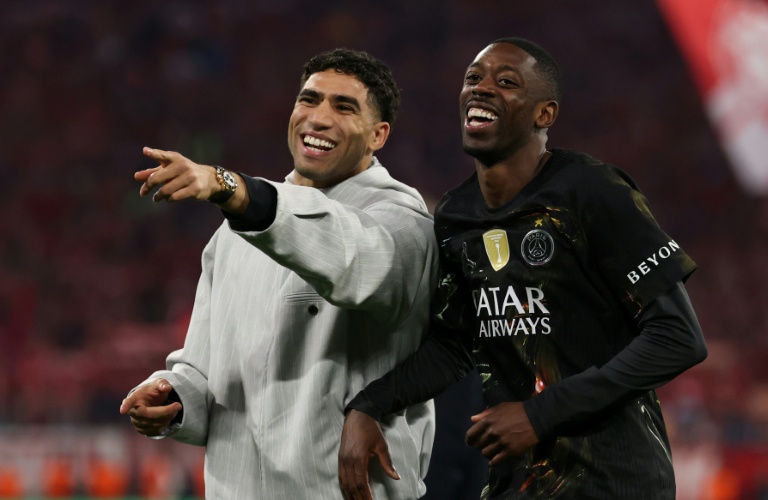
Speaking of talent, Warren Zaire-Emery, a mere 20-year-old French international, stands as a prime example of PSG’s strategy—homegrown quality fused with big-money imports. He’s rebounded from a tough prior campaign, logging over 4,000 minutes this season, more than anyone else in Luis Enrique’s squad. His versatility, often deputizing at right-back for Achraf Hakimi (who happens to be Moroccan, drawing yet another thread to the region), seems to guarantee him a spot at the upcoming World Cup.
What This Means
The predictable domestic crowning of PSG isn’t just a win for the club; it’s a win for the broader Qatari project. This relentless sporting dominance serves as a highly visible, incredibly effective form of cultural diplomacy and economic projection. For Doha, ownership of PSG isn’t merely an investment in a football team; it’s a multi-faceted assertion on the global stage. It builds brand recognition, enhances soft power, and cultivates allegiances that span continents, reaching audiences from European capitals to far-flung communities in South Asia and the broader Muslim world. This is about prestige. It’s about establishing Qatar as a sophisticated, influential player—a reliable partner in business and a force in culture—amidst a geopolitical landscape where narratives matter. The success of PSG reinforces a particular image, counteracting critical perspectives by demonstrating ambition, capability, and connection to popular global pastimes. The ongoing Champions League quest isn’t just for a trophy; it’s for the ultimate validation of this massive, strategic outlay, signaling that the investment pays dividends far beyond the pitch. For other European clubs—and national leagues struggling for relevance against such financial might—it signals a future where competition at the very top is increasingly defined not by tradition or organic growth, but by sovereign wealth fund backing. It forces other nations to ask: what’s our equivalent soft power play? It’s not a level playing field, — and it’s likely never going to be again.