


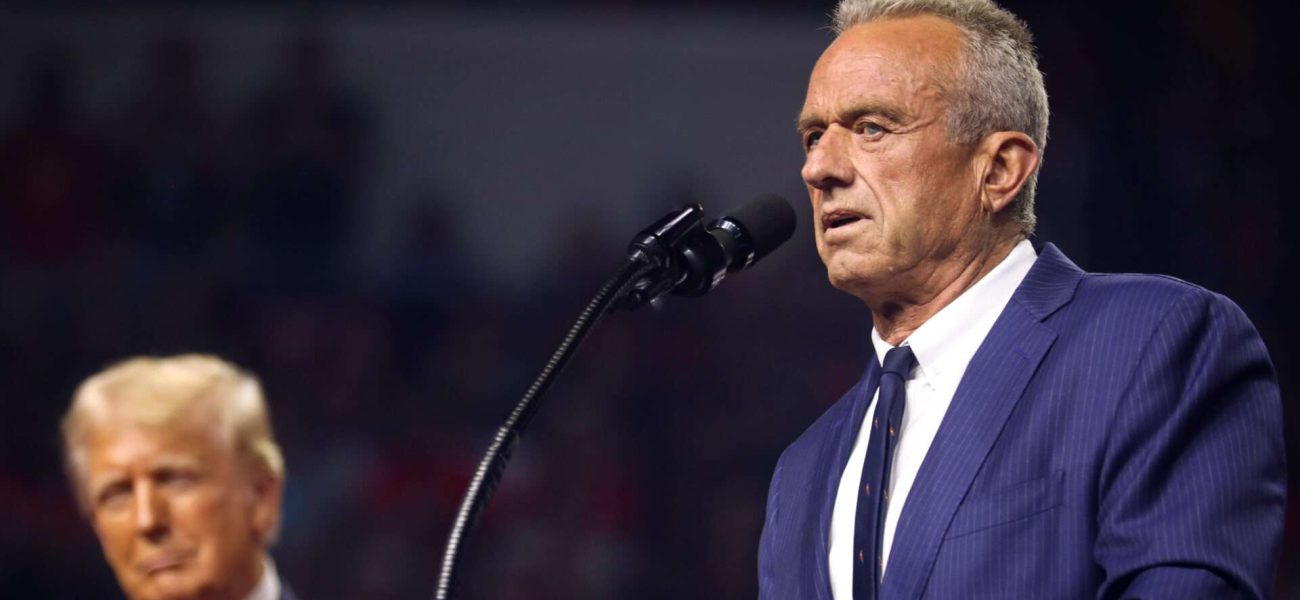
The Elusive Enemy: RFK Jr.’s Crusade Against Indefinable ‘Food’
POLICY WIRE — Washington, D.C. — For eons, humans knew what grub was. A tomato. A slab of meat. Maybe some fresh bread. Straightforward. Today? We’re staring down boxes and bags with ingredient...

POLICY WIRE — Washington, D.C. — For eons, humans knew what grub was. A tomato. A slab of meat. Maybe some fresh bread. Straightforward. Today? We’re staring down boxes and bags with ingredient lists longer than a tax form, wondering if what’s inside even counts as sustenance. This sprawling uncertainty, it turns turns out, is exactly where Robert F. Kennedy Jr. has decided to stake a claim, launching a campaign to regulate ‘ultra-processed foods’—a category so nebulous, nobody can actually nail down what the heck it’s.
It’s a peculiar battleground, isn’t it? A presidential hopeful—even one with his particular brand of unconventional wisdom—decides his signature health initiative will take aim at something no one, not even the scientists who dreamt up the term, can universally define. You’ve got to appreciate the moxie. Or maybe, the political opportunism. He’s certainly found a nerve, tapping into the public’s deep, nagging unease about what they’re shoving down their gullets.
The concept, broadly, posits that foods undergo so much industrial tinkering—think flavor enhancers, emulsifiers, high-fructose corn syrup, all the stuff you can’t pronounce—they become nutritionally depleted, even harmful. And yeah, common sense tells you a soda isn’t the same as an apple. But policy doesn’t run on common sense; it needs hard lines. And this line, well, it’s a blur.
Food scientists typically lean on something called the NOVA classification, which slots foods into four groups based on their industrial processing level. Group four is the bad guy: ultra-processed. Trouble is, even that system’s creators admit it’s not perfect. It lumps together sugary cereals — and fortified bread, industrial-scale yogurt and microwave meals. Some critics argue it misses the real issue, focusing on ‘process’ rather than actual ingredients. But then again, if you’re trying to regulate everything, some collateral damage is just part of the game.
“Look, our kids are sick,” Kennedy told a crowd recently, his voice raspy but conviction absolute. “Someone’s gotta stand up to Big Food, even if we’re still figuring out all the damn details. We can’t wait for these corporations to grow a conscience.” He isn’t wrong about the health crisis—we’ve seen obesity rates explode across the globe, from our own heartland to the bustling markets of Karachi, Pakistan, where cheap, highly processed snacks have elbowed out traditional fare, contributing to a shocking rise in type 2 diabetes. That region, particularly, offers a stark reminder: Western diet trends aren’t contained by borders. This stuff has gone global, creating a dietary dilemma even for cultures known for their historically healthier eating habits.
But how do you legislate against something so slippery? Industry experts, naturally, are howling. “You can’t just slap a label on a whole category of food when the science itself isn’t settled,” countered Roberta Jensen, president of the American Food Manufacturers Association, in a recent policy briefing. “This isn’t just about chemicals; it’s about context, preparation, tradition even. Are we going to tell grandma her store-bought bread is evil?” Good point, Grandma loves her Wonder Bread. Jensen makes a compelling case for the complexities that policymakers typically struggle with—namely, unintended consequences and economic fallout. And she’s right; sweeping policy pronouncements rarely hit only their intended target.
📄 POLICY WIRE WHITEPAPER PUBLISHED: PAKISTAN'S NATIONAL SECURITY POLICY PRIORITIES
👉 READ BY CLICKING HEREConsider the data: A 2021 study published in the Journal of the American Medical Association (JAMA) reported that ultra-processed foods account for over 57% of total caloric intake among U.S. adults. That’s a staggering figure. Fifty-seven percent! Regulating half the calories Americans eat is like trying to tame a hydra—chop off one head, two more pop up. It’s a monster undertaking, one that’d reshape the American pantry and perhaps the global food supply chain as we know it.
What This Means
Politically, Kennedy’s move is shrewd. He’s cornering a specific, health-conscious slice of the electorate, demonstrating a willingness to tackle Big Business (even if ‘Big Food’ is a sprawling, multi-headed beast) and frame it as a populist fight for public well-being. It gives him an edge—a genuine, albeit potentially chaotic, policy proposal in a field of bland platitudes. And that’s appealing to a segment of voters who feel forgotten or exploited by established systems.
Economically, the implications could be monumental. If a definitive classification somehow emerges, food manufacturers would face immense pressure to reformulate products, innovate new ones that fall outside the regulated category, or completely re-evaluate their entire business model. Supply chains for ingredients would shift dramatically. It could drive up costs for consumers initially, as ‘approved’ alternatives become more expensive. Or it might foster an explosion of local, less processed food businesses. But because the regulatory target itself is undefined, the industry spends its lobbying muscle fighting the definition, not just the regulation. It’s a game of semantic whack-a-mole, — and nobody really wins except the lawyers and lobbyists. This regulatory ambition, no matter how well-intentioned, presents a serious bureaucratic challenge for an already bogged-down federal apparatus, setting up potential legal battles and consumer confusion for years to come.