

Italy’s Unwritten Rule: The Espresso Ritual and the Peril of Global Cultural Blind Spots
POLICY WIRE — Rome, Italy — The globalized age promised a flattened world, an ease of transit and transaction that would render cultural barriers quaint relics. One could hop a budget flight, swipe a...

POLICY WIRE — Rome, Italy — The globalized age promised a flattened world, an ease of transit and transaction that would render cultural barriers quaint relics. One could hop a budget flight, swipe a card, and navigate ancient streets with the effortless confidence of a digital native. But beneath this veneer of seamless integration, friction persists—often in the most innocuous of settings, challenging the very notion of a universally understood social contract.
Consider the Italian café, a democratic institution where espresso flows like municipal water and conversation is its own art form. Millions flock there annually, cameras poised, ready to consume its aesthetic bounty. Yet, a peculiar phenomenon plays out daily in its myriad establishments, a silent comedy where well-meaning tourists, often clutching travel guides or staring blankly at QR codes, find themselves utterly bewildered by a protocol so deeply ingrained it’s practically invisible to locals. It’s a dance of unspoken expectations, a cultural choreography mastered only through osmosis. They’re trying to order from a table, or worse, lingering after a quick coffee, unwittingly violating a centuries-old social compact.
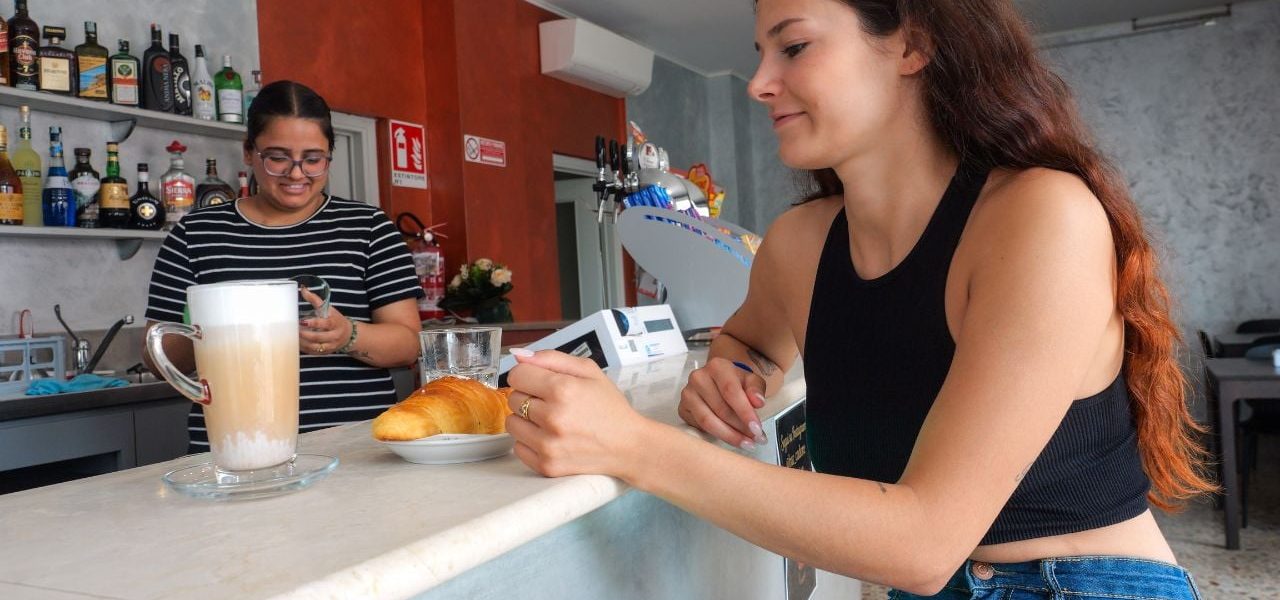
At its core, the unwritten rule is disarmingly simple: if you’re standing at the bar, it’s a quick shot of espresso or a fast cappuccino, consumed swiftly before you move on with your day. Seating costs more; it’s an amenity for leisure, for extended conversations, for perhaps a pastry or two. Patrons queuing at the bar, only to be told by a wry barista to “please take a seat and a server will be with you” when they clearly just want a caffeine hit, betray a fundamental disconnect. It’s not about rudeness; it’s about efficiency, about respecting the flow, the very pulse of Roman life.
And this seemingly minor social infraction isn’t just about a misplaced coffee order. It’s a micro-drama illustrating a far grander narrative: the growing tension between global tourism’s homogenizing tendencies and the stubborn resilience of local custom. It underscores how easily even the most prepared traveler can misstep when assuming universal norms.
“Italy isn’t just a backdrop for your Instagram; it’s a living, breathing culture with its own rhythms,” shot back Maria Rossi, spokesperson for the Italian Ministry of Tourism, during a recent press briefing. “A little effort to understand them goes a long way – it enriches your experience, don’t you think? We welcome visitors, of course, but respectful engagement, not just passive consumption, is what we hope for.”
Still, for a nation where tourism contributed roughly 10.5% to its GDP in 2022, amounting to over €190 billion, according to data from the World Travel & Tourism Council, such nuanced cultural navigation becomes a significant, if often unacknowledged, aspect of international relations. It speaks to Italy’s soft power—or its challenge—in managing the influx while preserving its identity.
📄 POLICY WIRE WHITEPAPER PUBLISHED: PAKISTAN'S NATIONAL SECURITY POLICY PRIORITIES
👉 READ BY CLICKING HEREBehind the headlines of grand geopolitics and economic blocs, these everyday interactions—or misinteractions—shape perceptions. They can foster genuine connection or, conversely, breed quiet resentment. Ambassador Ahmed Khan, cultural attaché for Pakistan to the EU, echoed this sentiment in an interview with Policy Wire. “These seemingly minor social rituals, whether it’s how you order coffee in Rome or how you greet an elder in Lahore, are the very bedrock of cultural respect. Misunderstanding them can lead to alienation, or worse, reinforce stereotypes. It’s consequential, particularly in a world struggling with cross-cultural dialogue.” He added, “In Pakistan, for instance, hospitality isn’t just about providing food; it’s an intricate dance of deference, of knowing when to offer, when to accept, and how to express gratitude without overt declaration. It’s a language of glances — and gestures.”
Such observations aren’t trivial. They hint at a broader challenge for globalized societies: how to foster genuine exchange without eroding local particularities. The café rule, then, isn’t merely about efficiency or pricing; it’s a quiet guardian of Italian identity, a subtle insistence that some things, like the way one takes their morning espresso, remain sacrosanct.
What This Means
The humble Italian café rule, often a source of mild bewilderment for tourists, isn’t just a quirky local custom; it’s a potent, albeit understated, symbol of deeper geopolitical and economic currents. Politically, it represents the struggle of host nations to maintain cultural authenticity in the face of mass tourism. Governments like Italy’s, keen to capitalize on the substantial economic benefits of tourism, simultaneously grapple with the erosion of local customs and the potential for a ‘Disneyfication’ of their heritage. The café rule, therefore, functions as a subtle boundary, a quiet assertion of national identity against the tide of global homogeneity. It’s a reminder that cultural capital, while an attraction, also demands respect.
Economically, this friction points to an ongoing debate about sustainable tourism. Are the sheer numbers of visitors truly beneficial if they don’t engage with, or even acknowledge, local ways of life? The differentiation in pricing — and service (standing vs. seated) isn’t just about cost; it’s a deliberate mechanism to manage flow and cater to distinct modes of consumption, reflecting a nuanced economic model that many tourists, accustomed to uniform pricing, simply miss. as economies become increasingly intertwined, understanding these localized nuances becomes critical, not just for tourism, but for any cross-cultural exchange or negotiation. It’s a microcosm of the larger challenge of navigating a world where what’s obvious to one is utterly opaque to another, particularly when global dynamics like a whisper from Islamabad can shift oil markets.