


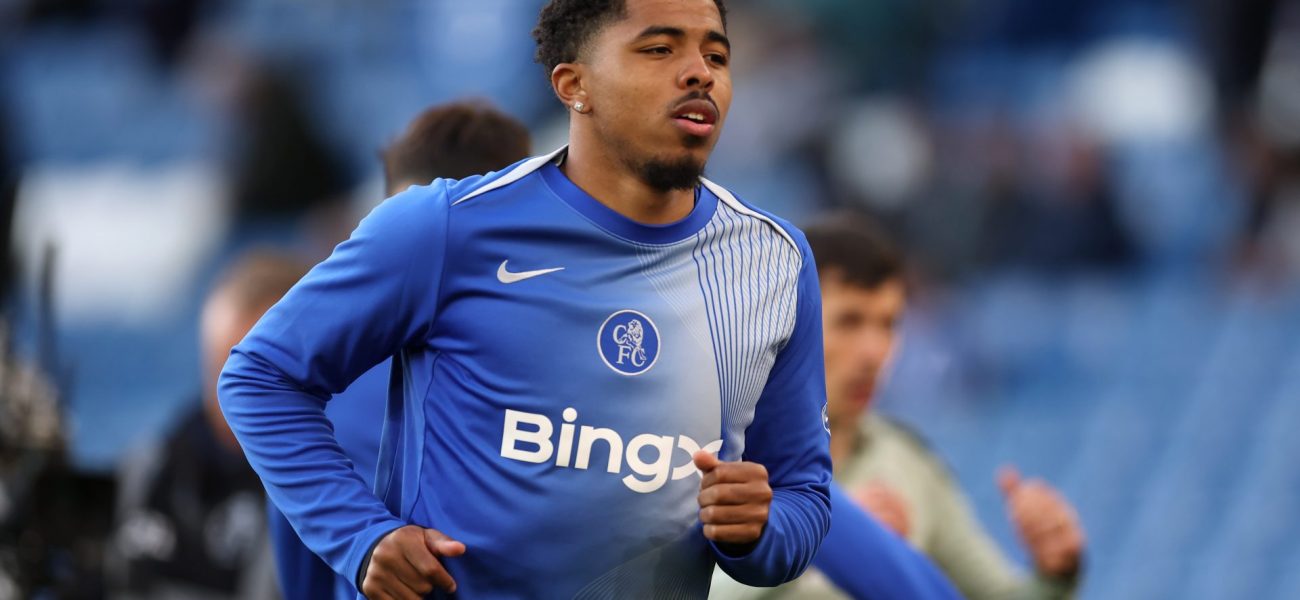
Barcelona’s €30M Fofana Play: A High-Stakes Gamble in Europe’s Financial Football Arena
POLICY WIRE — Madrid, Spain — It’s not about the player anymore; it’s never been, really. At its core, the whispers surrounding French defender Wesley Fofana’s potential migration from Chelsea’s blue...

POLICY WIRE — Madrid, Spain — It’s not about the player anymore; it’s never been, really. At its core, the whispers surrounding French defender Wesley Fofana’s potential migration from Chelsea’s blue to Barcelona’s iconic claret and blue aren’t merely a transfer saga. No, it’s a trenchant illustration of Europe’s top-tier football — a sprawling, multi-billion-euro enterprise — navigating a precarious economic landscape, where even the titans of the game find themselves bartering for loans and penny-pinching over transfer clauses.
The reported overture, a subtle dispatch from Chelsea’s camp to Catalonia, suggests Fofana, valued at a tidy €30 million, could be on the move. But this isn’t a straightforward acquisition. Barcelona, ever the financial tightrope walker, isn’t ready to simply cut a cheque. They’re angling for a loan, with an option to buy later — a fiscal contortion befitting a club that’s mastered the art of creative accounting and asset-leveraging, often called ‘palancas’, to keep its head above water. It’s a delicate dance, isn’t it?
Chelsea, for its part, finds itself in a peculiar bind. After a season bereft of Champions League glory, the West London outfit, bankrolled by the American consortium led by Todd Boehly, needs to recalibrate its balance sheet. There’s a distinct aroma of strategic asset management emanating from Stamford Bridge. “We’re always optimizing our squad’s economic profile,” a spokesperson for Chelsea’s ownership group conceded recently, declining to comment directly on Fofana but hinting at broader maneuvers. “And sometimes that means making difficult decisions. But rest assured, any movement would be about securing the best strategic advantage for the club.” It’s a remarkably diplomatic way to say, ‘we need to clear some books.’
And Barcelona? Their sporting director, Deco, a man intimately familiar with the club’s grand ambitions and equally grand debts, is playing it cool. “Our strategic objective isn’t merely acquiring talent; it’s about fiscal prudence and ensuring long-term sustainability,” he shot back when pressed on the Fofana rumors. “We’re interested, sure, but only if the terms reflect a realistic valuation — and our current economic landscape. We can’t afford another misstep.” He knows, doesn’t he, that the Nou Camp faithful have a short memory for financial woes when trophies are on the line.
This intricate ballet of high finance — and sporting ambition isn’t confined to the boardrooms of London and Barcelona. It reverberates across the globe, reaching far beyond Europe’s gilded stadia. Consider the colossal, unwavering viewership from regions like South Asia and the Muslim world, particularly in countries like Pakistan, where European football clubs command a fervent, almost religious, following. This massive, engaged fanbase—often overlooked in the glitzy transfer headlines—is, in fact, the economic bedrock. Their viewership fuels advertising revenue, broadcasting rights, and merchandising sales, which, in turn, underwrite these multi-million euro transactions. So, when a €30 million valuation is thrown around for a defender, it’s not just abstract figures; it’s a testament to a global economic engine humming along, largely powered by passions from lands far removed from La Liga’s hallowed pitches. These same regions, ironically, often grapple with their own significant economic challenges, making the sums involved seem utterly surreal.
The sheer scale is dizzying. According to the Deloitte Football Money League 2024, the top 20 revenue-generating clubs amassed a staggering €10.5 billion in the 2022/23 season, a new record. That’s an awful lot of shirts sold and subscriptions bought, a hefty chunk of which comes from burgeoning markets outside Europe.
📄 POLICY WIRE WHITEPAPER PUBLISHED: PAKISTAN'S NATIONAL SECURITY POLICY PRIORITIES
👉 READ BY CLICKING HEREWhat This Means
This potential Fofana deal, even if it remains a whisper, unveils several consequential layers. Politically, it showcases the continuous geopolitical soft power play inherent in European football. Clubs aren’t just sports teams; they’re global brands, cultural emissaries whose financial stability can mirror, or even influence, national prestige. The constant jockeying for talent and financial health among these clubs indirectly reflects on the broader economic prowess of their respective nations. For a club like Barcelona, deeply entwined with Catalan identity, fiscal health isn’t just about balance sheets; it’s about maintaining a beacon of regional pride.
Economically, the situation is a stark reminder of the tightrope top clubs walk between sporting success and financial fair play regulations. The loan-with-option-to-buy structure isn’t just a preference; it’s an urgent necessity for Barcelona, a way to defer immediate costs while retaining future flexibility. And for Chelsea, it’s about asset management, extracting value from a player who might not be central to their immediate plans or who represents a significant balance sheet item. Such transactions, often financed by complex debt structures or private equity — even Gulf investments, as seen in the wider football landscape (Petro-Dollars vs. Pedigree) — illustrate a globalized financial ecosystem where football operates as a highly specialized, and often volatile, market. It’s a market that thrives on global engagement, something keenly felt from the bustling streets of Karachi to the fervent fan clubs in Cairo.
Still, the underlying truth is clear: the pursuit of glory on the pitch is inextricably linked to the ledger. And for clubs like Barcelona, every €30 million transaction, whether it materializes or not, is a testament to both their enduring allure and their perpetual financial precarity.