


Houston’s Pitching Paradox: GM Dana Brown’s High-Stakes Gamble Unravels Amidst Mound Mayhem
POLICY WIRE — Houston, United States — A dynasty, they say, eventually eats its own tail. For the Houston Astros, a franchise once synonymous with pitching dominance — an almost alchemical ability to...

POLICY WIRE — Houston, United States — A dynasty, they say, eventually eats its own tail. For the Houston Astros, a franchise once synonymous with pitching dominance — an almost alchemical ability to conjure aces from thin air — the present reality is nothing short of an existential crisis. It isn’t the bat-wielding sluggers or the slick-fielding infielders drawing the ire; no, the very foundation of their past glories, their pitching staff, has imploded with a spectacularity that borders on the surreal.
Consider this: a team that, mere seasons ago, boasted a rotation envied across Major League Baseball, now sports a collective earned run average (ERA) that’s less a statistic and more a flashing crimson warning light. The Astros’ current team ERA of 5.78, according to official MLB statistics, isn’t just bad; it’s the absolute worst in baseball, a staggering 0.71 runs per game worse than the next-lowest contender, the Arizona Diamondbacks. It’s a precipitous fall, one that leaves many in the Houston faithful — and indeed, the broader sporting world — scratching their heads, wondering how a golden era could transmute so rapidly into an era of leaden arms and shattered hopes.
At its core, this spectacular unraveling stems from a winter strategy that, in hindsight, feels less like prudent management and more like a high-stakes poker game played with bargain-bin chips. General Manager Dana Brown, whose tenure has been marked by a discernible fiscal conservatism — a perceived mandate from owner Jim Crane to steer clear of the luxury tax threshold — elected to address significant rotation holes by signing a flurry of unproven or reclamation projects rather than established, albeit pricier, talent. This isn’t an entirely novel approach; numerous clubs, especially those in developing economic markets like Pakistan or Bangladesh (where organizations often invest in promising, yet unproven, local expertise hoping for exponential returns), employ similar strategies to stretch limited resources. But for a perennial contender, it’s a conspicuous pivot.
And now, the bill for that particular gamble is coming due. Mike Burrows, acquired in a complex three-way swap, hasn’t merely struggled; his H/9 rate has ballooned from 8.3 last year to 11.7 this season, a stark indicator of a pitcher whose command has simply evaporated. Tatsuya Imai, hailed as a potential ace after a dominant spring, flashed brilliance before succumbing to arm fatigue and a chronic inability to locate the strike zone. Then there’s Ryan Weiss, a KBO import whose initial promise quickly dissolved into a deluge of earned runs and walks, prompting his swift demotion. He hasn’t just been bad; he’s taken a flamethrower to late-inning leads, a rather unceremonious end to his major league foray, at least for now.
Still, not all of Brown’s moves have been outright failures. Kai-Wei Teng and Peter Lambert, both acquired on the cheap, have provided glimmers of competence, offering relief to an overworked bullpen and spot-starting admirably. Teng, in particular, has been a singular bright spot, boasting a 2.35 ERA and 0.96 WHIP while providing much-needed versatility. But these isolated successes are hardly sufficient to staunch the bleeding, especially with frontline starters Hunter Brown and Cristian Javier sidelined by injury, not expected back until mid-season.
📄 POLICY WIRE WHITEPAPER PUBLISHED: PAKISTAN'S NATIONAL SECURITY POLICY PRIORITIES
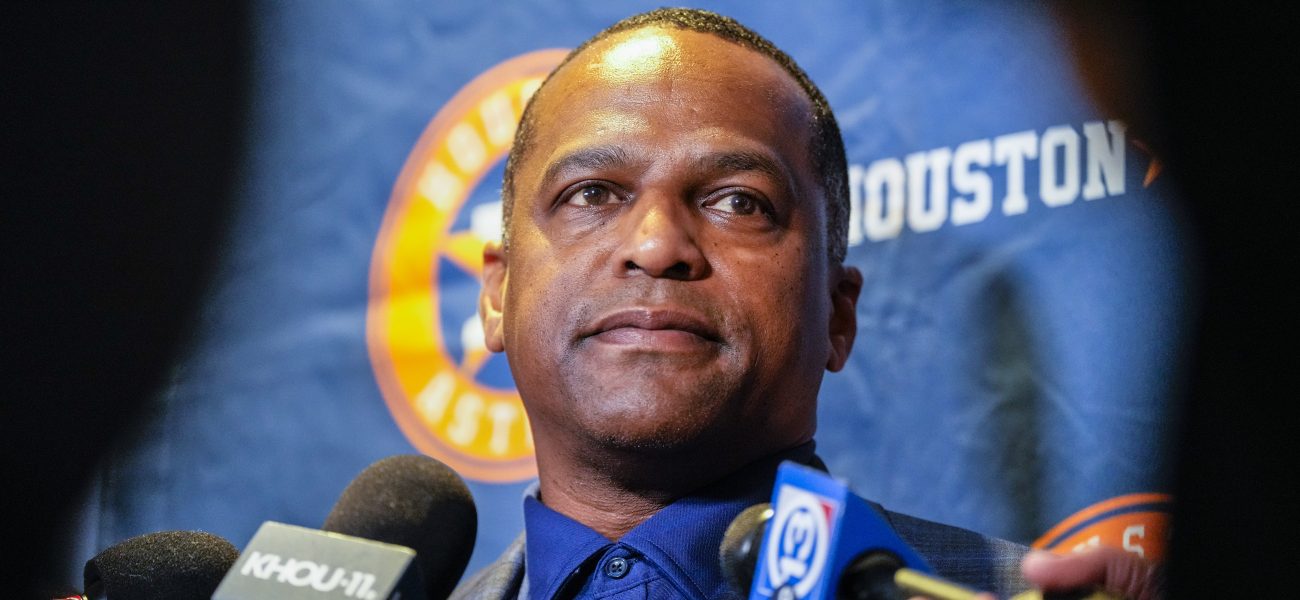
👉 READ BY CLICKING HERE“We’re facing unforeseen challenges, no doubt,” opined Brown recently in a press conference, maintaining a semblance of composure amidst the storm. “But I’m confident in the talent we’ve assembled — and the adjustments we’re making. It’s a long season, isn’t it?” Yet, the unspoken truth hangs heavy: the fate of the Astros’ season, and indeed Brown’s own employment, hinges precariously on the miraculous resurgence of Burrows and Imai — an outcome that, at this juncture, feels more like wishful thinking than a strategic certainty. With the trade deadline looming, and the farm system reportedly bereft of the ‘big time’ prospects needed to acquire a marquee arm, Brown finds himself in an unenviable bind.
Behind the headlines and the box scores, owner Jim Crane, a man famously allergic to losing, watches with an increasingly discerning eye. “Winning is the objective here. Always,” Crane shot back when asked about the team’s struggles. “And if it means making tough decisions to get back to that level, then tough decisions will be made. Payroll discipline is part of that equation, but success isn’t negotiable.” His words, delivered with characteristic brevity, carry the weight of an implicit threat, a reminder that the brutal calculus of success is measured in wins, not intentions. (And frankly, who could blame him? He didn’t build a multi-billion dollar empire by tolerating mediocrity.)
What This Means
This organizational predicament transcends mere athletic performance; it’s a potent cocktail of political and economic implications. Politically, Dana Brown’s position is deeply tenuous. His offseason strategy, predicated on financial prudence, has backfired spectacularly, exposing him to the full brunt of public and ownership dissatisfaction. If the team doesn’t turn its fortunes around, particularly given his contractual status, he’s effectively on borrowed time. The power dynamics within the organization are shifting, potentially empowering other voices to influence future personnel decisions or even usher in a new leadership structure. Economically, the ‘bargain bin’ approach, while understandable for managing a tight budget and avoiding the luxury tax, demonstrates the inherent risks of undervaluing proven talent. It’s a stark lesson in opportunity cost. a prolonged downturn could significantly impact ticket sales, merchandise revenue, and the overall brand value of a franchise accustomed to consistent contention. The ripple effects could even touch ancillary industries, such as sports media and local businesses that thrive on the team’s success. It underscores that even in the seemingly insulated world of professional sports, global economic realities and the brutal calculus of resource allocation are always at play. The pressure isn’t just on the players; it’s a systemic test of the entire organization’s resilience and strategic acumen.