


Tehran’s Precarious Gambit: German Official Warns Against Overreach in Deliberations
POLICY WIRE — Berlin, Germany — The air in the Persian Gulf, it seems, is growing thicker with both ambition and apprehension. It’s a persistent haze that now draws a pointed admonition from...

POLICY WIRE — Berlin, Germany — The air in the Persian Gulf, it seems, is growing thicker with both ambition and apprehension. It’s a persistent haze that now draws a pointed admonition from Europe, specifically from Berlin’s political corridors. This isn’t merely about a diplomatic spat; it’s about the very architecture of regional stability — a fragile construct, perpetually on the brink.
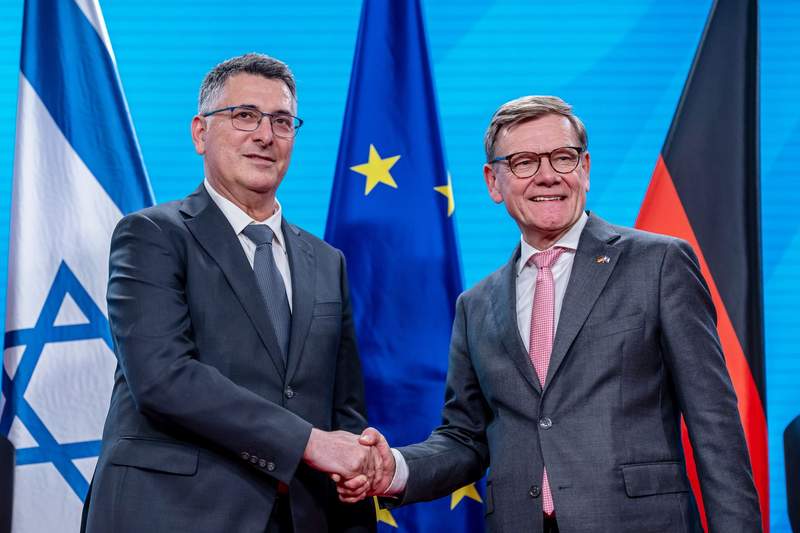
For months, the cadence of international dialogue concerning Tehran’s multifaceted activities has been less a harmonious symphony and more a discordant jazz ensemble, with each player improvising, often aggressively. Now, a prominent German voice, Johann Wadephul, a senior parliamentarian (and the CDU/CSU parliamentary group’s foreign policy spokesperson, no less), has issued a public caution to Iran, urging it not to miscalculate its leverage in ongoing — and notably opaque — deliberations, reportedly with European diplomatic channels, colloquially referenced as ‘Saar’.
And Wadephul’s warning, delivered with the characteristic German directness that often masks deeper frustrations, carries consequential weight. It’s an implicit acknowledgment that Tehran’s recent maneuvers, its accelerated nuclear program, and its continued regional assertiveness, are straining the already frayed patience of Western powers. The fear, palpably, is that Iran’s leadership believes it holds all the aces, a perception that could invite catastrophic missteps.
“The margin for error, frankly, has evaporated,” observed Johann Wadephul, emphasizing the precarious tightrope walk. “Tehran’s current trajectory, its continued provocations, doesn’t just imperil these crucial discussions; it risks alienating even its most patient interlocutors.” It’s a sentiment many diplomats privately echo, concerned that a hardline stance could inadvertently trigger a broader, more unpredictable confrontation.
But the Iranian perspective, predictably, remains largely unyielding. For them, it’s a matter of national sovereignty — and a rightful pushback against decades of perceived Western coercion. “Our national interests dictate our posture, not the pronouncements of distant capitals,” retorted a high-ranking official within Iran’s Foreign Ministry, who spoke on condition of anonymity due to the sensitivity of ongoing deliberations. “Those who chastise us for ‘overplaying our hand’ conveniently forget decades of sanctions — and external interference. We’re merely asserting our sovereign right to develop and defend ourselves.” That’s a familiar refrain, isn’t it?
This diplomatic push-and-shove isn’t occurring in a vacuum. It reverberates across the broader Muslim world, particularly in South Asia, where nations like Pakistan watch with trepidation. Bordering Iran, Pakistan grapples with its own complex geopolitical calculus, balancing historical ties with Tehran against its critical relationships with Saudi Arabia and the broader Gulf states. Any escalation, any miscalculation from Iran, could destabilize a region already wrestling with economic fragilities and persistent security challenges. The Red Sea, currently under siege, serves as a stark reminder of how quickly regional tensions can spill over into global crises.
📄 POLICY WIRE WHITEPAPER PUBLISHED: PAKISTAN'S NATIONAL SECURITY POLICY PRIORITIES
👉 READ BY CLICKING HEREAt its core, the European concern, articulated by Wadephul, stems from Iran’s advancing nuclear capabilities. Iran’s enrichment of uranium to 60% purity, a level far exceeding the 3.67% cap set by the 2015 nuclear deal (Joint Comprehensive Plan of Action or JCPOA), has been consistently confirmed by the International Atomic Energy Agency (IAEA) over the past years. This brazen defiance, steadily pushing the envelope closer to weapons-grade material, is what truly unnerves Western powers, creating a tangible sense of urgency in these behind-the-scenes talks.
Still, the precise nature of these ‘Saar’ talks remains shrouded in the usual diplomatic discretion. It’s understood, however, that these are likely back-channel engagements or focused discussions aimed at de-escalation, possibly revolving around the nuclear dossier or regional proxy activities that often inflame sectarian tensions from Syria to Yemen. And Tehran, it seems, has been leveraging this diplomatic lifeline, however tenuous, to press its demands while continuing its maximalist domestic and foreign policies.
But there’s a limit, isn’t there? A breaking point where dialogue gives way to harsher realities. Wadephul’s warning isn’t just about preserving a negotiation; it’s about averting a crisis, a conflagration that would undoubtedly draw in more players and inflict untold damage across an already volatile arc of instability.
What This Means
Wadephul’s public admonition signals a palpable shift in European patience with Tehran’s tactics. It underscores the belief in Berlin that Iran may be misreading the international community’s resolve, particularly as global attention remains diverted by other crises (such as Kyiv’s grim reprise). Economically, continued Iranian belligerence guarantees sustained sanctions pressure, choking off vital revenue streams and further isolating a populace already reeling from inflationary pressures and a depreciating currency. Politically, overplaying its hand risks fracturing any lingering European consensus for engagement, pushing more nations towards a harder line alongside the United States. For the wider Muslim world, especially its Sunni-majority nations, Iran’s assertive posture is a constant source of regional unease, threatening to ignite proxy conflicts and further sectarian division, impacting trade routes and energy security for critical global partners.