

Israel’s Security State Deepens Grip: Ex-Shin Bet Chief Joins Eisenkot’s Political Endeavor
POLICY WIRE — Tel Aviv, Israel — The revolving door between Israel’s vaunted security establishment and its notoriously fractious political arena just spun again, with characteristic precision. It...

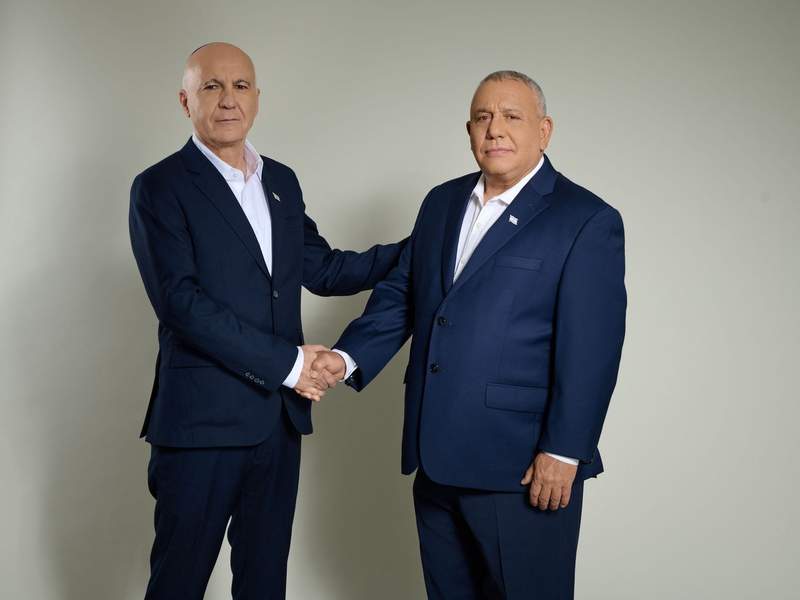
POLICY WIRE — Tel Aviv, Israel — The revolving door between Israel’s vaunted security establishment and its notoriously fractious political arena just spun again, with characteristic precision. It isn’t just another retired general trading fatigues for a tailored suit; it’s the quiet, almost inevitable absorption of a former Shin Bet chief, Yoram Cohen, into the freshly minted ‘Yashar!’ party—a faction already brimming with ex-military brass, led by former IDF Chief of Staff Gadi Eisenkot. This latest maneuver, far from a mere personnel shuffle, underscores a profound, often unstated, aspect of Israeli democracy: its perpetual, almost reflexive, reliance on security figures to navigate the treacherous waters of governance.
At its core, this development isn’t surprising. Israel, a nation perennially—and quite rightly—obsessed with its survival, routinely looks to those who’ve spent careers safeguarding its borders and internal stability for political leadership. And so, Cohen, whose tenure at Shin Bet saw him grappling with the nuanced, often brutal, realities of internal threats and intelligence operations, now lends his considerable weight to a party positioning itself as the voice of experience and sobriety amidst what many perceive as political theatrics. It’s a compelling narrative, certainly, for a populace weary of endless election cycles — and coalition acrobatics.
Eisenkot, himself a figure of stoic gravitas, isn’t simply collecting trophies; he’s assembling a formidable team designed to appeal to a broad swathe of centrist, security-conscious voters. Cohen’s inclusion adds an essential layer of internal security expertise to a group already boasting significant military bona fides. This alliance signals a clear intent: to project an image of unflappable competence and strategic foresight, directly contrasting with the perceived instability of current political leadership. “We’re assembling a cadre of individuals whose entire careers have been dedicated to Israel’s security, not its internal squabbles,” Eisenkot reportedly stated during a hushed briefing with party strategists. “This isn’t about partisan gain; it’s about restoring a sense of competent, unified leadership when the nation needs it most.”
Still, the implications extend beyond mere electoral calculus. The continuous influx of high-ranking security personnel into key political roles invariably shapes the national discourse, often prioritizing security considerations above — or at least on par with — other policy concerns like social welfare or economic reform. This isn’t necessarily a critique; it’s an observation on the fundamental character of the Israeli state. For many, it’s a comforting reassurance; for others, it raises questions about the scope of civilian oversight and the potential for a securitized worldview to dominate domestic and foreign policy.
The optics of a Shin Bet veteran entering mainstream politics won’t be lost on observers in Islamabad or Cairo, where the lines between security establishments and elected governance can often blur, albeit with starkly different historical trajectories and public perceptions. In some parts of the Muslim world, such a transition might be viewed as an inevitable evolution of power, reflecting a deep-seated statecraft where military and intelligence services wield significant, even ultimate, authority. Yet, in Israel, it’s often framed as a patriotic duty, a sacrifice of a quiet retirement for the clamor of public service. “My years at Shin Bet taught me the profound fragility of our societal fabric and the constant vigilance required,” Cohen declared in a terse press release, his words resonating with the gravitas expected of his former station. “I’m not entering politics for personal ambition, but because the stakes for Israel’s internal stability – and its very soul – couldn’t be higher right now.”
And those stakes are undeniably high. A 2023 Israel Democracy Institute poll found that 85% of Jewish Israelis trust the IDF, while only 27% trust political parties. This stark disparity explains much of the appeal of parties like Yashar!—they tap into a deep well of public confidence in institutions seen as apolitical and effective, contrasting sharply with the cynicism directed at elected officials. But trust, even in security figures, isn’t infinite; it demands results, especially in a region prone to sudden, violent shifts. Regional instability, from the Red Sea to northern borders, provides a constant backdrop to these internal political machinations, emphasizing the perpetual dance between defense and diplomacy.
What This Means
Cohen’s entry into ‘Yashar!’ significantly bolsters the party’s credibility and broadens its appeal, particularly among centrist voters who value security and governmental stability. Politically, it strengthens Eisenkot’s hand in forming a potent, experience-rich bloc that could challenge both the Likud-led right and the fractured left. This move might nudge public discourse even further towards security-focused solutions for complex challenges, potentially sidelining more nuanced socio-economic debates or diplomatic initiatives. It also underscores a persistent theme in Israeli elections: the yearning for a strong, decisive hand to guide the nation, often embodied by those who’ve commanded its most sensitive defense apparatuses. Economically, a government perceived as stable and secure, especially one led by figures with strong defense credentials, could theoretically attract more foreign investment or maintain higher credit ratings. However, excessive focus on security at the expense of other sectors might also divert critical resources, influencing long-term economic growth. The true impact, of course, hinges on electoral performance—whether this formidable collection of former security chiefs can actually translate their storied pasts into a cohesive, governing future. The enduring challenge will be proving they can navigate not just battlefields and intelligence labyrinths, but also the messy, often contradictory demands of a vibrant democracy.