


Shadow of the Shin Bet: Ex-Spy Chief’s Political Leap Reshapes Israeli Electoral Calculus
POLICY WIRE — Tel Aviv, Israel — The perpetual Israeli dance between the ballot box and the general staff headquarters has taken another intriguing step, casting a long shadow over the nation’s...

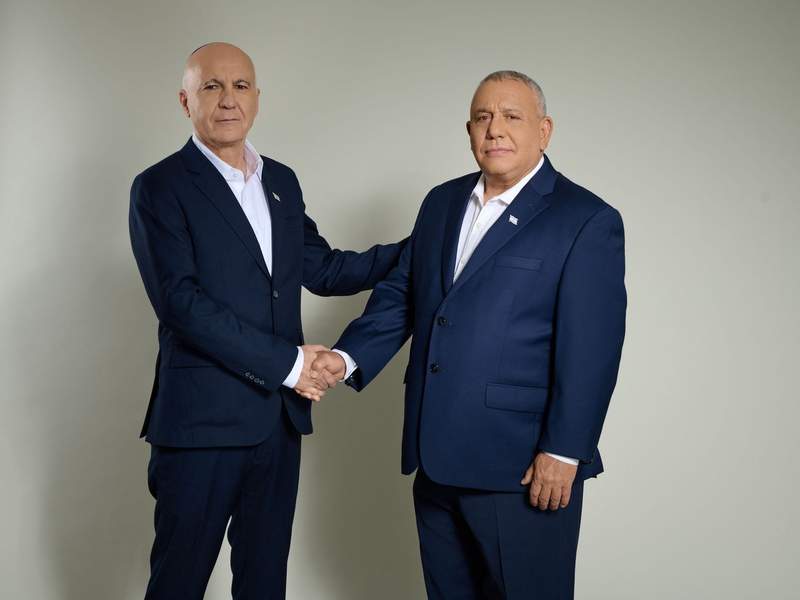
POLICY WIRE — Tel Aviv, Israel — The perpetual Israeli dance between the ballot box and the general staff headquarters has taken another intriguing step, casting a long shadow over the nation’s already fractious political landscape. It isn’t merely the entry of a new face into the political arena that warrants attention; it’s the specific pedigree of the latest recruit. Yoram Cohen, a man who once helmed the Shin Bet, Israel’s formidable internal security agency, has now aligned himself with Gadi Eisenkot’s burgeoning ‘Yashar!’ (Straight!) party, fundamentally reshaping the contours of the forthcoming elections.
Behind the headlines, this development is less about a fresh personality and more about the enduring Israeli fetish for security bona fides in its political leaders. Cohen, a figure whose public life has been largely defined by clandestine operations and counter-terrorism, brings a different kind of gravitas — one etched in classified intelligence and national protection — to a party already led by a former IDF Chief of Staff. It’s a calculated move, one presumes, designed to corner the market on voter trust, a commodity in scarce supply these days. And it begs the question: will the electorate, weary from incessant political infighting, once again turn to those who’ve historically managed the nation’s existential threats?
Gadi Eisenkot’s ‘Yashar!’ has been meticulously positioning itself as a centrist beacon, an alternative to both the entrenched right and the often-disparate left. The addition of Cohen, a religiously observant Sephardic Jew, isn’t just an asset for security credibility; it’s a shrewd appeal to a demographic often courted by the right, a demographic that might feel disenfranchised by the traditional secular-military elite. They’re broadening their tent, aren’t they, strategically pulling from various strata of Israeli society.
Cohen himself made his motivations clear, albeit in a carefully worded statement. “My entire adult life has been dedicated to Israel’s security, shielding its citizens from relentless threats,” he opined, his voice measured. “Now, that dedication shifts to ensuring its internal stability — and robust leadership. Eisenkot’s vision for a pragmatic, unified future — one grounded in responsible governance and security — resonates deeply with my own unwavering commitment to the nation’s well-being. It’s time for quiet competence, not constant commotion.”
This sentiment was promptly echoed by Eisenkot, who understands the symbolic weight of such an endorsement. “Yoram Cohen brings an unparalleled depth of experience in safeguarding our borders and our people, often from the shadows,” Eisenkot conveyed, his demeanor stoic. “His strategic acumen, honed over decades at the sharpest end of national defense, will be invaluable as we confront truly complex challenges and rebuild trust in government. This isn’t just about winning an election; it’s about forming a government that can truly govern, competently and ethically.” The subtext, naturally, being a stark contrast to current leadership.
Still, the path ahead for ‘Yashar!’ remains fraught. Israel’s political chessboard is notoriously volatile, with alliances shifting faster than desert sands. The electorate, by most accounts, is deeply polarized, and while security credentials often provide a comforting veneer of stability, they don’t always translate into a clear majority. Indeed, a study from the Israel Democracy Institute in 2021 indicated that nearly 20% of all Knesset members since the year 2000 have held senior military or security intelligence positions before entering politics, yet this hasn’t necessarily led to sustained political consensus or stability. It’s an enduring paradox.
📄 POLICY WIRE WHITEPAPER PUBLISHED: PAKISTAN'S NATIONAL SECURITY POLICY PRIORITIES
👉 READ BY CLICKING HEREAcross the wider Muslim world, from Cairo to Islamabad, shifts in Israel’s internal political dynamics are often meticulously observed. The entry of a former Shin Bet chief into the political fray, particularly one aligned with a central figure like Eisenkot, will undoubtedly be analyzed through the lens of security hawkism, perhaps fueling existing apprehensions regarding regional stability and the intractable Palestinian conflict. Perceptions matter, even if the primary audience for this move is domestic. Any strengthening of a perceived ‘security-first’ bloc in Israel could be interpreted by regional actors, including those concerned about maritime security in the Red Sea, as a signal of continuity, if not an escalation, in Israel’s security posture.
What This Means
Cohen’s recruitment is a pivotal maneuver for Eisenkot, unequivocally cementing ‘Yashar!’s claim as the preeminent centrist-security option. It’s an explicit challenge to other centrist parties, particularly those led by figures like Benny Gantz, who also boast impressive military records. The immediate political implication is a heightened scramble for the crucial undecided middle, especially those voters who prioritize national security and stability above all else. Economically, a government perceived as stable and led by experienced security figures could theoretically reassure markets, though Israel’s economy is robust enough to weather most political storms. The deeper impact, however, lies in the potential for this alliance to create a more formidable bloc capable of unseating the current government, or at least significantly altering its composition.
It’s also a stark reminder of the unique confluence of military and political power in Israel, where a distinguished military career often serves as a direct springboard to high office. This isn’t just a trend; it’s become a deeply ingrained expectation for many voters. But whether this latest iteration of the security-chief-turned-politician will finally break the cycle of political stalemate or merely perpetuate it remains the million-dollar question. Don’t bet on easy answers.