

Thai Cabinet’s Bold Gambit: $12.2 Billion Borrowing Skirts Parliament, Igniting Fiscal Debate
POLICY WIRE — Bangkok, Thailand — The ink barely dry on its latest political compromise, Thailand’s nascent administration has again found itself navigating the treacherous waters of fiscal...

POLICY WIRE — Bangkok, Thailand — The ink barely dry on its latest political compromise, Thailand’s nascent administration has again found itself navigating the treacherous waters of fiscal policy—this time by sidestepping parliamentary scrutiny for a colossal $12.2 billion emergency borrowing decree. This isn’t just about money; it’s a test of the nation’s democratic institutions — and its economic resolve.
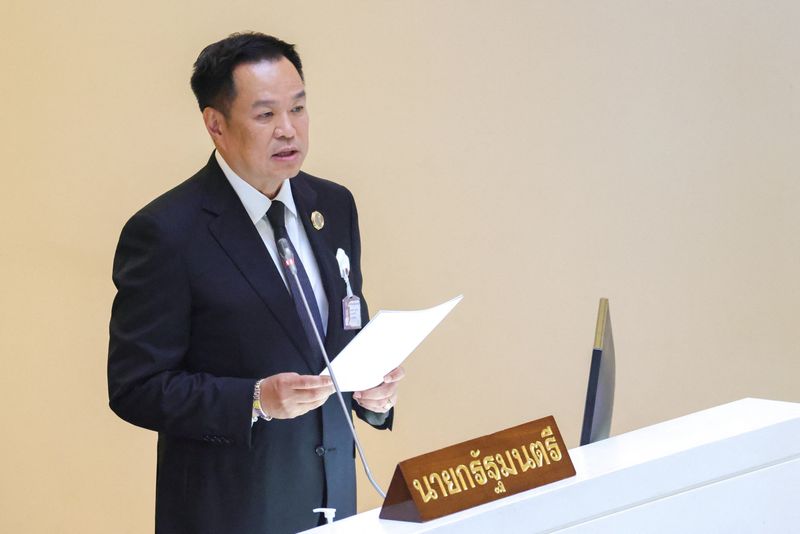
Bangkok’s corridors of power buzzed this week after the cabinet, led by Prime Minister Srettha Thavisin, rubber-stamped the hefty loan. Ostensibly, the funds are earmarked for vital economic stimulus, a much-needed shot in the arm for a sputtering economy. But its issuance via executive decree, rather than the customary parliamentary process, has ignited a fiery debate over accountability and the very mechanisms of governance.
At its core, this move represents a calculated risk. The government, fresh from a drawn-out electoral cycle and coalition haggling, clearly believes expediency trumps deliberation. They’ve framed it as a necessary evil, a swift response to alleviate immediate economic pressures. Prime Minister Srettha Thavisin, a former property mogul, shot back at critics. “This isn’t about avoiding debate; it’s about expeditious action to ignite our economy,” he told Policy Wire, his voice betraying a hint of impatience with the persistent questioning. “The cost of inaction, frankly, far outweighs the cost of this decree.”
But critics aren’t buying the emergency rhetoric wholesale. They argue that such a substantial financial commitment — equivalent to roughly 2% of Thailand’s GDP, a figure that stood at over $500 billion in 2023 — demands the full vetting of elected representatives. “A prime minister governing by decree—it’s a troubling precedent,” countered Pita Limjaroenrat, leader of the opposition Move Forward Party, speaking to local media. “Fiscal responsibility demands more than a pen stroke; it requires transparent discussion and legislative oversight.” His party, known for its reformist zeal, has long championed stronger parliamentary powers.
The precedent set here could reverberate far beyond Thailand’s borders. This high-stakes maneuver, relying on executive fiat over legislative deliberation, echoes concerns frequently raised in nations like Pakistan, where successive governments often face similar pressures to inject liquidity into sputtering economies. These often lead to contentious, frequently emergency, borrowing measures that bypass robust parliamentary review, contributing to Pakistan’s own perennial search for stability and economic predictability. It’s a familiar playbook for regimes in a hurry, bypassing the checks — and balances designed to protect public funds.
Still, the government asserts the funds are critical. Its digital wallet scheme, a central plank of its election campaign, promises a one-time payment to millions of eligible Thais. It’s an ambitious, some might say audacious, bid to stimulate consumption directly. But don’t misunderstand: this isn’t free money; it’s borrowed money. And Thailand’s public debt-to-GDP ratio already hovers around 60%, nearing statutory limits — a figure that gives even the most ardent spendthrifts pause, according to recent data from the Bank of Thailand.
📄 POLICY WIRE WHITEPAPER PUBLISHED: PAKISTAN'S NATIONAL SECURITY POLICY PRIORITIES
👉 READ BY CLICKING HEREAnd so, while the immediate financial lifeline might ease some anxieties, the long-term implications are already sparking contentious dinner table conversations across the kingdom. Will this gamble pay off, rejuvenating the economy sufficiently to justify the debt? Or will it merely kick the can down the road, burdening future generations with the weight of today’s political expediency?
What This Means
This $12.2 billion decree isn’t merely an economic policy; it’s a profound political statement. Firstly, it underscores the current administration’s willingness to use executive power aggressively to implement its agenda, even if it means circumventing established legislative channels. This could set a dangerous precedent, weakening the role of parliament and potentially concentrating more power within the executive branch. Critics fear it erodes the very foundations of democratic accountability, particularly after years of military influence in Thai politics.
Economically, the immediate injection of capital is designed to jolt consumer spending — and investment. However, its effectiveness hinges on several factors: how efficiently the funds are distributed, whether they genuinely stimulate sustainable growth rather than just a temporary bump, and the impact of the increased debt burden on Thailand’s fiscal health. The baht could face pressure, and investor confidence — both domestic and international — might waver if perceptions of fiscal indiscipline take hold. by skipping parliamentary debate, the government misses an opportunity to build broader consensus for its economic policies, potentially leading to greater instability down the line. It’s a high-stakes play, — and its outcome will define Srettha’s premiership.