


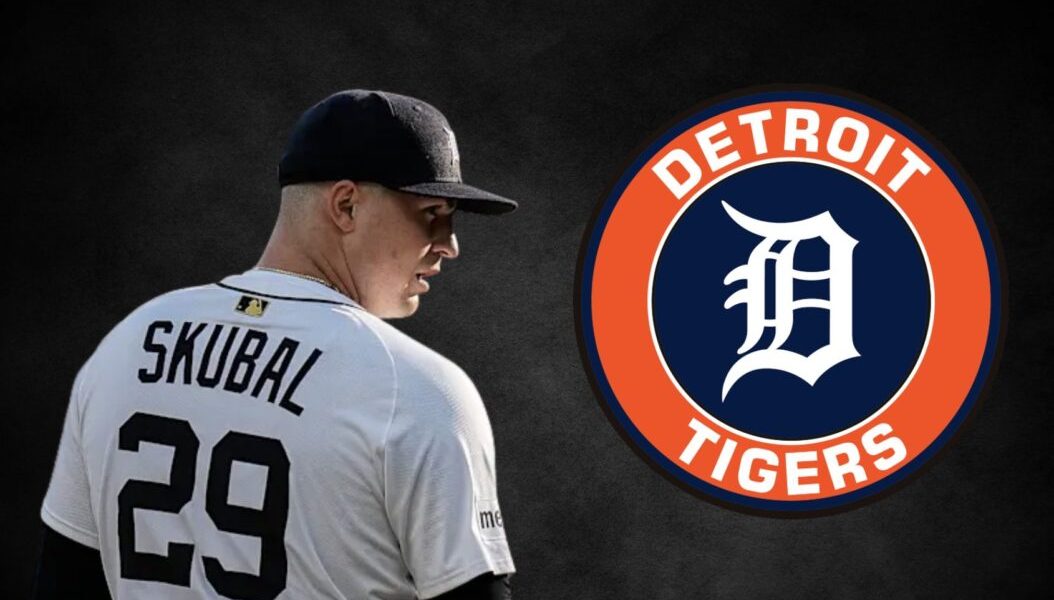
The Fragile Arm: Skubal’s Elbow Injury Exposes MLB’s Billion-Dollar Predicament
POLICY WIRE — Detroit, United States — The intricate, often brutal, alchemy of elite athletic performance — particularly in baseball’s high-stakes crucible — finds its starkest expression not...

POLICY WIRE — Detroit, United States — The intricate, often brutal, alchemy of elite athletic performance — particularly in baseball’s high-stakes crucible — finds its starkest expression not in triumph, but in the sudden, silent failure of a ligament or a joint. Such is the current, delicate predicament facing the Detroit Tigers, whose ace, Tarik Skubal, now confronts the surgeon’s knife for a relatively minor but deeply consequential elbow issue. It’s a tale as old as the game itself, yet one that constantly reshapes the financial and strategic landscape of America’s pastime.
While the organization has, with characteristic caution, demurred from affixing a precise date to Skubal’s probable return, the prognosis from medical professionals offers a sliver of cautious optimism. Indeed, an experienced orthopaedic surgeon, wading into the speculative waters of recovery timelines, posits that the Tigers’ hard-throwing southpaw could very well be back on the mound before the humid days of August yield to autumn’s crispness, provided, of course, that the body proves a willing participant in rehabilitation’s arduous journey.
And what precisely is the nature of this particular physical betrayal? Skubal is slated for a procedure to extract what medical parlance dryly terms ‘loose bodies’ from his left elbow. Minimally invasive, this operation typically entails the delicate removal of small cartilage or bone fragments that, much like political dissidents, can disrupt the natural order of things within the joint. Dr. Kevin Farmer, a specialist whose insights were shared through Tony Paul of the Detroit News, painted a comparatively rosy picture of the short-term outlook. “It’s probably one of the better ones (surgeries) to have in the shorter term… take out the pieces, do a little cleanup,” Farmer observed with clinical detachment. “Short-term, you can bounce back relatively quickly.”
But quickness, in the realm of million-dollar arms, is always relative. The procedure itself might barely consume an hour — a blink in the grand scheme of a pitcher’s career — yet the subsequent path to full strength is anything but instant. Farmer outlined a progression that begins with an initial six to eight weeks dedicated to the mundane but vital work of physical therapy: reducing swelling, restoring that critical range of motion. Following this foundational phase, another six to eight weeks are typically committed to a gradual, meticulous build-up of throwing volume and strength. Only then, perhaps, will a pitcher be deemed fit for the gladiatorial arena of competitive baseball.
“Everybody’s different, obviously,” Farmer cautioned, underscoring the idiosyncratic nature of human recovery. Under the most auspicious circumstances, Skubal might rejoin the rotation by early August. However, a more conservative — and arguably, more prudent — trajectory could see his return nudged closer to the twilight of August or even the dawn of September. It’s a tightrope walk for any franchise, balancing competitive urgency with the long-term health of an irreplaceable asset.
Still, the immediate fix often overshadows the more profound, persistent questions. Loose bodies aren’t uncommon among pitchers; many hurlers, in fact, carry these internal hitchhikers without ever sensing their presence. But once symptoms manifest, they become impossible to ignore. Farmer, with a rare flash of vivid metaphor, compared the sensation to a pebble in one’s shoe. You’re fine until it shifts, until it presses precisely where it shouldn’t, turning a minor irritant into an insistent, debilitating throb. This isn’t just about this season; it’s about the cumulative toll on an arm that generates velocities that would shatter lesser men, an arm that represents millions in potential earnings.
“We’re talking about an investment here, not just in talent, but in human capital,” remarked Alistair Reed, Director of Player Operations for an AL Central rival, speaking broadly about elite athletic injuries. “Every injury, no matter how minor it seems, forces a reassessment of risk, reward, and the very limits of the human body under extreme stress.” It’s a stark reminder that beneath the roar of the crowd, the business of baseball is a cold, hard calculus.
The global nature of elite sports, and the injuries endemic to it, throws into sharp relief the disparities in medical infrastructure. While Skubal benefits from world-class surgeons and state-of-the-art rehabilitation facilities in Detroit, one can’t help but ponder the sheer chasm that separates this from the reality for aspiring athletes in other parts of the world. A similar, career-threatening elbow issue for a promising pitcher in, say, Pakistan’s burgeoning but still nascent baseball leagues (yes, they do exist), would likely spell the definitive end of a dream, not merely a temporary setback. The access to cutting-edge sports medicine isn’t just a matter of wealth, it’s a geopolitical privilege.
📄 POLICY WIRE WHITEPAPER PUBLISHED: PAKISTAN'S NATIONAL SECURITY POLICY PRIORITIES
👉 READ BY CLICKING HEREWhat This Means
For the Detroit Tigers, Skubal’s uncertain return timeline casts a long shadow over their aspirations. His presence — or absence — will profoundly impact their immediate competitive viability. But it also underscores a broader, systemic challenge facing Major League Baseball. According to a 2023 study published in the Journal of Orthopaedic & Sports Physical Therapy, pitcher injuries account for roughly 65% of all player days lost to injury annually across MLB, representing a staggering collective financial hit estimated at over $600 million each season. This isn’t just about one player; it’s about the relentless attrition of the sport’s most valuable assets.
At its core, this situation forces teams to confront the policy implications of managing incredibly expensive, yet inherently fragile, human capital. How do you mitigate risk? How do you invest in preventative measures when the very act of pitching seems to defy biological limits? The answers aren’t simple, involving everything from biomechanical analysis to workload management protocols — policies that directly impact player careers and team fortunes. It’s an ongoing, often losing, battle against the biological limits of the human arm, intensified by the pursuit of increasingly higher velocity and spin rates.
Behind the headlines of immediate recovery, the long-term policy challenge remains: how can MLB — an institution that operates on a multi-billion-dollar scale — adapt its training, scouting, and injury management strategies to safeguard its most precious resource without stifling the athletic advancements that draw millions of fans? This isn’t just about a team losing a pitcher; it’s about the league’s perpetual struggle with the human cost of a sport pushing its physical boundaries.
Still, the Tigers must navigate the coming weeks without their most dominant arm. Their fate, for now, hangs in the balance, a poignant reminder that even in sports, the most consequential policies often revolve around the delicate, unpredictable machinery of the human body. The hope, tenuous as it may be, is that when Skubal does eventually step back onto the mound, he’ll be ready not just to pitch, but to anchor a rotation — and a franchise — with the full, unbridled power that once made him indispensable, proving that some investments, though risky, can still yield immense dividends.