


From Blazes to Brood: Albuquerque’s Fire Station Becomes Unlikely Avian Nursery, Signaling Deeper Urban Shifts
POLICY WIRE — Albuquerque, N.M. — The Albuquerque Fire Rescue Training Academy isn’t typically where one seeks arboreal serenity. Its grounds, usually a crucible of diesel roar and simulated...

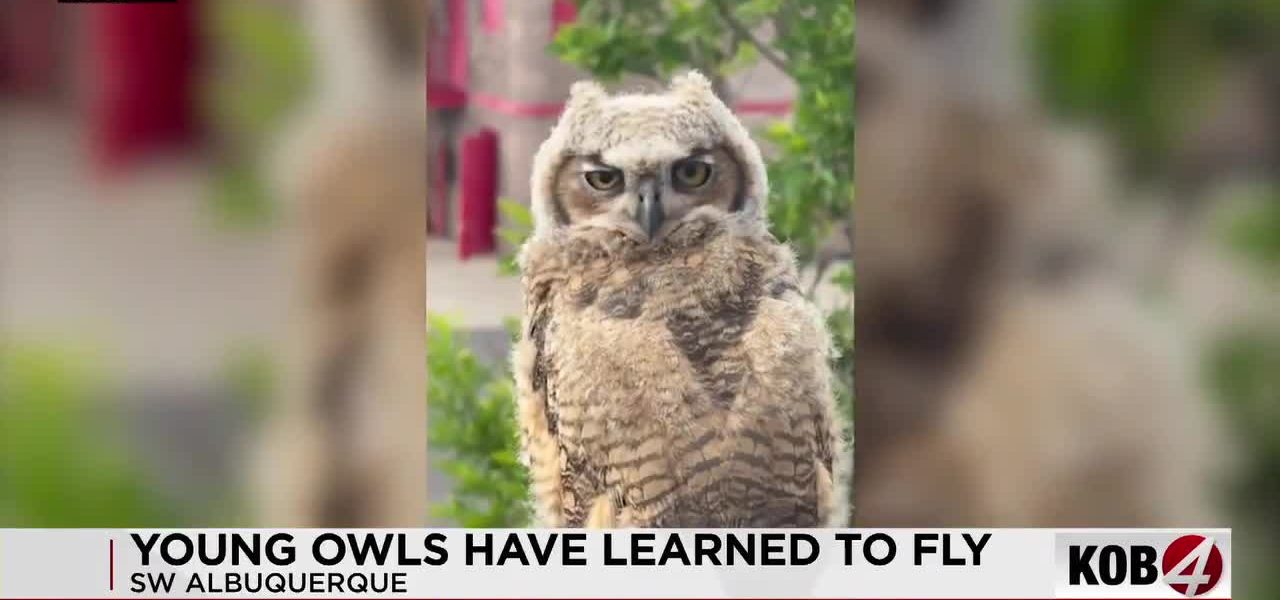
POLICY WIRE — Albuquerque, N.M. — The Albuquerque Fire Rescue Training Academy isn’t typically where one seeks arboreal serenity. Its grounds, usually a crucible of diesel roar and simulated disaster, have nevertheless become a most improbable nursery. For the fourth consecutive year, great horned owls—formidable nocturnal predators—have chosen this very precinct to raise their young, a rather inconvenient truth for those expecting predictable urban habitats.
It’s not merely a quaint footnote, this annual avian encampment. These owlets, now demonstrating fledgling flights across the training grounds, present a curious juxtaposition to the human endeavors unfolding beneath them. They’ve grown fast, observers note, their rapid development mirroring the equally swift march of urban encroachment into previously wild domains. But this isn’t just about the owls; it’s about what their persistent presence signifies for municipal planning, ecological adaptation, and the ever-blurring lines between nature and the built environment.
The fire academy, a hub for emergency response preparedness, has found itself inadvertently doubling as a wildlife sanctuary. Social media footage released Monday showcased the young raptors’ aerial prowess, still clinging near their parents, yes, but undeniably airborne. It’s a testament to nature’s tenacious will, perhaps, or a subtle indictment of human development that leaves creatures few alternatives. This isn’t just a local curiosity; it’s a microcosm of a global phenomenon where infrastructure, however utilitarian, unwittingly becomes a haven for displaced wildlife.
And so, a municipal fire department, tasked with safeguarding human lives and property, finds itself responsible for an unexpected, feathered constituency. This novel situation prompts a range of questions, not least among them the allocation of public resources. Should city budgets now account for avian pest control – or, conversely, for wildlife conservation? It’s a policy conundrum wrapped in a delightful viral video, isn’t it?
Mayor Tim Keller, ever keen to spin a community narrative, didn’t shy from the unexpected celebrity. “We’re not just responding to emergencies; we’re demonstrating adaptability on multiple fronts,” Keller quipped during a recent city council briefing. “It’s a stark, feathered reminder that even our most utilitarian infrastructure can offer unexpected refugia. You can’t budget for that kind of positive public relations, can you?” His remarks, while lighthearted, underscored a deeper tension: the unpredictable interplay between civic duty and ecological reality.
Behind the headlines, serious ecologists are paying attention. Dr. Anya Sharma, an urban ecologist at the University of New Mexico, views the owls’ recurring residency with a mixture of academic interest and cautious optimism. “These owls aren’t just a feel-good story; they’re a biological indicator,” observed Dr. Sharma during a phone interview. “Their success in such an anthropogenic landscape really underscores the resilience of certain species – and perhaps, our unintended creation of new, albeit precarious, ecological niches. It’s a delicate balance, one we’re only just beginning to truly grasp.” She stressed that while charming, this adaptation often signals prior habitat loss.
Still, the owls’ continued success here isn’t anomalous globally. A 2022 study published in *Frontiers in Ecology and the Environment* highlighted that urban areas globally are experiencing a 30% increase in sightings of certain ‘generalist’ wildlife species over the past decade, a trend directly linked to habitat fragmentation and resource availability within human-dominated landscapes. This isn’t just an American experience, either. From the bustling metropolises of South Asia to the rapidly expanding cities of the Muslim world, urban planners grapple with similar, if not more pronounced, challenges. In Karachi, Pakistan, for instance, the displacement of traditional habitats has led to an increase in wildlife—from jackals to exotic birds—seeking refuge in parks, abandoned lots, and even under bridges. It’s a universal narrative of nature asserting its claim, regardless of human blueprint.
📄 POLICY WIRE WHITEPAPER PUBLISHED: PAKISTAN'S NATIONAL SECURITY POLICY PRIORITIES
👉 READ BY CLICKING HEREThe enduring presence of these majestic birds in such a decidedly human-centric locale forces us to reconsider our notions of natural space. It’s not just about designated wildlife preserves; it’s about the pockets of wildness that persist, and even thrive, in the very fabric of our engineered world. And, more critically, it’s about how policy must adapt to these unscripted ecological dramas. New Mexico, a state wrestling with its future infrastructure – including a massive digital cartography initiative – finds itself, like many other regions, constantly negotiating its relationship with its natural heritage.
What This Means
At its core, the Albuquerque Fire Rescue’s accidental aviary isn’t merely a heartwarming anecdote; it’s a subtle yet potent commentary on urban policy and environmental stewardship. For one, it highlights the increasingly blurred lines between ‘wild’ and ‘urban’ environments, challenging conventional zoning and land-use paradigms. The city isn’t just managing human populations; it’s now, by extension, a de facto wildlife manager. This creates potential new fiscal obligations for unexpected ecological services, forcing policymakers to consider questions of habitat protection even within operational municipal infrastructure.
Politically, the story offers a ready-made narrative of community — and environmental awareness, however serendipitous. It’s a potent, feel-good moment that deflects from less palatable policy debates, offering a brief, almost poetic interlude. But it also raises deeper questions about sustainable urban growth. Are these owls a symbol of resilient adaptation, or a bellwether of encroaching habitat loss that forces wildlife into precarious coexistence? The answer likely lies somewhere in the uncomfortable middle, demanding more thoughtful integration of green infrastructure and conservation efforts into the very blueprints of our expanding cities. Just like the shifting plateaus of local media, the landscapes we inhabit are constantly redefining their boundaries, and we’d be wise to observe the signs, hooting or otherwise.
Ultimately, these owls at the fire academy aren’t merely cute; they’re an enduring, feathered challenge to our assumptions about urban planning, demanding that policy not only accommodate human needs but also acknowledge, and perhaps even celebrate, the uninvited guests who choose to call our engineered landscapes home.