


The Billion-Dollar Abyss: Mumbai Indians’ Playoff Hopes Hang by a Thread, Unmasking IPL’s Brutal Economy
POLICY WIRE — New Delhi, India — The Mumbai Indians, a franchise synonymous with unbridled financial power and cricketing supremacy, finds itself navigating an unfamiliar abyss. With a roster...

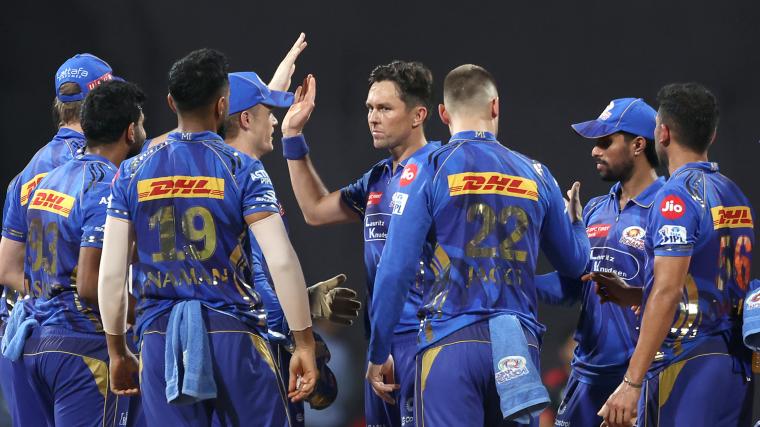
POLICY WIRE — New Delhi, India — The Mumbai Indians, a franchise synonymous with unbridled financial power and cricketing supremacy, finds itself navigating an unfamiliar abyss. With a roster bristling with marquee international talent and a brand valuation soaring into the billions, their current predicament — languishing near the bottom of the IPL 2026 table — isn’t merely a sporting slump; it’s a jarring anomaly that sends tremors through the intricate, high-stakes ecosystem of global T20 cricket.
It’s a curious spectacle, this unraveling of an empire. For years, MI has been the gold standard, not just on the pitch but as a commercial behemoth. They’ve consistently drawn top-tier sponsorship, boasting a fan base that stretches across continents — a testament to India’s undeniable soft power through sport. But this season, the numbers are stark, unforgiving. Mumbai Indians have lost seven out of their 10 matches, a statistic that speaks volumes about their current malaise, according to the IPL 2026 Points Table as of May 4, 2026.
And so, as the league phase nears its denouement, the question isn’t just ‘Can they make the playoffs?’ It’s morphed into ‘What does this unprecedented stumble mean for the edifice of professional cricketing franchises?’ Captain Hardik Pandya, whose return to the helm was heralded with much fanfare (and no small measure of controversy), now shoulders the Herculean task of inspiring an impossible turnaround. They don’t just need to win their remaining four matches; they need to win them by colossal margins to offset a dismal net run rate of -0.649.
Still, the team isn’t throwing in the towel, at least not publicly. “We’re not giving up, not by a long shot,” Hardik Pandya opined recently, his voice resonating with a strained defiance. “This team has fight, and we’ll show it. We owe it to our fans, and to ourselves, to push until the very last ball.” It’s a sentiment that, while admirable, feels increasingly divorced from the harsh arithmetic of points and run rates.
Behind the headlines — and the passionate cries of fans, a colder calculus is at play. Financial analysts, ever keen on the intersection of sport — and commerce, are watching with bated breath. The IPL, after all, isn’t just a league; it’s a multi-billion dollar enterprise, where brand equity is as volatile as a last-over chase. Mumbai Indians’ decline, therefore, isn’t just a cricketing misfortune; it’s a potential dent in an otherwise gleaming investment portfolio, proving that even stratospheric budgets don’t guarantee consistent performance.
This reality isn’t lost on observers beyond India’s borders either. From Karachi tea stalls to Dhaka’s bustling markets, the IPL’s drama unfolds daily, and the fall of a giant like MI reverberates far beyond Wankhede. In Pakistan, where cricketing narratives are devoured with zealous intensity, the struggles of such a dominant Indian franchise provide a different kind of talking point – a momentary equalizer in a sport often seen as reflecting national prowess. It’s a powerful reminder that in the volatile world of professional sports, nobody’s invincible (a lesson the global economy of athleticism frequently teaches).
📄 POLICY WIRE WHITEPAPER PUBLISHED: PAKISTAN'S NATIONAL SECURITY POLICY PRIORITIES
👉 READ BY CLICKING HEREDr. Rohan Gupta, a prominent sports economist at the Mumbai School of Economics, didn’t mince words. “What we’re witnessing isn’t just a bad season; it’s a profound strategic miscalculation that’s cost them millions in brand equity,” he shot back in a virtual press conference. “You simply can’t buy chemistry, it seems, nor can you guarantee wins with just star power. This has wider implications for how franchises approach team building.” His assessment underscores the precarious nature of investing heavily in individual talent without a cohesive team strategy.
To qualify for the playoffs, a team typically needs at least 16 points. At 14 points, which MI could achieve by winning all their remaining matches, they’d likely be embroiled in a tie-breaker scenario. Their current NRR makes that a perilous proposition. Should they lose just one more game, accumulating a mere 12 points, their playoff dreams become mathematically possible but statistically ludicrous, requiring a cascade of unlikely outcomes from other mid-table clashes.
What This Means
The Mumbai Indians’ precarious position isn’t just a story for sports pages; it’s a telling barometer for the enduring competitive nature of the Indian Premier League and, by extension, the broader economics of professional sports. A prolonged slump for a marquee franchise like MI could ripple through sponsorship deals, fan merchandise sales, and even broadcast viewership figures, affecting the overall financial health of the league. It forces a re-evaluation of management structures, player auction strategies, and the delicate balance between brand appeal and on-field performance. For rival franchises, it presents an unprecedented opportunity to seize market share — and fan loyalty. it highlights the volatility dividend inherent in professional sports — where the unexpected creates dramatic narratives but also significant financial uncertainty. Ultimately, MI’s struggle reinforces a crucial lesson: in the cutthroat arena of professional sport, reputation and past glories, no matter how immense, don’t guarantee future success.
So, the saga continues. Mumbai’s faithful, accustomed to champagne finishes, are now contemplating a bottom-half dwelling, a fate almost unimaginable just months ago. The clock ticks, the matches loom, and the cricketing world watches to see if this fallen titan can conjure a miracle, or if its season will simply peter out, a stark reminder that even the biggest budgets can’t always purchase victory.